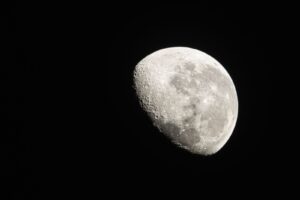
Mars Daily On 1 June 1966, Surveyor 1 landed on the Moon and sent home 10,338 pictures in under two weeks By Mars Daily Editorial Team · Aug 31, 2026
Flora And Fauna What happened when wildlife biologists released 41 predators into a national park starting in 1995 and researchers began arguing, decades later, whether the rivers themselves had changed course as a result? By Mars Daily Editorial Team · Aug 25, 2026
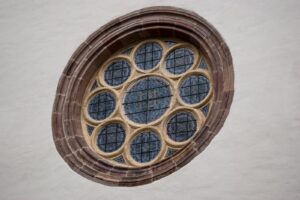
Physics News We tend to picture glass as a slow-moving liquid because old cathedral windows are thicker at the bottom, but physicists have shown the sag is a manufacturing artefact of medieval glassmakers, and room-temperature glass would need timescales far longer than the age of the universe to flow By Mars Daily Editorial Team · Aug 21, 2026
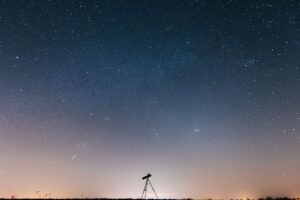
Outer Planets In 1610, Galileo turned a homemade telescope toward Jupiter and sketched four points of light that seemed to shift positions each night, and within a week he realised he was watching moons orbit another world — the first direct evidence that not everything circled Earth By Mars Daily Editorial Team · Aug 19, 2026
Psychology People who keep the thermostat lower than everyone else in the house, wear the same coat for a decade, and refill jars they could easily replace aren't cheap, they carry a relationship to scarcity that never fully left the body By Mars Daily Editorial Team · Aug 19, 2026
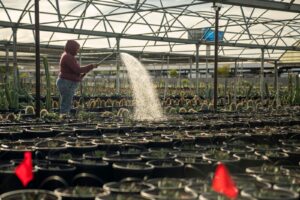
Farm News How did a desert nation with almost no freshwater and 60 percent arid land raise agricultural output more than tenfold since 1948 while cutting water used per crop by roughly half, using a technique invented on a leaky pipe? By Mars Daily Editorial Team · Aug 19, 2026
Mars Daily A meteorite that fell near the Australian town of Murchison in 1969 turned out to contain silicon carbide grains roughly 7 billion years old, meaning fragments inside that rock formed around dying stars more than 2 billion years before the Sun ignited By Mars Daily Editorial Team · Aug 16, 2026
Uncategorized Breathable oxygen has now been produced on the surface of Mars — generated between 2021 and 2023 by a NASA experiment about the size of a toaster, riding inside the Perseverance rover — the first time humans have ever made air on another planet, opening the door to bringing astronauts safely home one day By Mars Daily Editorial Team · Aug 14, 2026
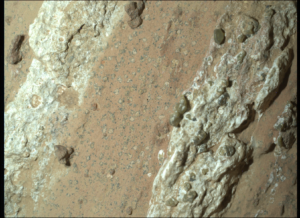
Mars Daily A rock on Mars nicknamed Cheyava Falls is speckled with 'leopard spots' — tiny rings of iron and phosphate that, on Earth, only form where microbes once lived, making it the strongest candidate for ancient life scientists have ever drilled By Mars Daily Editorial Team · Aug 14, 2026
Water World How does a city-state with no large rivers or natural aquifers now meet up to 40 percent of its water demand with recycled sewage? By Mars Daily Editorial Team · Aug 13, 2026
Rocket Science How did a captured German rocket, fired straight up from a New Mexico desert range in 1946, return the first photograph ever taken of Earth from beyond the atmosphere on 35mm film? By Mars Daily Editorial Team · Aug 10, 2026
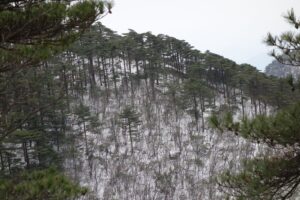
Earth Observation How did one half of a war-torn peninsula grow from 35 percent forest cover in 1955 to roughly two-thirds within a single lifetime? By Mars Daily Editorial Team · Aug 7, 2026
Flora And Fauna In 1994, a park ranger descending a sandstone gorge west of Sydney found a conifer from a 200-million-year-old family, and the latest official count found only 45 mature Wollemi pines across four secret wild stands By Mars Daily Editorial Team · Aug 6, 2026
Mars Daily How did a hilltop sanctuary in southeastern Anatolia, built with 5-metre limestone pillars around 9600 BCE, predate Stonehenge by roughly 6,000 years without metal tools, pottery, or the wheel? By Mars Daily Editorial Team · Aug 5, 2026
Mars Daily Olympus Mons on Mars rises about 22 kilometres above the surrounding plains but stretches roughly 600 kilometres wide, so a climber standing on its slope would see only a gentle rise in every direction and never realise they were on the tallest volcano in the solar system By Mars Daily Editorial Team · Aug 5, 2026
Mars Daily In 1846, French astronomer Urbain Le Verrier predicted the position of an unseen eighth planet from irregularities in Uranus's orbit, and when he wrote to the Berlin Observatory, they found Neptune within a single degree of his coordinates on the very first night they looked By Mars Daily Editorial Team · Aug 4, 2026