Inside a black, carbon-rich stone that fell on a Victorian dairy paddock on the morning of 28 September 1969 sit specks of silicon carbide older than the Sun by more than two billion years. Some formed roughly 7 billion years ago, around dying stars whose remnants — if anything survived — are now cold white dwarfs or neutron stars scattered somewhere across the Milky Way. Several thousand of them would fit on the head of a pin. They are the oldest solid materials ever held in a human hand.
The rock they came from is called Murchison, named for the farming town where it landed. The town had a few hundred residents, a post office, and cows.
A fireball at breakfast time
Residents of Murchison and surrounding towns heard a sequence of sonic booms and looked up to see a fireball. Fragments rained across paddocks and cow pastures. According to the ABC’s fiftieth-anniversary account, farmers and schoolchildren spent the following days walking the strewn field, picking up black stones and posting them, sometimes in shoeboxes, to laboratories in Melbourne, Chicago and Washington.
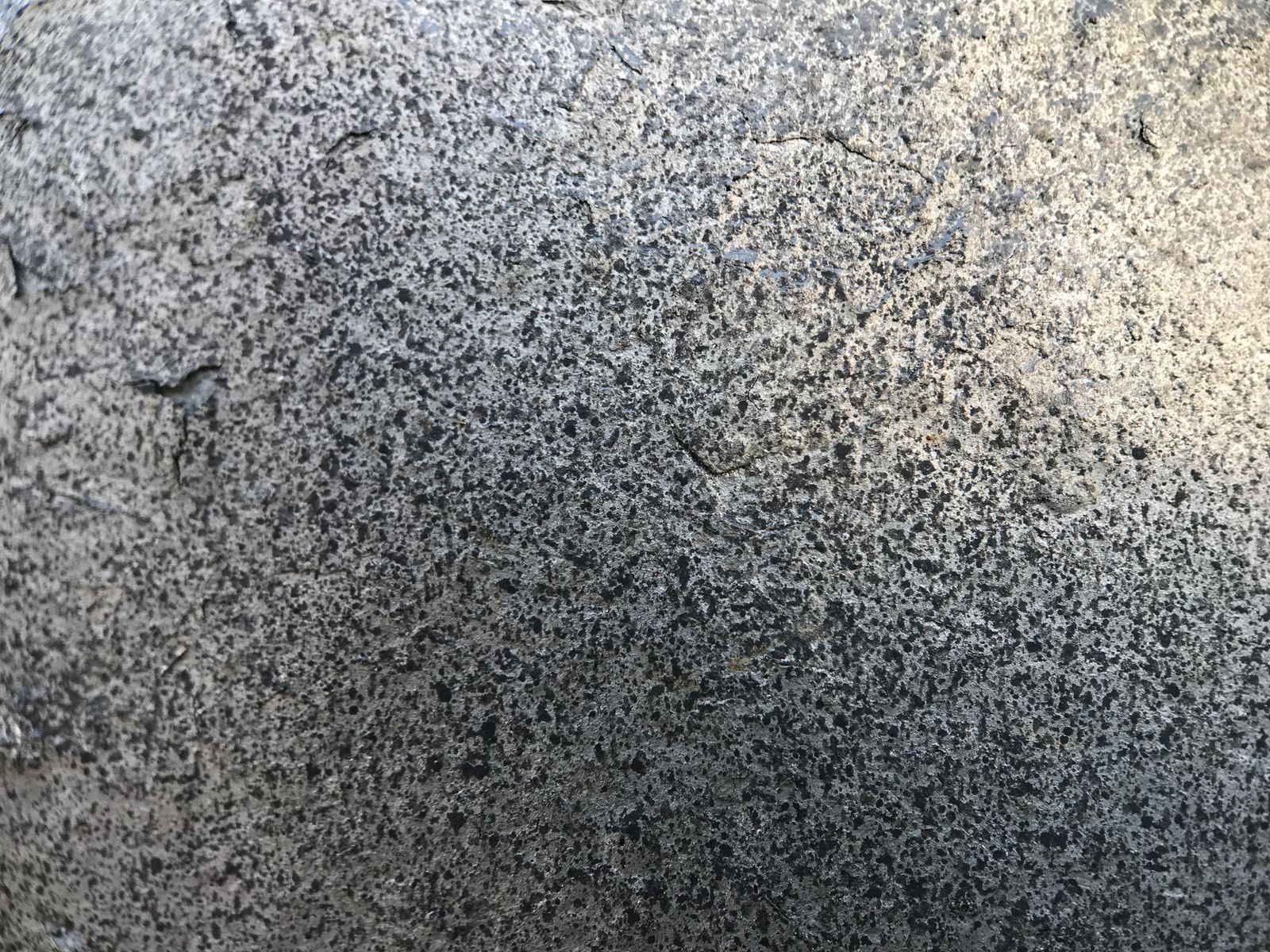
The rocks smelled strange — a clue that the meteorite was crowded with organic chemistry: amino acids, sugars, nucleobases, hydrocarbons. Murchison is a CM2 carbonaceous chondrite, a rare primitive class that never melted or fully recrystallised after the solar system formed. It preserves the chemistry of the cloud that made the Sun.
Approximately 100 kilograms of material was recovered. Pieces now sit in nearly every major cosmochemistry lab on Earth.
What actually formed 7 billion years ago
Buried in the Murchison matrix, tangled up with clay minerals and water-bearing silicates, are microscopic crystals of silicon carbide, graphite and corundum. Most are smaller than a micrometre. Under a scanning electron microscope they look like soot. They are individually heavier in certain isotopes — silicon-29, carbon-13, nitrogen-15 — than anything the Sun could produce.
That isotopic mismatch is the fingerprint. The grains condensed in the outflows of stars that died before the Sun was born. Mostly red giants shedding their outer atmospheres. Some traces from supernovae. Each grain carries the chemical signature of the specific kind of star it grew around, like a tiny slice of a stellar autopsy.
To pull them out, researchers crush small pieces of the meteorite and dissolve away everything else with a sequence of acids strong enough to eat silicate rock. The silicon carbide survives. What’s left at the bottom of the beaker is, almost literally, stardust.
How you date a grain that predates the Sun
In January 2020, a team led by cosmochemist Philipp Heck at the Field Museum in Chicago, working with colleagues at the Australian National University, ETH Zurich and the Max Planck Institute for Chemistry, published a technique for dating the grains directly. The method, described in detail by Business Insider’s coverage of the study, relies on cosmic rays.
Cosmic rays drizzle through the galaxy constantly. When a high-energy particle slams into a grain floating in interstellar space, it shatters atoms inside the crystal and produces small quantities of new isotopes, particularly neon-21. The longer a grain sits exposed in open space, the more neon-21 accumulates inside it. Measure the trapped neon, and you can calculate how long the grain drifted before being swept up into the molecular cloud that became the solar system.
Heck’s team examined forty presolar grains from Murchison. Most sat between 4.6 and 4.9 billion years old — slightly older than the Sun itself. A subset clustered around 7 billion years. One grain may be older still.
The numbers, laid flat
Some benchmarks help. The Earth is about 4.54 billion years old. The Sun is roughly 4.6 billion. The oldest mineral grains ever dated from Earth itself, zircons from the Jack Hills in Western Australia, come in at about 4.4 billion years. The universe is approximately 13.8 billion years old.
A 7-billion-year-old silicon carbide grain from Murchison, then, is older than the Sun by more than half the Sun’s current age. It existed when the Milky Way was roughly half its present mass. It drifted through cold interstellar space for longer than complex multicellular life has existed on Earth, before ever being pulled into the collapsing cloud that made this solar system.
And several thousand of them would fit on the head of a pin.
A baby boom in the Milky Way
The clustering told Heck’s team something unexpected. If presolar grains had been produced at a steady rate across galactic history, their ages should be spread out evenly. Instead, the Murchison sample showed a pile-up around 7 billion years ago.
The plausible reading, according to the detailed account of the 2020 result: a burst of star formation swept through this part of the Milky Way roughly 7 billion years ago. Stars born in that surge lived for a few hundred million to a couple of billion years, swelled into red giants, and shed dust into the surrounding interstellar medium. That dust drifted until something — perhaps a nearby supernova shockwave — pushed it into the molecular cloud that collapsed to form the Sun about 4.6 billion years ago.
Astronomers had argued for decades about whether star formation in the galaxy is roughly constant or comes in bursts. Grains inside a stone that fell on a Victorian dairy paddock gave them physical evidence for bursts.
Why Murchison, and not just any meteorite
Most meteorites carry no useful presolar grains at all. They’ve been heated, shocked, or chemically altered enough during their history to erase the isotopic fingerprints. Carbonaceous chondrites — and CM2s especially — preserve them because their parent asteroid never got hot enough to melt. As a recent explainer from The Conversation notes, the Murchison stone contains not only the oldest minerals to form in the solar system, but amino acids and stardust from stars that exploded billions of years before the Sun.
Tens of thousands of meteorites have been identified worldwide. Australia’s arid interior, particularly the Nullarbor Plain, preserves them exceptionally well; more than half of Australia’s known meteorites have been found there. Mars Daily has previously looked at how stones recovered from the same red deserts are being used to sharpen the search for biosignatures on Mars.
Murchison sits in a different category from ordinary desert finds because its fall was witnessed. Curators at the Field Museum and the Smithsonian keep pieces stored under nitrogen to slow terrestrial weathering. The chemistry inside is as close to pristine primordial solar-system material as anything on Earth.
One stone, several billion years of history
The same rock that carries the presolar grains also carries dozens of amino acids, many of which do not occur naturally on Earth. It contains components of RNA bases. It contains sugars, including ribose. The organic chemistry alone would have made Murchison one of the most-studied stones in scientific history. The silicon carbide grains push it further back, into a period before the Sun.
The result no longer stands alone. NASA’s OSIRIS-REx spacecraft returned samples from the asteroid Bennu in 2023, and the same class of presolar grains — silicon carbide with isotopic signatures — appears across different meteoritic samples.
Different rocks. Different asteroids. Same ancient dust.
What the grains actually are, physically
Silicon carbide is hard, chemically stubborn and thermally stable. On Earth it’s manufactured for use in car brake discs, LED electronics and sandpaper. In space, it condenses out of the cooling atmospheres of dying stars, where carbon and silicon combine into tiny crystals that then get blown outward by stellar winds. Because silicon carbide resists acid, heat and shock so well, it survives the journey from a red giant’s outer atmosphere, through billions of years of interstellar drift, through the collapse of a molecular cloud, through incorporation into an asteroid, through a collision that ejected chunks of that asteroid, and through atmospheric entry above Victoria on a September morning in 1969.
Under a microscope, the oldest grains look like nothing. Small, dark, irregular flecks. They formed when the Milky Way was younger, when this stretch of the galaxy was studded with stars now long dead. They exist as small, dark specks in a beaker in Chicago because a fireball broke apart above a paddock and a child, somewhere near the town of Murchison, picked up an unfamiliar rock and brought it home.
The ownership rules that keep stones like these findable
Meteorite ownership in Australia is governed by state and territory laws. In Western Australia, all meteorites are state property under the Museum Act. In South Australia, they belong to the Crown and are managed by the SA Museum. The Northern Territory declares meteorites Crown property under the Meteorites Act 1988. Finders must report discoveries. Specimens then remain in public collections for research and display.
Those rules matter because damaged meteorites tell shorter stories. Well-meaning finders have soaked them in acid, scrubbed off the fusion crust, or smashed them with hammers. Some have been sold or exported illegally, putting them beyond scientific reach. The delicate isotopic fingerprint that let Heck’s team read the age of a silicon carbide grain would not survive rough handling.
Fireballs still light up Australian skies. As news coverage of the Murchison anniversary has pointed out, the 1969 fall still shapes what scientists know about the earliest chemistry of the solar system, more than five decades after farmers first picked the fragments off their fields.
An older lineage than anything on this planet
The old objects on Earth tend to flatten with familiarity. A Greenland shark from the 1700s. A bristlecone pine from before the pyramids. A zircon crystal from the Hadean Eon. Extraordinary in human terms, but they all belong to the same planet as the people measuring them.
The Murchison grains belong to nothing in particular. They condensed in the atmosphere of a star whose remnant, if any survived, now sits somewhere thousands of light-years from the Sun. They drifted in cold, empty space for longer than the Earth has existed. They were baked into an asteroid, broken loose by a collision, and fell onto a paddock in Victoria on a Sunday morning.
Mars Daily has explored how meteorites from Mars end up on Earth after being blasted off the Martian crust by ancient impacts, carrying a few hundred million years of Martian geology in their chemistry. Murchison operates on a different timescale entirely. Its Martian cousins are young rocks. The silicon carbide inside Murchison predates the ground under any planet in this solar system.
Somewhere on Earth, another CM2 chondrite will fall eventually. Locals will hear the boom, look up at the smoke trail, and start picking through the fields. In a lab, small pieces will be crushed and dissolved. Grains a thousand times thinner than a human hair will be plucked from the residue and measured for trapped neon. And some of what comes out of the beaker will have been drifting in the dark for longer than the Sun has been burning.