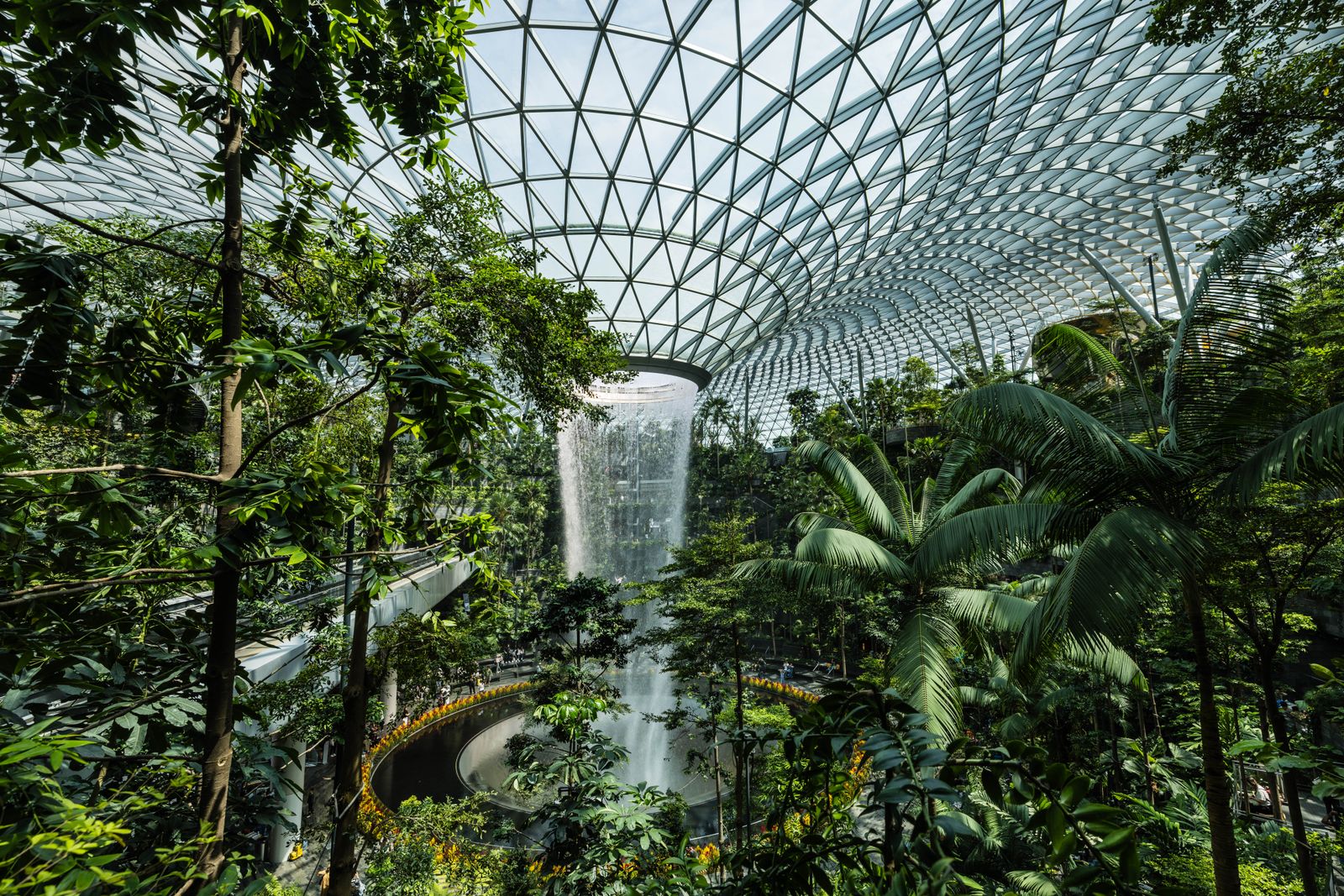
Singapore does it through NEWater, a system that sends conventionally treated used water through membrane filtration, reverse osmosis and ultraviolet disinfection, supported by the Deep Tunnel Sewerage System that carries used water to centralised reclamation plants. NEWater can meet up to 40 percent of Singapore’s total water demand. Most of that high-grade reclaimed water goes directly to industry; a smaller amount is blended into reservoirs during dry periods and treated again before entering household taps.
The city-state is not literally riverless. It has the Singapore River and other waterways, but no large rivers or natural aquifers, a distinction Singapore’s deputy prime minister made in June 2026. Its problem is not a lack of rain so much as a lack of land and natural storage.
Nor does yesterday’s flush normally return through a kitchen tap the next morning. Collection, biological treatment and purification take time, while water intended for drinking first passes through a reservoir and then a conventional waterworks. PUB, Singapore’s national water agency, calls this indirect potable use.
Why heavy rain was not enough
Singapore lies just north of the Equator and receives abundant tropical rain. Yet a dense city on a small island cannot store every downpour, and long dry spells can draw reservoirs down while homes, factories and cooling systems continue to consume water.
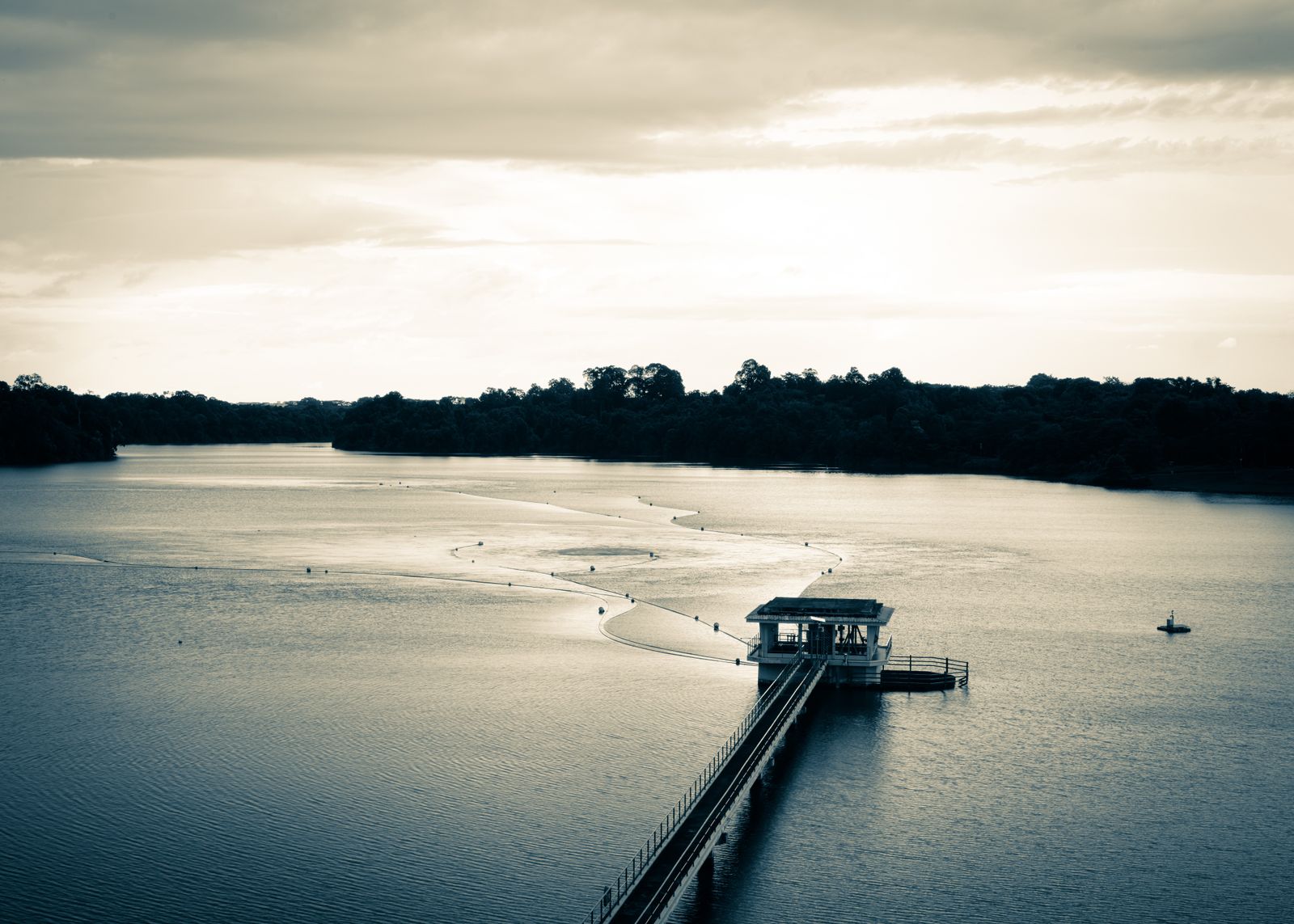
The government responded by turning much of the island into a catchment. Two-thirds of the land surface now drains through more than 8,000 kilometres of drains and canals into 17 reservoirs, according to the Ministry of Sustainability and the Environment. Singapore currently uses about 440 million gallons of water a day.
Catchment water is one of the Four National Taps. The other three are imported water from Johor, desalinated seawater and NEWater. The portfolio matters because rainfall is variable, desalination is energy-intensive and imported water is governed by an agreement with an expiry date.
Singapore’s 1961 water agreement with Johor expired in August 2011. The 1962 agreement remains in force until 2061 and allows Singapore to draw up to 250 million gallons of raw water a day from the Johor River, as the Ministry of Foreign Affairs records. The agreement is legally guaranteed, but its scale and end date gave water planners a reason to build alternatives decades ahead.
The underground loop beneath the city
The answer begins below street level. PUB’s Deep Tunnel Sewerage System is a 206-kilometre network designed to move used water by gravity toward three centralised reclamation plants at Changi, Kranji and Tuas.
Phase 1 opened in 2008 with a 48-kilometre deep tunnel and the Changi Water Reclamation Plant. PUB lists Changi’s designed treatment capacity at 800,000 cubic metres a day, roughly 320 Olympic-sized swimming pools, with room for major future expansion.
Gravity replaces the chain of pumping stations that an older sewer network required. Once the entire system is complete, PUB expects the centralised design to halve the land footprint of used-water treatment and free as much as 150 hectares for other uses.
The scale is easy to miss because most of it cannot be seen. PUB puts the cost of the two-phase system at about S$10 billion and its intended working life at 100 years.
How used water becomes NEWater
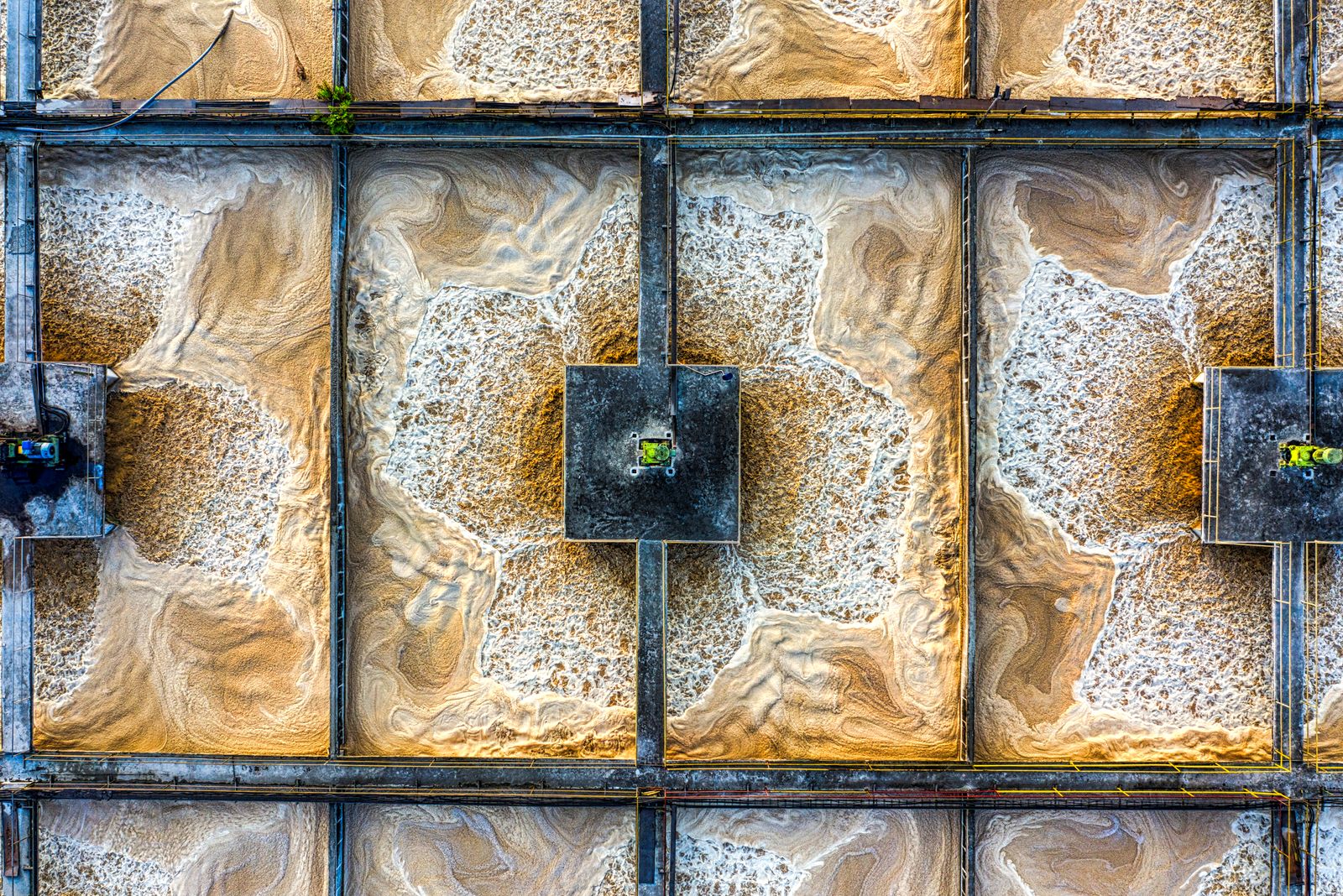
At a reclamation plant, screens first remove grit and debris. Biological treatment then uses microorganisms to break down the organic material in the flow, producing treated used water that is ready for the higher-grade NEWater process.
The first advanced stage is microfiltration or ultrafiltration. Fine membranes remove suspended particles and bacteria. Some facilities use a membrane bioreactor that combines biological treatment, sedimentation and fine filtration in one step.
Reverse osmosis comes next. Pressure pushes water molecules through a semi-permeable membrane while contaminants including viruses, salts, heavy metals, pesticides and aromatic hydrocarbons are left behind.
Ultraviolet light provides a final disinfection barrier. In its account of the three-stage process, PUB says external experts found the finished water consistently safe and within World Health Organization and United States Environmental Protection Agency drinking-water requirements. For indirect potable use, it is then mixed with reservoir water and treated once more at a conventional waterworks.
Why factories receive most of it
Wafer fabrication plants need extremely clean water to rinse semiconductor surfaces. Minerals acceptable in ordinary tap water can interfere with microscopic manufacturing steps, so NEWater’s purity is useful before a factory adds the final polishing required for its own process.
PUB says NEWater is used mainly by wafer fabs, industrial estates and commercial cooling systems through a dedicated pipe network. That industrial route is central to the 40 percent figure: the number describes total national demand that NEWater can meet, not the share of household drinking water drawn directly from reclaimed water.
Non-domestic users already account for 55 percent of Singapore’s water demand, and the government expects that share to reach two-thirds by 2065 as semiconductor manufacturing and data centres expand. Recycling therefore protects potable supplies while serving the part of demand growing fastest.
The direct industrial use also avoids a common misconception. Singapore is not sending all reclaimed water into household pipes. During dry periods, only a smaller portion is added to reservoirs, where it blends with raw water before another round of treatment.
The engineer and the public bargain
Lee Ek Tieng was one of the central civil servants behind the system, though no single engineer built it alone. In 1972 he worked with engineer Tan Gee Paw on Singapore’s first Water Master Plan, and later revived water-reclamation work as membrane technology became more reliable. He spearheaded NEWater’s development and gave it its name.
Lee also led the 1977 to 1987 clean-up of the Singapore River and Kallang Basin, a project that required sanitation infrastructure as well as the relocation of polluting farms, hawkers, workshops and settlements. He died on April 6, 2025, aged 91.
Public acceptance took engineering of another kind. NEWater made its public debut at the August 2002 National Day Parade, and the first two factories opened at Bedok and Kranji in January 2003. PUB later closed the Bedok factory and its visitor centre on July 31, 2024; its current NEWater page lists four plants in operation.
What changes in 2027
The next large step is Tuas Water Reclamation Plant in western Singapore. PUB says it is due to become operational in 2027, with separate modules able to treat 650,000 cubic metres of domestic used water and 150,000 cubic metres of industrial used water each day. Domestic flows will be purified further into NEWater at the co-located factory.
Tuas is part of the second phase of the deep-tunnel system, whose network is scheduled to be commissioned in stages from 2027. It will extend gravity conveyance to western districts and connect the water plant with a solid-waste facility in the integrated Tuas Nexus.
The contrast with the rest of the world should be stated carefully. The latest UN-Water assessment estimates that 42 percent of household wastewater was not safely treated before discharge in 2022, while warning that country reporting remains too incomplete for a reliable global figure covering all wastewater.
Singapore’s system has limits of its own. Membranes consume electricity, treatment produces residual waste, and future demand could nearly double by 2065. The same long-horizon habit appears in Mars Daily’s account of South Korea’s forest recovery: infrastructure and ecological systems change on a timescale longer than an election cycle.
Having water and being able to reach it are different problems. Mars Daily’s report on liquid water inferred deep in the Martian crust describes the extreme case; Singapore’s achievement is to make difficult water routinely accessible.
By the time the 1962 Johor agreement expires in 2061, Singapore expects today’s young adults to be approaching retirement. Beneath them, the tunnels will still be carrying used water toward membranes and ultraviolet light, while rain strikes the reservoirs above. At a kitchen tap, the result will remain almost defiantly uneventful: clear water, no smell and no taste worth noticing.