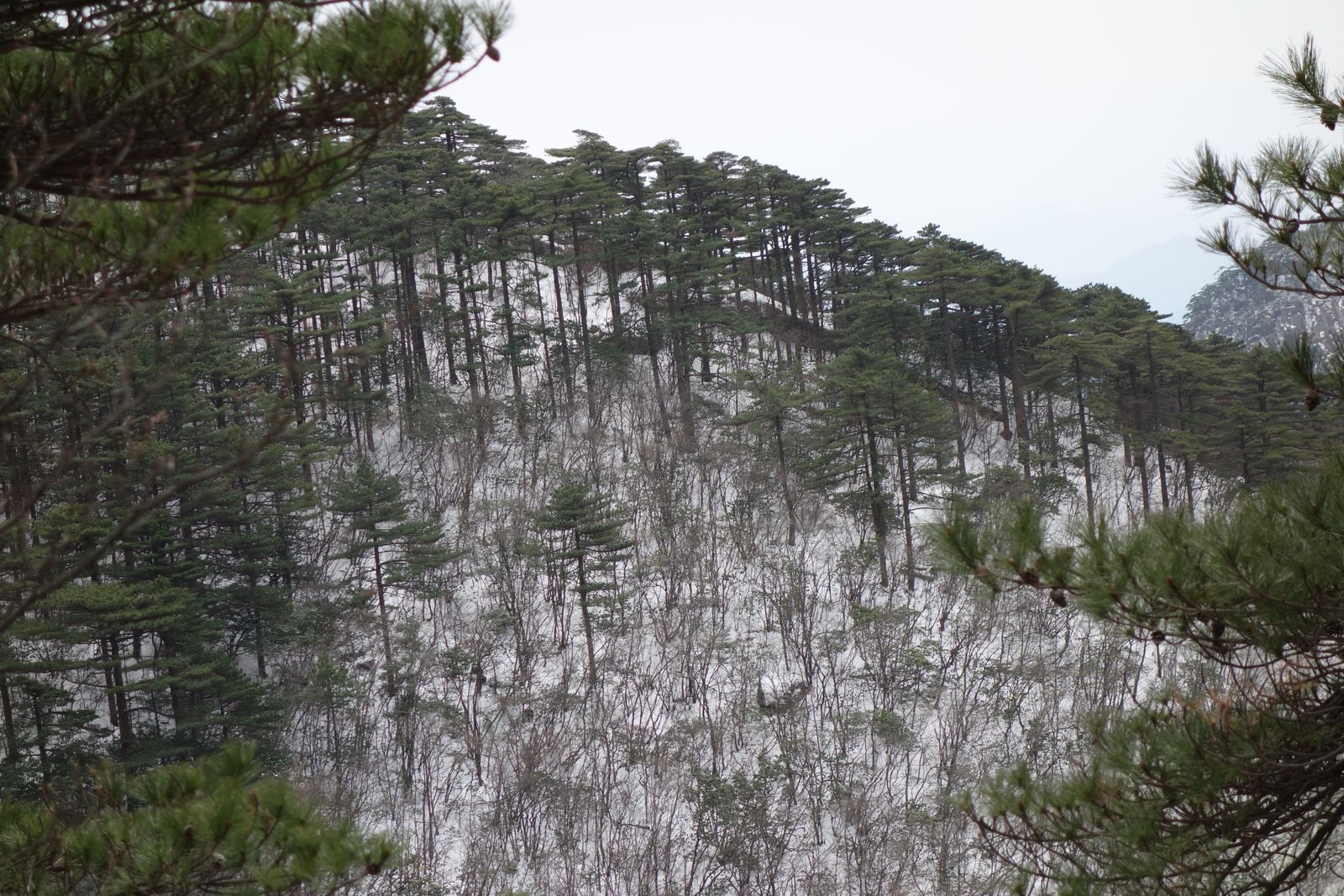
The country was South Korea, and the recovery came from more than planting trees. Stocked forest cover rose from about 35 percent in 1955 to roughly 63 percent today, while average growing stock climbed from 5.7 cubic metres of wood per hectare in 1953 to 165 cubic metres by 2020. The mechanism was a national rehabilitation drive launched in 1973, reinforced by village forestry organizations, controls on cutting and burning, and a shift from firewood to coal briquettes and other commercial fuels, as documented by a historical reconstruction of South Korea’s forest transition and current Korea Forest Service statistics.
That change fits inside one lifetime. A child born in the aftermath of the Korean War could grow up among slopes the colour of exposed clay, then reach old age beneath closed canopies of pine, larch and oak.
The transformation is sometimes reduced to a tree-planting miracle. Its harder edge is more revealing: earlier seedlings had repeatedly disappeared because people still needed fuel, land and fodder. The forests returned only when the country changed what happened around each seedling after it entered the ground.
What 35 percent forest cover looked like
When the armistice halted the Korean War in July 1953, much of South Korea’s mountain landscape had already endured decades of pressure. Timber extraction during Japanese colonial rule had thinned accessible stands, combat had damaged more land, and households short of other fuels cut branches, saplings and roots for cooking and winter heat.
The national average growing stock fell to 5.7 cubic metres per hectare. That figure did not mean every mountain was bare, but it described forests with remarkably little standing wood. Many slopes classified as forest land held scrub, scattered trees or exposed soil rather than a continuous canopy.
This distinction matters because forest area and forest condition are not the same measurement. A hillside could remain legally recorded as forest while carrying almost no usable timber, little leaf litter and too few roots to slow runoff.
South Korea’s steep terrain amplified the damage. Summer monsoon rain struck unprotected ground, opened gullies and carried soil into rivers and reservoirs. Replanting was therefore not only a timber project. It was an attempt to keep the country’s mountains from moving downhill each wet season.
The national plan that changed the pace
The decisive turn came in 1973 with the First Ten-Year Forest Rehabilitation Plan. Its initial target was to restore one million hectares by 1982, but the government reported completing about 1.08 million hectares by 1978, four years ahead of schedule. The Korea Forest Service describes the first plan as the point when rehabilitation moved from scattered efforts to a national project.
The state set targets, supplied seedlings, coordinated provincial officials and tied forestry to the New Village Movement already reorganizing rural roads, roofs, wells and communal work. The surviving record is unusually rich: in 2025, UNESCO added 9,619 documents, photographs and films from the campaign to its Memory of the World register.
The first species were chosen for difficult ground rather than ecological perfection. Pitch pine and black locust tolerated poor soil, Japanese larch grew quickly in cooler areas, and chestnut offered rural communities a crop as well as a tree. On severely eroded slopes, workers cut terraces, carried soil and stones by hand, and planted grasses alongside seedlings to slow the first rush of rain.
Village forestry associations, known as sanlim-gye, connected that national plan to local land. They operated nurseries, organized planting and guarded young stands against fire and illegal cutting. Research on the associations shows that seedling sales and forest products generated village income, sometimes helping to finance bridges, meeting halls and other shared projects.
Money moved through the system in several ways. State budgets financed nurseries and erosion-control work, while village associations earned income from seedlings and forest products. What held the campaign together was not a single pay-per-tree contract but a mix of public spending, village labor, local monitoring and strict protection.
Why the seedlings stayed alive this time
Planting had never been the only obstacle. If a household needed wood to heat an underfloor ondol stove, a young tree was stored energy. If livestock could graze freely on a hillside, seedlings were food. If burned or cleared land could become a farm plot, a plantation remained vulnerable long after officials left.
South Korea attacked that demand at the same time it increased the supply of trees. Coal briquettes called yeontan and oil-based fuels spread through homes as the economy industrialized. An FAO account of the recovery identifies the substitution of fossil fuels for fuelwood, together with urbanization and rural depopulation, as central to the change.
Migration also altered the arithmetic. Millions of people moved from rural districts to growing cities, and rising incomes made purchased fuel more attainable. The pressure on nearby hills weakened just as nurseries and planting crews were putting new trees into them.
Protection was enforced from above and within villages. Officials restricted cutting, regulated slash-and-burn farming and treated forest fires as threats to a national investment. Forestry associations watched communal land because the value of a surviving stand increasingly returned to the community.
The political setting should not be softened. The campaign unfolded under Park Chung-hee’s authoritarian government, and its targets were driven through a centralized administrative system. A recent reassessment of the restoration argues that strong coordination mattered, but so did the country’s ability to learn from repeated planting failures and intensify care after planting.
The sequence was what made the difference. Commercial fuel reduced the need to cut, enforcement protected vulnerable slopes, village organizations supplied attention, and planting accelerated only after those supports were in place.
A similar pattern appears in other landscape projects. In Bangladesh’s coastal defences, mangrove planting became more useful when combined with shelters, warnings and evacuation systems. Trees could absorb part of the physical force, but they could not replace the human system around them.
What returned, and what did not
By 2020, South Korea had about 6.3 million hectares of forest, covering 63 percent of its land. The deeper change was inside that area: growing stock had increased roughly twenty-ninefold from the 1953 low. A country once short of branches for household fuel now carried more standing wood per hectare than the OECD average reported by its forest service.
The recovery was not simply an expansion of the forest boundary. An FAO forestry account found that recorded forest area declined from 6.61 million hectares in 1970 to 6.37 million in 2010 as cities, roads and other uses expanded. What changed dramatically was the conversion of degraded or unstocked forest land into wooded slopes with denser, taller stands.
That vertical growth is easy to miss on a map that shows only green or not green. Instruments that measure canopy height reveal the difference between scrub and mature stands, a distinction explored in Mars Daily’s report on how a NASA space laser reads forest structure. South Korea’s national inventories record the same transformation through trunks and timber volume rather than colour alone.
The recovered forests also became a large carbon store. A national mapping study estimated approximately 432.2 million tonnes of forest carbon in 2020. That number is substantial, but carbon was not the original reason villagers climbed eroded slopes with seedlings. Soil, water, fuel and timber came first.
Green cover is not the same as an old, complex forest. Large areas were rebuilt with fast-growing or non-native species in even-aged stands, leaving simpler habitat than the mixed forests they replaced. Research from other regions has likewise found that isolated or simplified forest remnants can lose wildlife even while remaining visibly green.
South Korea’s pines now face diseases that the first planters did not anticipate. Pine wilt disease was first reported in Busan in 1988 and spread through red, black and Korean pine stands, according to the original plant-disease report. Fire, warming temperatures and an ageing canopy add new pressures to forests built quickly and at enormous scale.
A forest that is still being rebuilt
The work has therefore changed. The urgent task in the 1970s was to cover exposed ground before the next monsoon could strip it further. Today, foresters thin crowded stands, remove diseased pines, encourage natural regeneration and introduce a broader mix of native species.
The first campaign produced shade and roots at speed. The next phase is slower because it asks a more difficult question: how to turn a successful emergency forest into a resilient one that can withstand disease, fire and a changing climate.
Someone born in 1955 turns 71 in 2026. Over that person’s lifetime, the national average moved from sparse wooded land carrying 5.7 cubic metres of timber per hectare to a country whose mountain horizons are again layered in green.
On an April hillside, the change is no longer visible as a government target. It is felt as cooler air under the canopy, damp leaf litter beneath a boot and rain caught by roots before it reaches the valley. The oldest trees planted during the national drive are entering maturity, while younger oaks rise in the spaces opening below them.