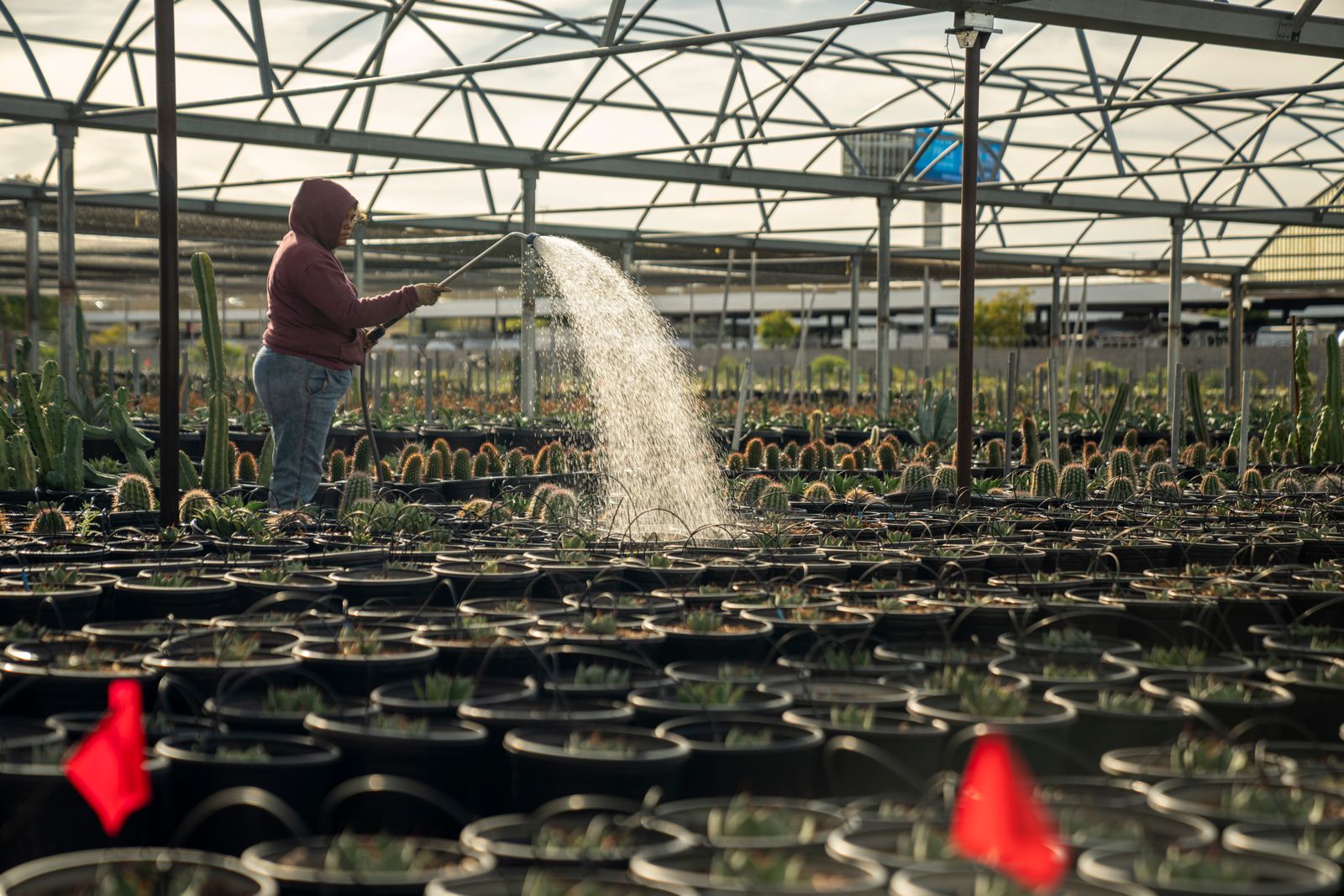
Israel farms about 60 percent desert. The country receives less than 300 millimetres of rain a year across most of its territory, has no major river system it fully controls, and yet grows enough produce to feed itself and export citrus, peppers, dates, and cut flowers to Europe in winter. Agricultural output has risen dramatically since the state was founded in 1948, while the water used to grow a kilogram of crop has fallen by roughly half. The tool that made most of that possible was invented on a farm in the Negev in the 1950s and 1960s, after an engineer named Simcha Blass noticed something strange about a hedge next to a leaking pipe.
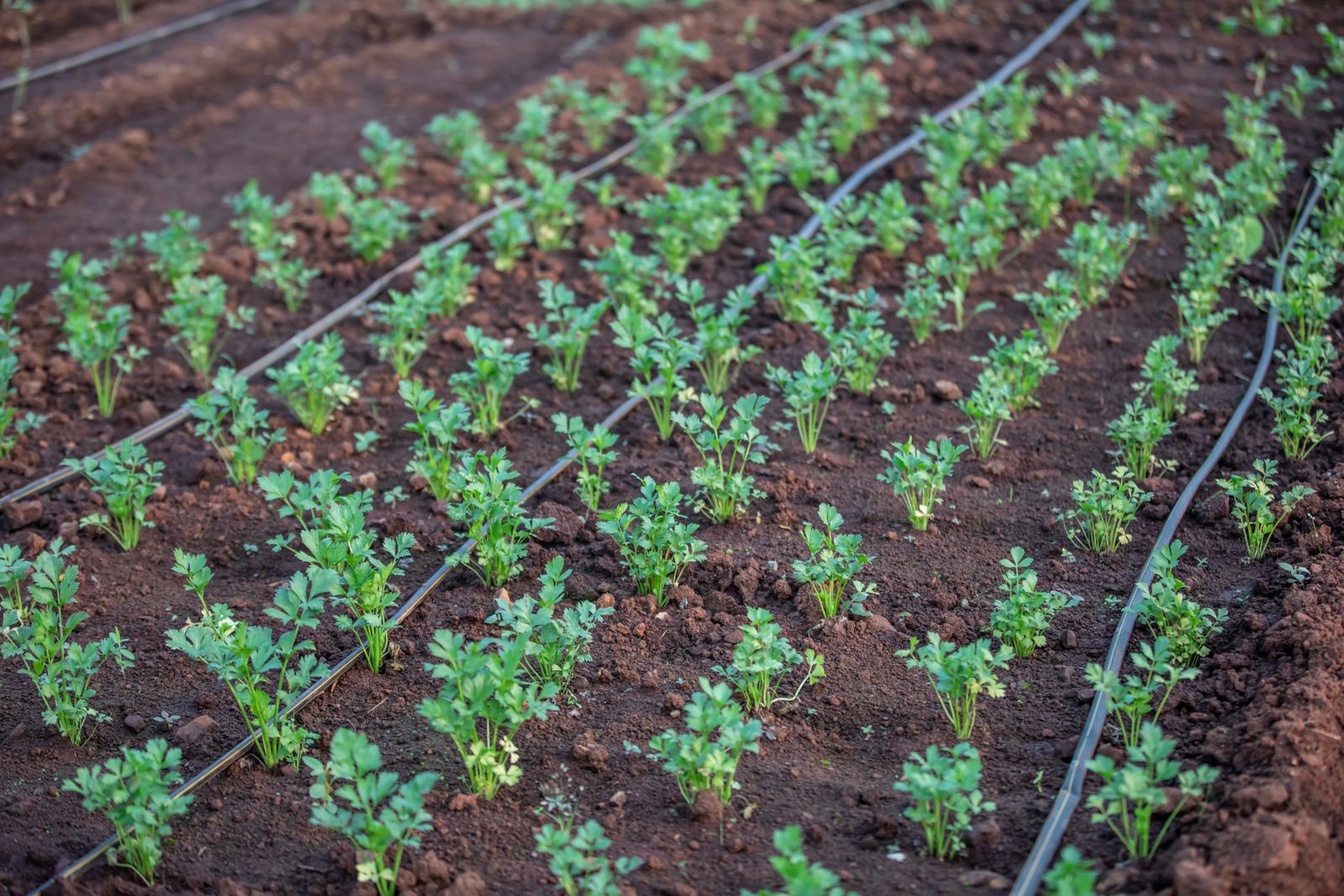
Blass, a Polish-born hydraulic engineer who had helped plan Israel’s National Water Carrier, kept returning to a single observation. One tree in a row watered by a slow, dripping tap grew visibly larger than its neighbours fed by surface flooding. The leak fed water directly to the roots, drop by drop, in quantities small enough that almost none evaporated. In 1959, working with Kibbutz Hatzerim in the Negev, Blass patented a modern drip emitter. The kibbutz founded Netafim in 1965 to manufacture it. That single idea — deliver water in measured drops to the root zone instead of flooding a field — is the mechanism behind almost every number in the title.
The leak that started it
Flood irrigation, still the dominant method across most of the world, loses a substantial portion of applied water to evaporation, runoff, and deep percolation past the root zone. Drip irrigation, when tuned correctly, delivers most applied water directly to the plant. The math compounds. Halve the loss, and you can either double the irrigated area with the same water or hold the area steady and cut consumption. Israel did both.
Blass’s original patent described a plastic emitter with a labyrinth inside — a tiny maze that slowed pressurised water down to a controlled drip at the outlet. The labyrinth prevented clogging by keeping flow turbulent. It also meant a single length of hose could feed hundreds of emitters at nearly identical rates, even on sloping ground. Before that, the physics of surface tension and pressure loss made even watering across a field almost impossible without flooding it.
What the numbers look like on the ground
The Israeli agriculture ministry has tracked the shift since the 1950s. Cultivated land has expanded substantially since 1948. Over the same period, agricultural water use has stayed almost flat in absolute terms while yields per hectare rose sharply for nearly every crop measured. Tomato yields per cubic metre of water have climbed dramatically from the 1950s to modern greenhouses. Cotton, once considered impossibly thirsty for a dry country, is now grown in the Negev at water-use ratios that would have seemed absurd sixty years ago.
A 2024 review of precision irrigation systems published in the journal Agriculture found that sensor-driven scheduling, combined with drip delivery, can raise water-use efficiency substantially compared with conventional surface methods. The Israeli case sits at the upper end of that range because drip was rolled out nationally, not as a pilot but as policy. By the early 2000s, a large majority of Israeli irrigated farmland ran on drip or micro-sprinkler systems, while the global average remains far lower.
Fertiliser through the same pipe
The second innovation, less famous but almost as consequential, was fertigation — dissolving fertiliser into irrigation water and delivering both through the same drip line. Instead of broadcasting granular fertiliser across a field and hoping rain or irrigation carried it to the roots, farmers metered nitrogen, phosphorus, and potassium straight into the water stream. Uptake efficiency for nitrogen jumped substantially under drip fertigation compared to flood systems.
Reporting from The Times of Israel traces how Netafim grew from a kibbutz workshop into the company that helped seed the Green Revolution across Asia and Africa, with Israeli-designed drip and fertigation systems now installed from Mexican greenhouses to Spanish public parks. Rivulis and Naandanjain, both descended from the same wave of Israeli irrigation engineering, now supply similar systems worldwide. The export figure matters because it flipped the domestic story into a foreign-exchange earner. A country that once imported most of its calories now sells the machinery that grows them elsewhere.
Recycled sewage on the fields
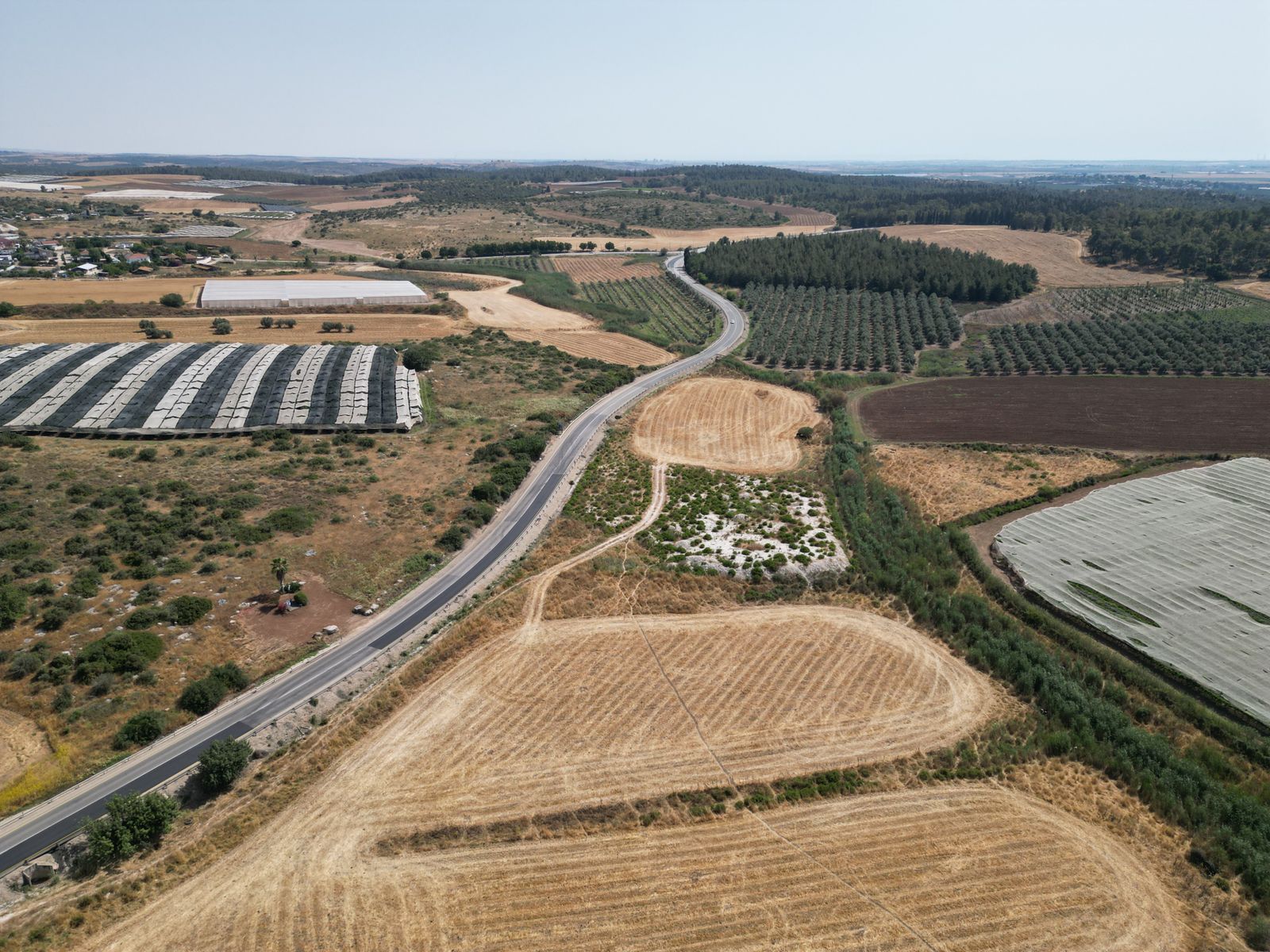
Drip alone would not have been enough. Israel also became the world leader in wastewater reuse. Roughly 85 to 90 percent of the country’s sewage is now treated and reused, mostly in agriculture — the highest share of any nation, well ahead of Spain, the next-largest reuser. The treated water travels through a separate purple-pipe network to fields in the Negev and Arava valleys, where it feeds citrus, dates, and forage crops through drip lines that would clog on untreated water.
Singapore has pursued a parallel approach, where recycled sewage meets a substantial portion of urban water demand. Israel took the same idea and pushed it further, sending the reclaimed water not into taps but into the food supply, freeing freshwater for cities.
Desalination filled the last gap
The third pillar was desalination. Between 2005 and 2015, Israel built five large reverse-osmosis plants along the Mediterranean coast — Ashkelon, Palmachim, Hadera, Sorek, and Ashdod. Sorek alone produces about 624,000 cubic metres of drinking water a day, making it one of the largest reverse-osmosis facilities in the world. Together the plants now supply roughly 70 to 80 percent of the country’s municipal drinking water, which allowed the government to redirect natural freshwater from the Sea of Galilee and the coastal aquifer toward farms and ecological flows.
An analysis in npj Clean Water, a Nature Portfolio journal, examining the effects of population growth on Israel’s demand for desalinated water projected that without continued large-scale desalination, the country would face chronic shortages as its population grows. The plants came online just in time. The cost, once prohibitive, has fallen substantially at Sorek, cheap enough that desalinated water now competes with pumped groundwater on price.
Breeding the crops to match
The plants themselves changed too. Israeli breeders at the Volcani Center and Hebrew University developed cherry-tomato varieties, drought-tolerant wheat lines, and salt-resilient date palms tuned to the country’s soils and climate. The cherry tomato, now standard in European supermarkets, was largely commercialised out of Hebrew University greenhouse research in the 1970s and 1980s, led by professors Nachum Kedar and Haim Rabinowitch. It produces higher sugar concentrations under mild water stress — a fact that turned a limitation into a marketing feature.
Research on water stress management shows that regulated deficit irrigation — deliberately watering below full crop demand at specific growth stages — can hold yields steady while cutting water use substantially. Israeli farmers were among the first to adopt the practice at scale, guided by soil-moisture sensors and evapotranspiration models pushed to their phones.
Sensors in the soil, satellites overhead
Modern Israeli farms now run on data. Buried tensiometers measure soil moisture at multiple depths. Weather stations feed evapotranspiration calculations updated every fifteen minutes. Satellite imagery from Sentinel-2 and commercial providers flags stressed plants before the human eye can see the wilt. A field manager in the Arava can wake up, check a dashboard, and adjust the drip schedule for a hundred hectares of peppers before breakfast.
Even when the technology exists, farmers often hesitate to switch because of upfront cost and unfamiliarity. Israel’s answer was subsidy and demonstration. The government partially funded early drip installations in the 1960s and 1970s and used state-owned experimental farms to prove the yields. Once neighbours saw the results, adoption ran on its own.
The exportable version
The story now travels. A farm-level economic study of drip adoption in Maharashtra found sugarcane productivity 23 percent higher under drip than under flood irrigation, with water savings of about 44 percent per hectare. Kenyan flower farms around Lake Naivasha use Israeli-designed fertigation to produce roses with a fraction of the water flood irrigation would demand. The pattern repeats wherever the upfront cost of conversion can be financed: less water in, more crop out, the same trade Blass first measured on a single tree.
What a drop in the desert bought
The full accounting looks like this. Since 1948, cultivated area has expanded substantially. Yields per hectare have climbed dramatically depending on the crop. Water use per unit of crop has fallen by about half. Agricultural exports exceed two billion dollars a year from a country smaller than New Jersey. The domestic food supply, once dependent on imports of basic vegetables, now runs a surplus in most produce categories.
None of this happened because the desert became less dry. Average rainfall in the Negev is still around 100 to 200 millimetres a year, comparable to parts of the Sahara. The Sea of Galilee has been near historic lows for much of the past two decades. The change was in the delivery — matching every drop to a specific plant, at a specific time, at a specific depth, with fertiliser dissolved into the flow and sensors watching the soil respond.
A toaster-sized instrument on Perseverance produced breathable oxygen on Mars. The engineering logic is the same one Blass followed at Hatzerim: if the resource is scarce, do not try to make more of it — deliver what you have with precision no one thought possible. Any future greenhouse on Mars will almost certainly use drip lines descended from the ones Netafim first extruded in 1965. The Negev turned out to be a rehearsal.
Blass died in 1982. The patent that started it all expired long ago. The plastic tubing is now so ordinary that a hardware store in Nairobi or Fresno stocks it beside the garden hoses. The leak on the hedge was the whole idea.