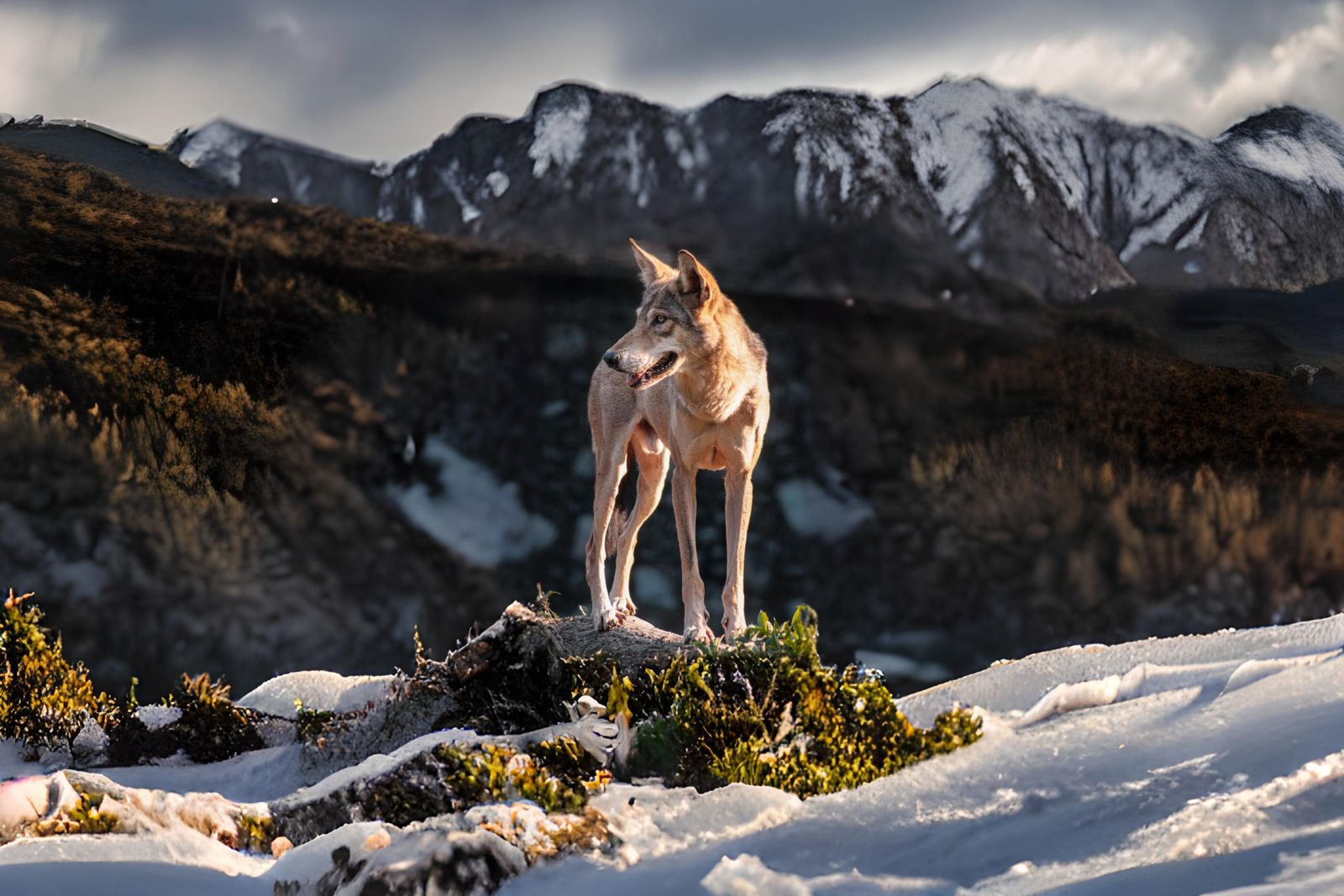
In 1995, wildlife biologists opened crates in the Lamar Valley of Yellowstone National Park and released the first gray wolves the place had held since 1926, when federal predator control shot the last two pups near Soda Butte Creek. Over the next three years the National Park Service put 41 wolves into the park — 14 from Alberta in 1995, 17 from British Columbia in 1996, and 10 from northwest Montana in 1997 — while another 35 went into central Idaho. The mechanism everyone came to argue about is called a trophic cascade: the idea that returning one top predator ripples down through elk, willow, beaver, and eventually the shape of the streams themselves.
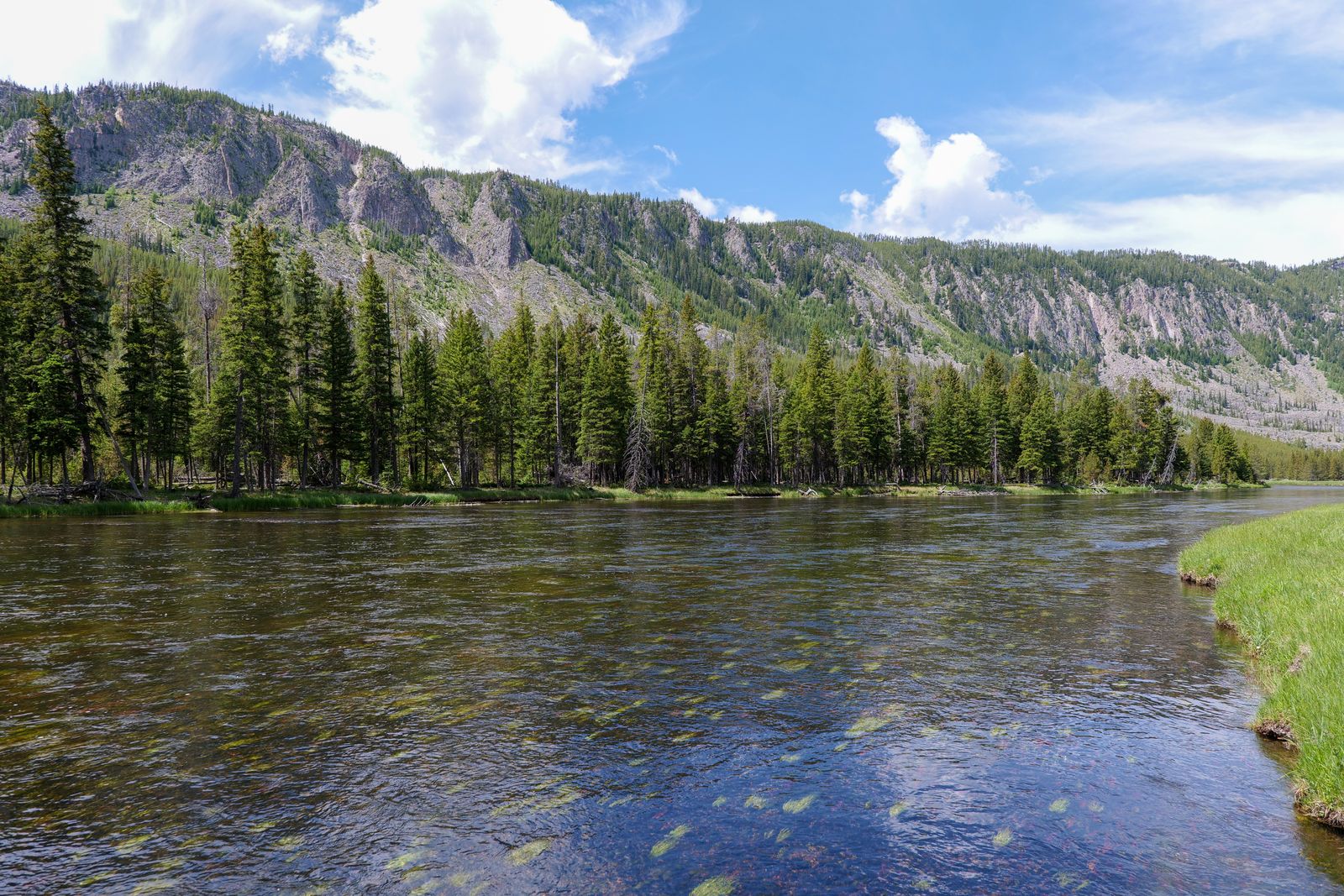
What happened next became one of the most famous stories in ecology, and thirty years on one of the most contested. Elk numbers dropped. Willow and aspen crept back along streambanks. Beavers, songbirds, foxes, and eagles were counted in greater numbers. A generation of documentaries told viewers the wolves had changed the rivers, forcing elk off cut banks, letting roots hold soil, narrowing channels into deeper, cooler pools. Beginning with a 2010 paper in Ecology and running through a bruising exchange in the journals in 2025, other scientists have been pulling that story apart.
The 41 wolves, and where they came from
The reintroduction was the culmination of nearly two decades of legal fights, federal rulemaking, and ranching-industry opposition. Congress had directed the U.S. Fish and Wildlife Service to prepare an environmental impact statement in 1992; the first eight animals came through the Roosevelt Arch on a truck on 12 January 1995, with schoolchildren watching.
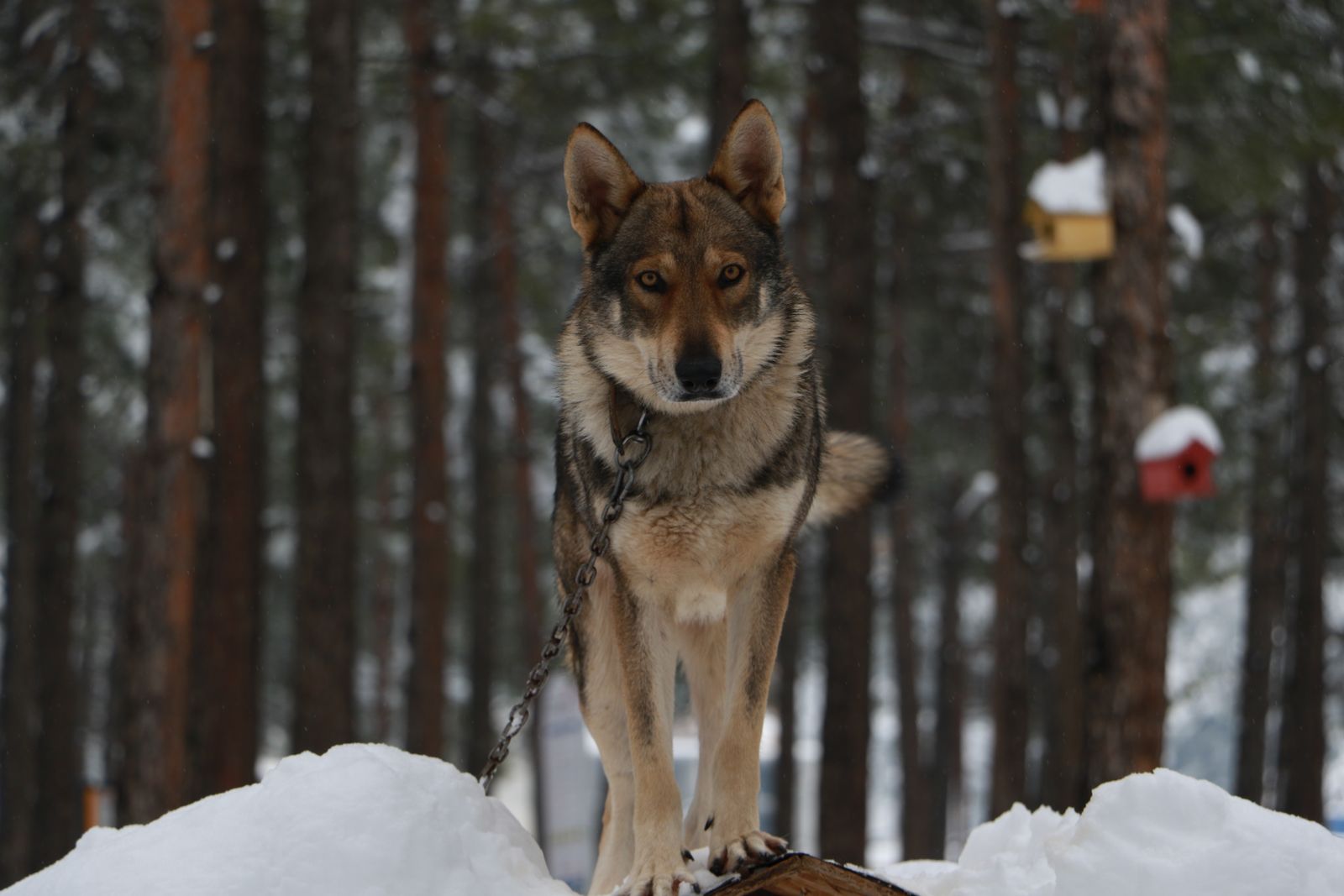
Yellowstone used a soft release. The wolves were held for about ten weeks in one-acre acclimation pens at Crystal Creek, Rose Creek, and Soda Butte Creek, fed roadkill and winterkill, before the gates were opened. Idaho used a hard release — wolves out of the crate and straight into the country. Two litters were born inside the Yellowstone pens in 1995 and two more in 1996, which nobody had planned for.
The ecological argument for bringing them back was straightforward. Without wolves, the northern Yellowstone elk herd had climbed to roughly 17,000 animals by the winter of 1995. Herds grazed river valleys year-round with no reason to move. Young willow and aspen shoots were browsed off before they could clear knee height; when ecologists surveyed aspen stands in the 1990s they could not find saplings escaping the browse line at all. Streambanks lost their root networks and slumped. Coyotes, freed from wolf competition, reached the densest population recorded anywhere in North America, which in turn suppressed rodents, foxes, and the raptors that hunted them.
The cascade story, as it was told
Within a decade of the release, biologists were reporting a chain of changes. Elk on the northern range fell sharply. Willow along some creeks grew taller than it had in living memory. Coyote density on the northern range dropped by about half in the first three years after the release, with declines approaching ninety percent inside core wolf pack territories, according to the northern-range coyote work of Robert Crabtree and Jennifer Sheldon. Beaver, which surveys had found essentially absent from the northern range in 1996, were back to roughly a dozen colonies by 2009 in the counts published by William Ripple and Robert Beschta.
The most cinematic version went further. A short film titled How Wolves Change Rivers, narrated from a George Monbiot lecture, told viewers that wolves had scared elk out of the river bottoms, that willow and cottonwood roots had stabilised the banks, and that the rivers had stopped braiding and begun running in tighter channels. Wolves, in that telling, had literally changed the shape of the water. The framing spread through classrooms, TED talks, and conservation fundraising decks faster than any of the underlying papers did.
Nate Blakeslee, whose book American Wolf traces the life of the Lamar Valley alpha female known as ’06, described the effect in similar terms in a National Geographic interview in 2017: streamside vegetation rebounding, beavers returning because willow is their main food, deeper pools forming behind their dams, coyote numbers falling, rodents and the raptors, foxes, and badgers that eat them coming back. The renaissance of a dozen species, he argued, traced back to the return of the top predator.
The correction, thirty years in
The first serious audit arrived in 2010, when Matthew Kauffman of the U.S. Geological Survey and two co-authors published a landscape-level test in Ecology and concluded that aspen were not recovering in Yellowstone, even with a large wolf population on the ground. If elk were being pushed off risky ground by fear, the aspen should have shown it first, and at landscape scale they did not.
The riparian challenge followed. Work by Kristin Marshall, Tom Hobbs, and David Cooper found that stream hydrology — incision, water tables, the height of the summer flow — constrained how far willow could recover regardless of how many elk were browsing. A 2024 study from the same Colorado State University group added a further complication: mountain lion and grizzly populations were recovering naturally on their own schedule at the same time wolves returned, and human hunting outside the park was pulling elk numbers down alongside them. Bison, meanwhile, increased, and bison browse woody plants too.
Then came the loudest exchange yet. In 2025, Luke Painter, Robert Beschta, and William Ripple of Oregon State published results in Forest Ecology and Management from 87 randomly selected, previously sampled aspen stands across northern Yellowstone. Forty-three percent of the stands contained a new cohort of small trees with trunks at least two inches across at chest height — the first documented recruitment of overstory aspen in the northern range since the 1940s. They also reported a more than 152-fold increase in the density of tall saplings between 1998 and 2021.
Daniel MacNulty of Utah State and colleagues replied in the same journal that the effect size had been inflated. Their comment argued the baseline sapling density had been miscalculated, that repeated measurements of the same stands were analysed as if independent, and that mean-based metrics let a handful of very high-density plots stand in for the landscape. Their conclusion was not that the cascade is fiction. It was that the evidence supports a trophic cascade weaker than the one claimed.
A corrigendum was issued. In their published response, Painter and his co-authors accepted the baseline error, recalculated, and maintained that the corrected figure still indicated a strong cascade relative to other published systems — while granting that results were highly variable across the landscape and that rising bison numbers complicate the picture. The core finding they defend is narrower than the headlines that carried it: young aspen are escaping the browse line in places where, for eighty years, they could not.
A parallel fight ran over willows. A Ripple-led paper reported a roughly 1,500 percent increase in willow crown volume between 2001 and 2020; a response letter in Global Ecology and Conservation, published 13 October 2025, argued the volume model had been misapplied and that the height data driving it appeared on both sides of the equation. Live Science covered the exchange under the question whether the cascade happened at all — which is roughly where the field sits.
What the wolves did do
Strip away the river-shape claim and a great deal remains. Elk on the northern range are warier and more mobile than they were in 1994; collar data show less time in open valley bottoms and more at elevation and in cover. The herd itself did not vanish. Montana Fish, Wildlife and Parks counted 5,597 elk in the northern Yellowstone herd in March 2024, down from roughly 17,000 three decades earlier but well above the low point that circulated in the popular retellings.
Coyote densities on the northern range remain far below their pre-wolf peak. Beaver colonies have expanded, though the reasons are entangled with willow growth, drought cycles, and beaver reintroductions the U.S. Forest Service carried out on the adjacent Gallatin National Forest, whose animals moved into the park on their own.
Scavengers gained the most unambiguously. Wolf kills spread carrion across the winter months, when the alternative was elk that starved in late March and froze solid before ravens, magpies, and bald eagles could open them. Grizzly bears, out of their dens in spring, now routinely displace wolves from carcasses — protein that matters in years when the whitebark pine seed crop fails.
The wolves themselves have thrived, contracted, and thrived again. The Yellowstone Wolf, Cougar, and Elk Project counted 108 wolves in nine packs at the end of 2024. At the end of 2025 the count came in at 84 wolves in eight packs, after the Wapiti pack lost all eleven of its pups. Across three decades the total has moved between roughly 80 and 175, which is the number worth carrying around rather than any single winter’s tally.
The politics that killed ’06
The wolf that came to embody the project was a female born in the Lamar River Valley in April 2006, known by her research collar number, 832F, and by the shorthand ’06 for her birth year. She weighed about a hundred pounds, unusually large for a female, and took down elk single-handedly in a species where a kill normally requires a pack. She led the Lamar Canyon pack through the valley most visited by tourists and raised three litters there.
On 6 December 2012 she was shot roughly fifteen miles outside the park boundary in Wyoming, the eighth and final wolf taken under that state’s inaugural quota since reintroduction. Her packmate 754M had been killed a few weeks earlier. Wyoming law bars officials from naming a person who shoots a wolf; Blakeslee tracked the hunter down anyway and gave him a pseudonym in the book. The killing produced an international outcry comparable to the killing of Cecil the lion in Zimbabwe three years later.
It also crystallised the fight that has surrounded the project since day one: federal biologists and eco-tourism operators on one side, state legislatures and ranching interests on the other, arguing over who gets to decide what public land is for. Wolves have since spread into Oregon, Washington, and California, and the argument has travelled with them.
Colorado, and reading a landscape three decades on
Colorado voters approved Proposition 114 on 3 November 2020 by 50.9 percent to 49.1 percent, directing the state to put wolves west of the Continental Divide by the end of 2023. Colorado Parks and Wildlife released the first five animals, sourced from Oregon, in Grand County on 18 December 2023, reaching ten by year’s end; fifteen more, from the central interior of British Columbia, followed in January 2025.
Ranchers, hunters, and conservationists there have been reading Yellowstone as a case study, and reading it very differently depending on which literature they trust. A Summit Daily report laid out what state biologists actually expect. Brenna Cassidy, the agency’s wolf monitoring and data coordinator, described trophic cascades as one of the most hotly debated topics in wolf ecology and very hard to detect even in a bounded system like Yellowstone, let alone statewide. Hobbs, quoted in the same piece, put the Yellowstone result plainly: “the ecosystem has not responded dramatically to the restored food web.” He also noted that this argues for not losing apex predators in the first place.
Colorado’s starting conditions differ in a way that matters. The state did not arrive at reintroduction with three decades of elk damage to riparian vegetation waiting to be undone, which is most of what Yellowstone’s cascade was measuring. If wolves are sold politically as a landscape-scale restoration tool, the science has to be precise about what they can and cannot do. Overselling the river-changing claim invites backlash when the rivers in a given watershed do not visibly change. Underselling the coyote-and-carrion effects misses what the animals are actually doing.
Yellowstone’s wolves were released into a system already in motion. Winters got milder. Drought years stacked up. Grizzly and cougar numbers rose on their own. Hunting quotas outside the park changed year to year, and bison increased. Mars Daily has looked at how Bangladesh’s mangrove planting cut cyclone deaths not because the trees alone stopped the water but because they worked alongside shelters and village warning systems. Single-cause narratives are satisfying. Landscapes rarely oblige them.
What the 41 wolves did, without argument, is return the animal to a place it had been absent from for nearly seventy years. What they did to the rivers is a smaller, patchier, more contested claim than the viral videos suggested. The corrections did not overturn the recovery story; they tightened it. Young aspen are escaping the browse line in more places than they did in 1994. Willow is taller along some creeks and not others. Beavers are back on streams that had none. Coyotes are fewer. Eagles are more numerous at kill sites in February.
Whether that adds up to a rewritten river is a question ecologists are now answering one watershed at a time. In the Lamar Valley, on a clear morning in late winter, you can still see descendants of the 1995 releases moving in single file across the snow, following the same drainages ’06 used to hunt. The elk on the far slope lift their heads before the wolves are visible to a human observer. That much of the story, at least, has held.