
The new frontier of exploration.
Mars Daily Editorial Team
Editorial Team

Mars Daily Editorial Team

Editorial Team

The Mars Daily Editorial Team produces Mars Daily's coverage of Mars exploration and science. We report on rovers and orbiters, sample-return and human-Mars planning, and the geology, atmosphere and astrobiology of the Red Planet. Articles reflect our team's collective editorial process, source verification, drafting, technical review, and editing, rather than a single writer's work. Mars Daily takes editorial responsibility for content under this byline. For more on how we work, see our editorial policy.

Legacy Reports

Astronomers Monitor Asteroid To Pass Near Mars

Pasadena CA (SPX) Dec 24, 2007 - Astronomers funded by NASA are monitoring the trajectory of an asteroid estimated to be 50 meters (164 feet) wide that is expected to cross Mars' orbital path early next year. Observations provided by the astronomers and analyzed by NASA's Near-Earth Object Office at the Jet Propulsion Laboratory in Pasadena, Calif., indicate the object may pass within 30,000 miles of Mars at about 6 a.m. EST (3 a.m. PST) on Jan. 30, 2008.


Legacy Reports

Sulfur Dioxide May Have Helped Maintain A Warm Early Mars

Cambridge, MA (SPX) Dec 24, 2007 - Harvard University Sulfur dioxide (SO2) may have played a key role in the climate and geochemistry of early Mars, geoscientists at Harvard University and the Massachusetts Institute of Technology (MIT) suggest in the Dec. 21 issue of the journal Science. Their hypothesis may resolve longstanding questions about evidence that the climate of the Red Planet was once much warmer than it is today.

Legacy Reports

Global Map Reveals Mineral Distribution On Mars

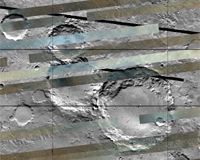
Laurel, MD (SPX) Dec 24, 2007 - Scientists are getting a clearer image of mineral distribution on the surface of Mars, thanks to the Compact Reconnaissance Imaging Spectrometer for Mars (CRISM), one of six science instruments on NASA's Mars Reconnaissance Orbiter, currently circling the planet. More than 200 just-released spectral maps reveal the distribution of various minerals on the surface of Mars -- the first installment of the Global Mars Map, which will eventually cover the entire planet.

Legacy Reports

How Mars Could Have Been Warm And Wet But Limestone-Free

Cambridge MA (SPX) Dec 24, 2007 - Planetary scientists have puzzled for years over an apparent contradiction on Mars. Abundant evidence points to an early warm, wet climate on the red planet, but there's no sign of the widespread carbonate rocks, such as limestone, that should have formed in such a climate. Now, a detailed analysis in the Dec. 21 issue of Science by MIT's Maria T. Zuber and Itay Halevy and Daniel P. Schrag of Harvard University provides a possible answer to the mystery.

Legacy Reports

In Search For Water On Mars Via Clues From Antarctica

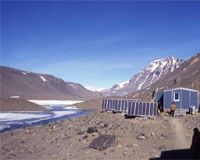
Columbus OH (SPX) Dec 24, 2007 - Scientists have gathered more evidence that suggests flowing water on Mars -- by comparing images of the red planet to an otherworldly landscape on Earth. In recent years, scientists have examined images of several sites on Mars where water appears to have flowed to the surface and left behind a trail of sediment. Those sites closely resemble places where water flows today in the McMurdo Dry Valleys in Antarctica, the new study has found.

Legacy Reports

NASA Delays Mars Scout Mission To 2013

Washington DC (SPX) Dec 24, 2007 - NASA has decided that the next mission in the Mars Scout program, originally planned for launch in 2011, is now targeted for launch in 2013. The schedule slip is because of an organizational conflict of interest that was discovered in one of the mission proposal team's Phase A Concept Study. This was the shortest delay for the mission possible because opportunities to send spacecraft to Mars occur only once every 26 months.

Legacy Reports

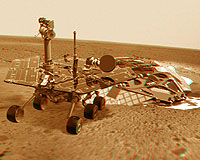
Spirit Update: Soon To Find Winter Resting Place

Pasadena CA (SPX) Dec 20, 2007 - To make the most of waning sunlight during the approach of Martian winter, Spirit's handlers have returned to Mars time. This means their working hours coincide with the Martian day, as they did for the first three months after the rover landed on the red planet. Because a Martian day is about 40 minutes longer than an Earth day, Mars time can coincide with all hours of the day and night on Earth.

Legacy Reports

Rowan University Professor Seeing Red (Planet)

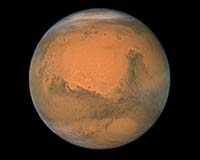
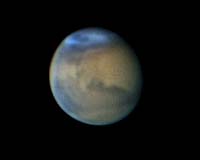
Glassboro NJ (SPX) Dec 18, 2007 - 'Tis the season for Rowan University physics and astronomy associate professor David Klassen. Mars season that is. December 24 marks the Mars opposition-the point at which Earth and Mars pass each other in their orbits. Visions of the planet will be dancing in Klassen's telescope in the coming days because Mars appears three to five times bigger in the sky during the opposition-quite a seasonal treat for observers of the planet.

Legacy Reports

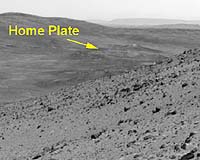
Spirit Scouts Home Plate For Safe Haven

Pasadena CA (JPL) Dec 17, 2007 - Spirit has arrived at the north edge of Home Plate. The rover will spend the next few Martian days, or sols, scouting the edge of Home Plate and acquiring images of the slopes to determine the best site for Winter Haven 3, where Spirit will try to survive another season of minimal sunlight. Once the team selects a site, Spirit will drive down the north-facing edge of Home Plate and maneuver into position to achieve the highest northerly tilt possible.

Legacy Reports

Building Blocks Of Life Formed On Mars

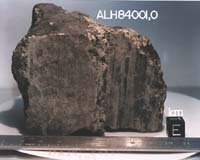
Washington DC (SPX) Dec 12, 2007 - Organic compounds contain carbon and hydrogen and form the building blocks of all life on Earth. By analyzing organic material and minerals in the Martian meteorite Allan Hills 84001, scientists at the Carnegie Institution's Geophysical Laboratory have shown for the first time that building blocks of life formed on Mars early in its history. Previously, scientists have thought that organic material in ALH 84001 was brought to Mars by meteorite impacts or more speculatively originated from ancient Martian microbes.