The new frontier of exploration.
Mars Daily Editorial Team
Editorial Team

Mars Daily Editorial Team

Editorial Team

The Mars Daily Editorial Team produces Mars Daily's coverage of Mars exploration and science. We report on rovers and orbiters, sample-return and human-Mars planning, and the geology, atmosphere and astrobiology of the Red Planet. Articles reflect our team's collective editorial process, source verification, drafting, technical review, and editing, rather than a single writer's work. Mars Daily takes editorial responsibility for content under this byline. For more on how we work, see our editorial policy.

Mars Daily

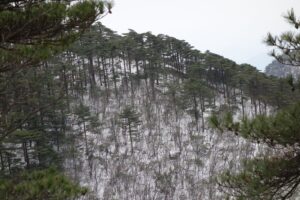
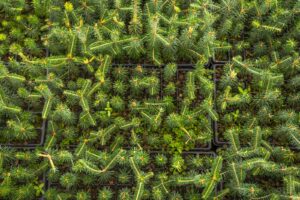
Bristlecone pines growing on the White Mountains of eastern California include individuals that germinated more than 4,800 years ago, meaning trees standing on that ridge today were already centuries old when workers at Giza set the first casing stones of the Great Pyramid

Methuselah, a Great Basin bristlecone pine in California's White Mountains, germinated around 2833 BCE — meaning it was already nearly 300 years old when the Great Pyramid of Giza was completed. It is still alive, still adding rings, still holding needles it grew in the 1980s.

Mars Daily

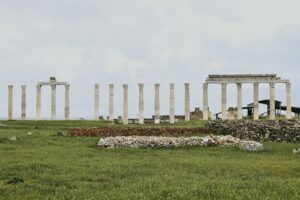
In 1971, a global dust storm on Mars swallowed the entire planet for weeks, hiding every surface feature from Mariner 9 as it arrived in orbit, and forcing NASA to wait months before the first detailed maps could even begin

When Mariner 9 became the first spacecraft to orbit another planet in November 1971, a global dust storm had already erased every surface feature on Mars. NASA waited four months for the sky to clear — and the mission that followed rewrote everything we thought we knew about the Red Planet.

Mars Daily

Every year, roughly 27.7 million tons of Saharan dust cross the Atlantic on trade winds and settle over the Amazon, carrying the phosphorus that keeps the rainforest soil from collapsing into something closer to sand

Every year, NASA satellites track around 27.7 million tons of Saharan dust drifting across the Atlantic to the Amazon, carrying roughly 22,000 tons of phosphorus — almost exactly what the rainforest's rivers wash away. Most of it comes from a single dry lake bed in Chad.

Mars Daily

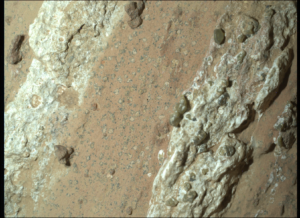
In December 2025, NASA’s Perseverance rover completed the first drives on another planet whose routes were generated by artificial intelligence, travelling 210 and 246 metres along Jezero Crater’s rocky rim after engineers verified the plans on Earth.

The rover's new route-planning partner isn't autonomous—it's a collaborative tool that lets engineers move faster while maintaining tight control, marking a shift in how humans and machines share the work of exploring Mars.