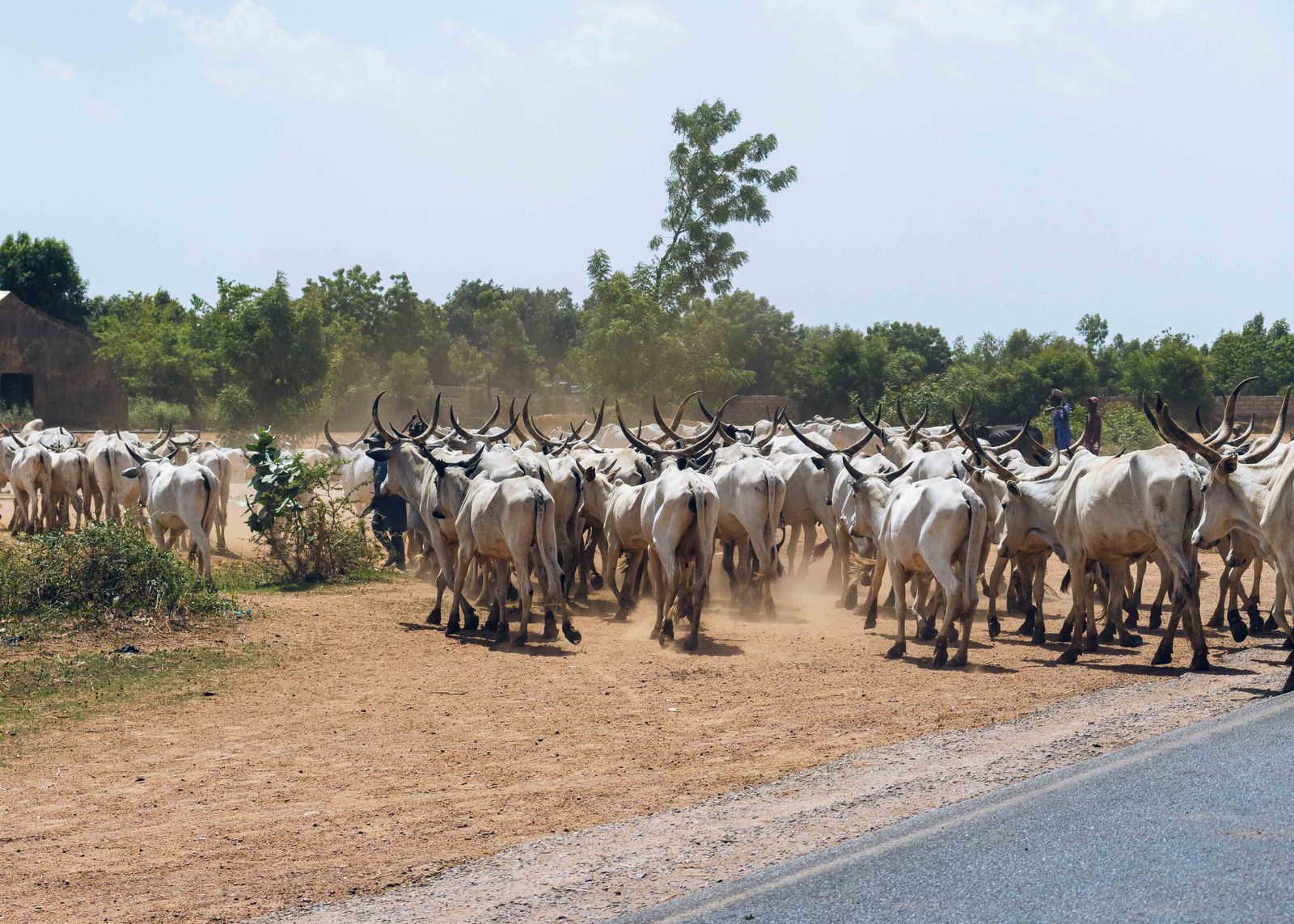
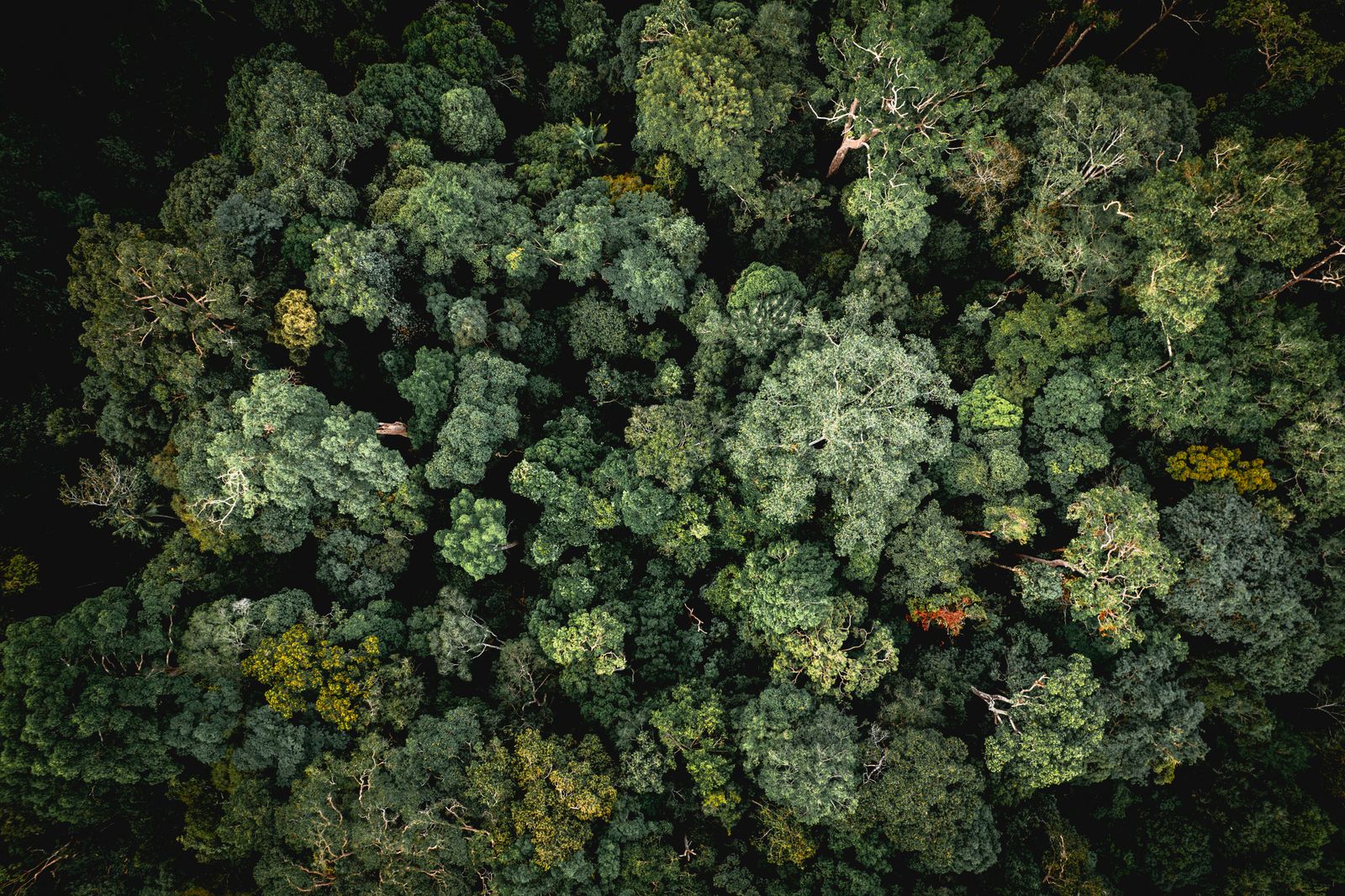
Every summer, a river of dust rises off the west coast of Africa, climbs into the trade winds, and drifts west across the Atlantic Ocean for a week to ten days before falling on the canopy of the Amazon. NASA’s CALIPSO satellite measurements between 2007 and 2013 put the average at 27.7 million tons of dust reaching the rainforest each year, carrying about 22,000 tons of phosphorus. That is almost exactly the amount the Amazon loses each year as its rivers flush nutrients toward the sea.
The rainforest, in other words, is fed by a desert 5,000 kilometres away.
Take the dust away and the math of Amazonian soil stops working. Around 90 percent of the forest floor is already low in phosphorus. Rain sluices nitrogen and other nutrients into the Amazon basin’s tributaries every year. Without a resupply from somewhere, the soil would slowly bleed out over decades or centuries, drifting closer to the chemistry of sand.
A desert feeding a rainforest
The idea sounds like a stretch until you look at the satellite loops. Every year between roughly late spring and early autumn, orange-brown plumes lift off the Sahara, cross the Cape Verde islands, and stretch in ribbons thousands of kilometres wide over open ocean. A large plume tracked in July 2026 followed exactly this route, drifting from North Africa toward the Caribbean and the Gulf Coast on the easterly trade winds.
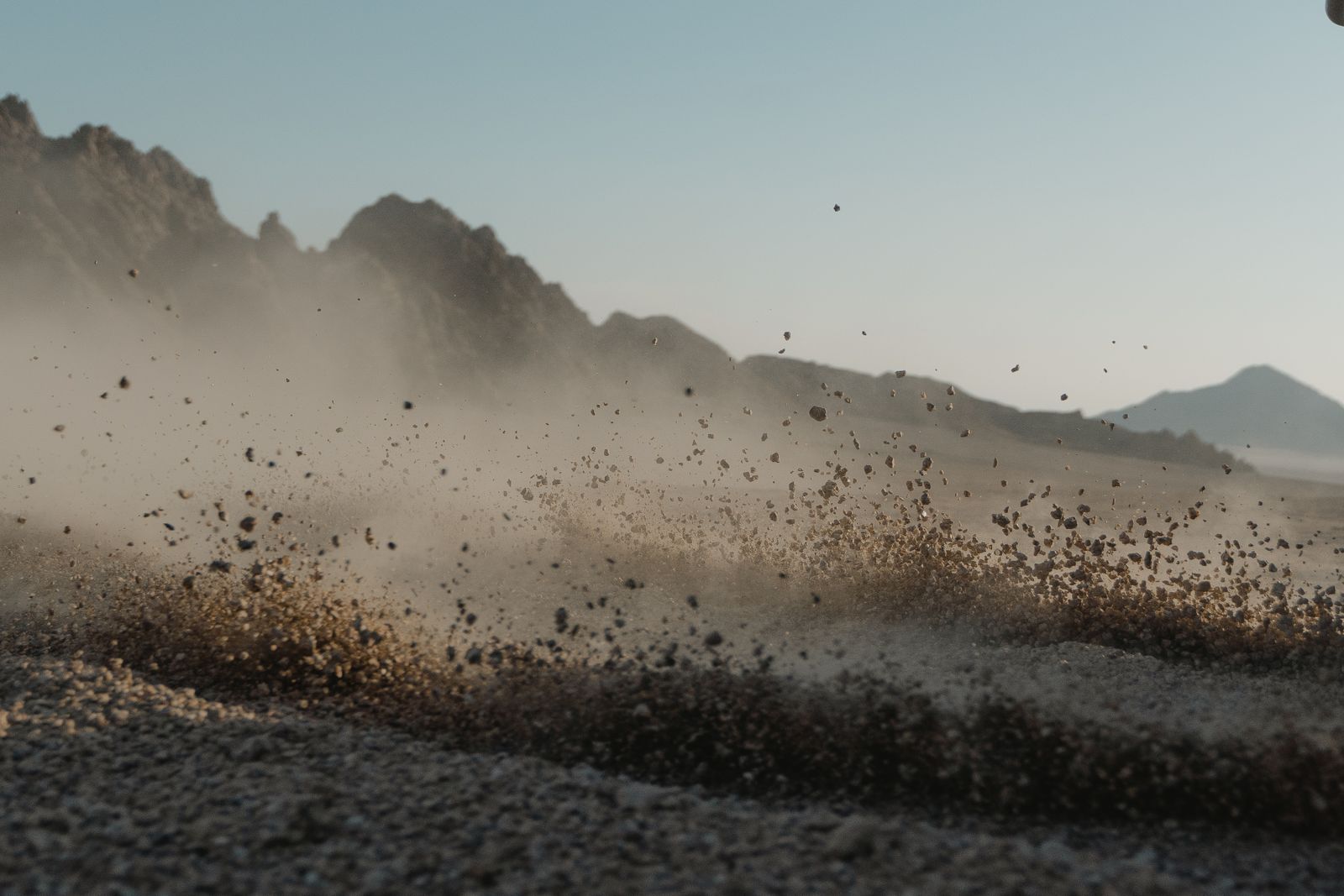
Most of the dust starts as fine sand and mineral particles kicked up by strong winds over the desert interior. Once lofted thousands of feet into the atmosphere, it enters what meteorologists call the Saharan Air Layer, a dry, dusty mass that rides above the marine boundary layer. From there it takes about a week to ten days to reach the Americas.
The dust that lands on the Amazon is not random Sahara sand. The most nutritionally important stuff comes from one very specific place.
The Bodélé Depression
In northern Chad, tucked between the Tibesti and Ennedi mountains, lies the dry bed of a vast ancient lake called Mega-Chad. What is left today is the Bodélé Depression, a flat basin of pale sediment that acts as the single most productive dust source on Earth. On many days, satellites see a plume rising from Bodélé alone that stretches for hundreds of kilometres downwind.
The reason it matters for the Amazon is what the lake left behind. When Mega-Chad dried out, it left thick layers of diatomite: sediment made mostly of the silica skeletons of microscopic algae that once lived in the water. Those dead microorganisms are unusually rich in phosphorus. Scrape wind across that lake bed and you are essentially aerosolising an ancient biological deposit.
The NASA-led team led by Hongbin Yu at the Earth System Science Interdisciplinary Center found that only about 0.08 percent of Saharan dust reaching the Amazon is phosphorus. A tiny percentage. But multiplied across 27.7 million tons, it is enough to replace what the rivers carry away.
Why the Amazon needs the help
To an outsider, it seems strange that the world’s most exuberant forest sits on some of its poorest soil. The trick is that almost all the nutrients in the Amazon are locked inside the living plants and the thin layer of decomposing litter on the ground, not in the mineral soil beneath. When a leaf falls, fungi and roots grab its nutrients within days. Clear the forest and you break that loop; the soil underneath is often too phosphorus-poor to sustain crops for more than a few seasons.
Phosphorus is the bottleneck. Plants build DNA, cell membranes and the ATP that powers photosynthesis using phosphorus atoms. Without a steady supply, growth slows and the forest cannot keep pace with what it loses to the rivers.
The dust arrives at just the right rate. The team’s estimate of 22,000 tons of phosphorus per year from Saharan dust matches, within the error bars, the amount hydrologists calculate the Amazon loses to runoff. It is a nutrient budget that balances across an ocean.
What happens over the Atlantic
The dust is not chemically inert during its transatlantic ride. Sunlight and trace acids in the atmosphere work on the mineral grains for days on end, altering their surfaces. New work published in Frontiers in Marine Science and reported by Science News found that reactive iron in Saharan dust drops from about 18 percent close to Africa to around 9 percent by the time cores are taken from the western Atlantic seafloor. The missing iron has been altered mid-flight, becoming more soluble, more available to plankton once it hits the water.
Timothy Lyons, a biogeochemist at the University of California, Riverside, told Science News that photochemical transformations tend to make the iron more soluble as it travels. That matters for the ocean too. Dust plumes settling on the open Atlantic seed phytoplankton blooms that draw down carbon dioxide and feed everything from copepods to skipjack tuna. A recent study cited in the same reporting suggested skipjack are drawn to areas where Saharan dust has recently fallen.
The same photochemistry that primes iron for plankton is probably at work on phosphorus-bearing minerals too, softening them just enough that Amazonian trees and fungi can pull the phosphorus out once the dust settles onto leaves and forest floor.
The trip does not end at the Amazon
The plume that fertilises the rainforest also brushes the Caribbean, Florida and the Gulf Coast, where residents mostly notice it as haze. As Orlando forecasters described in July 2026, a Saharan dust arrival tends to bring milky skies, more vivid sunsets, and hotter, drier weather. It also suppresses hurricanes: the dry Saharan Air Layer chokes off the moist convection tropical storms need to spin up.
On the Gulf Coast, meteorologists tracking the same plume noted the impact on air quality and rainfall patterns, with fine particulates degrading breathing conditions for sensitive groups. On Bermuda and the Bahamas, the same iron-rich mineral load slowly turns soils red over decades. In the ocean between, it drops into a nutrient-poor blue that lights up green under the right satellite filter after each big fall.
Some of the same dust chemistry appears to feed massive blooms of sargassum, the floating brown seaweed that has choked Caribbean beaches in recent years. Research reported by ScienceDaily has been closing in on the nutrient pathways that fuel those blooms, with atmospheric dust deposition as one of the ingredients under investigation.
How variable is it?
The 27.7 million tons per year figure is an average across seven years of CALIPSO data. Some years the transfer is dramatically larger, others noticeably smaller. Yu’s group found the year-to-year swing was enormous, and they suspect rainfall in the Sahel, the semi-arid band immediately south of the Sahara, plays a role. Wetter Sahel years mean more vegetation, more damp soil, and less loose material available for the wind. Drier Sahel years feed the plumes.
That variability matters, because it links the Amazon’s phosphorus budget to African climate. A long-term drying of the Sahel could, in principle, pump more dust across the Atlantic. A greening trend could starve the rainforest of the fertiliser it has depended on for millennia. Neither trajectory is well pinned down yet.
Weather forecasters watching the 2026 season have noted that the plumes have been arriving on their usual schedule, feeding the same annual rhythm that shapes summer skies across the southern United States.
A Martian side note
The Amazon story is a reminder that a planet’s biosphere can hinge on atmospheric transport of a single element. Mars, by contrast, is a world where the atmosphere has all but given up on that job. As covered in a recent Mars Daily piece on how Mars lost its atmosphere to the solar wind, the Red Planet still has enormous dust storms, some of them planet-encircling, but no rain to wash minerals into rivers and no biosphere to receive them. Its dust cycles carry heat, static charge and abrasive grit, not phosphorus for a forest.
Rovers like Perseverance now trundle through Jezero Crater, an ancient lakebed that once, briefly, might have run something like Bodélé did before it dried. A recent Mars Daily report on Perseverance’s first AI-planned drives along Jezero’s rim captured a rover picking its way across sediment that, in another climate, might have become a Martian version of the Chadian dust factory. Instead, on Mars, dust just settles.
A single connected system
The Amazon-Sahara link, first proposed decades ago and finally quantified by satellite in the 2010s, is one of the cleanest examples in Earth science of what atmospheric scientists call teleconnection. A dead lake bed in Chad, drying in the wind, keeps trees alive in Brazil. Ocean chemistry in the mid-Atlantic depends on what happens to iron grains during a nine-day flight over saltwater. Dry seasons in the Sahel show up months later in the phosphorus balance of Amazonian soil.
According to Mongabay’s coverage of the research, Yu emphasized the interconnected nature of global environmental systems, noting how dust from the Sahel appears months later in Amazonian soil phosphorus levels. The numbers make that literal. Take a scoop of soil from the Bodélé Depression, weigh it, and roughly one part in 1,250 of what you are holding will end up feeding a tree somewhere between the Andes and the Atlantic coast of Brazil, after a journey it took across an ocean on winds that have been blowing more or less the same way since long before humans were around to notice.
Somewhere over the tropical Atlantic right now, a plume the size of a small country is drifting west at roughly the speed of a bicycle, dropping its cargo grain by grain into a rainforest that will keep breathing because of it.