A day on Mars lasts approximately 24 hours and 39 minutes — a coincidence so uncanny that when NASA landed rovers on the surface, mission planners at the Jet Propulsion Laboratory in Pasadena decided the humans back on Earth should live on Martian time too. The plan lasted about three months before it broke the people running it.
The unit even has its own name. A Martian solar day is called a sol, and it is slightly longer than an Earth day. That sliver of extra time — 39 minutes and change — sounds negligible. Spread across a week, it becomes almost five hours of drift. Spread across a mission, it becomes a slow-motion collision between human biology and the rotation of another planet.

The 39-minute problem
Mars rotates on its axis a touch more slowly than Earth. The planet’s slightly longer solar day and 687-Earth-day year are the reason Martian calendars have to be tracked separately, with each Mars Year numbered from a reference point in the mid-1950s.
For a rover on the surface, the sol is the natural unit of work. Solar panels charge during Martian daylight. Cameras need Martian sun angles. Wind and dust behave on Martian rhythms. If you are commanding a robot that lives by the Sun over Gale Crater or Jezero, you plan by sols, not by hours in California.
The catch is that the humans doing the planning live in Pasadena.
Why JPL tried to move to Mars
Rover operations run on a tight daily cycle. Overnight on Mars, the rover sends down the day’s data. Engineers and scientists on Earth have to look at that data, decide what the rover should do next, write and test the commands, and send them back up before the Martian morning. Miss the window, and you lose a sol.
To stay in sync with the robot, teams at JPL adopted the Mars clock for the early months of missions like Spirit, Opportunity, Phoenix, and Curiosity. Watches were re-engineered to tick 2.7% slower. Meetings were scheduled in local mean solar time at the rover’s landing site. Shifts started 40 minutes later every day. The team, in effect, boarded a very slow time machine that only ran in one direction.
That worked for the robot. It was rough on the people. Reporting on the Curiosity mission, NBC News described the team coming off Mars time after roughly 90 sols, the standard window for the most intensive commissioning phase before operations shift to a more Earth-friendly schedule.
Waking up in the middle of the Los Angeles night
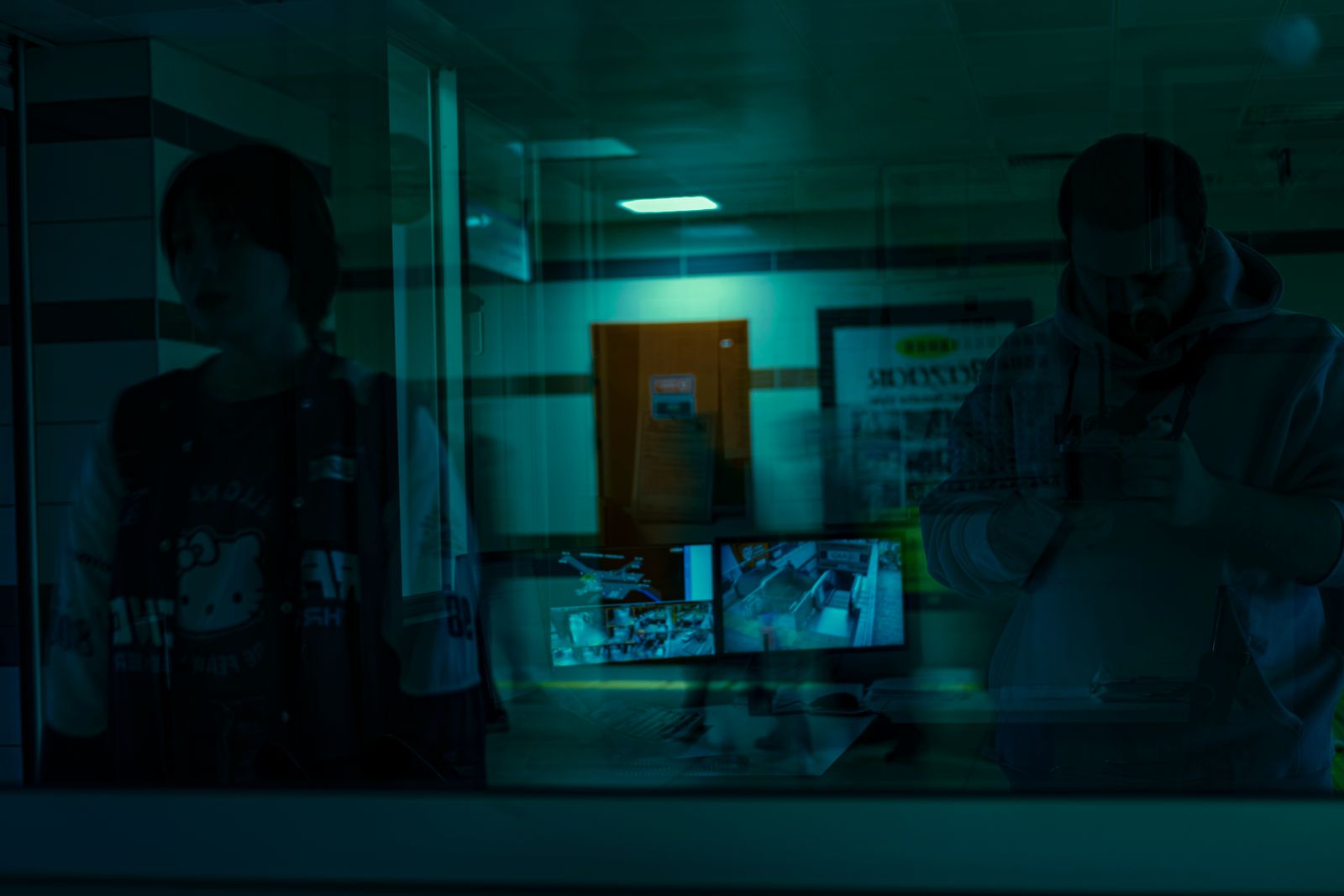
The math is unforgiving. Start your Monday morning shift at 8 a.m. Pacific. Tuesday you show up at 8:40. By Friday you are clocking in at 10:40. Two weeks in, your “morning” starts after dinner. A month in, you are driving to JPL in the dead middle of the Los Angeles night, blackout curtains taped over the bedroom windows at home, the freeway empty, the moon in the wrong place.
Every 36 or 37 Earth days, the schedule laps itself and the rover team is briefly working normal hours again — before sliding off once more.
Team members have described the disorientation in blunt terms. Missing children’s bedtimes. Missing them entirely. Eating cereal at 3 a.m. because the body cannot decide what meal it is. Trying to sleep while a neighbour mows a lawn. Ordering a coffee at a drive-through at an hour when the barista is clearly having a worse morning than you are.

What 40 extra minutes does to a body
Human circadian rhythms are not free-running. They anchor to sunlight, meals, temperature, and social cues, and they are surprisingly rigid. Left in a cave with no time signals, most people drift to a natural cycle a little longer than 24 hours — but not, it turns out, long enough to make Mars comfortable.
Sleep researchers who studied JPL personnel on Mars time during the Phoenix mission found that a meaningful fraction could not adapt at all. Some managed with careful light therapy, blue-tinted lamps timed to the Martian dawn, and rigid sleep discipline. Others racked up sleep deficits severe enough to affect reaction times. People are famously bad at judging their own performance under fatigue — the tired brain is the last one you want auditing itself.
On Phoenix, the effect was compounded by the lander’s location near the Martian arctic. Phoenix worked through a northern polar summer, its solar panels catching low-angle sunlight that barely set during the long Martian days. The lander did not need to sleep. The humans did.
The tricks teams used to hang on
The workarounds were low-tech and slightly absurd. Watches were built to tick on Mars time, with hands geared to complete a full revolution over 24 hours and 39 minutes. Cubicles at JPL were fitted with red-tinted lighting to blunt the wake-up signal from ordinary office fluorescents. Some engineers wore ski goggles home so the L.A. sun could not reset their brains during the drive.
Families adapted, too. Kids drew calendars marking which parent was on Mars time and which meals would be shared in reverse. Spouses learned to whisper. Dogs, reportedly, adapted faster than anyone.
Behind all of it was a simple engineering calculation: for the first few weeks of a rover mission, when every command matters and the vehicle’s health is still uncertain, the cost of losing a sol is higher than the cost of exhausting the team. Once the rover proves it can survive, the calculus flips. The humans go back to Earth time, and the ground team accepts that some sols will be planned a day late, in batches, on a schedule shaped around Pasadena breakfast rather than Martian noon.
Two clocks, one mission
The 24-hour, 39-minute sol is not just a scheduling headache. It shapes the way science gets done on Mars. Weather stations on the InSight lander logged pressure and temperature on Martian rhythms. Curiosity’s drilling campaigns are timed around Martian sunrise angles. The first sols on the surface are a blur of engineering checkouts synchronised to a clock that belongs to a different planet.
Beyond the sol, the calendar gets stranger. A Martian year runs about 687 Earth days, so seasons stretch. Northern summer on Mars lasts longer than southern winter, which, thanks to the planet’s eccentric orbit, is shorter and colder. Mars even marks its own New Year, a fresh calendar tick that arrives only about every two Earth years, timed to the planet’s northern spring equinox.
Curiosity, still trundling through Gale Crater, has logged thousands of sols on the surface over well over a decade of continuous operation on a mission originally planned for one Mars year. Every one of those sols began with a plan written by a human somewhere on the other planet, in a room where the wall clock does not agree with anything the rover is looking at.
Two moons and a shorter night
The strangeness of Martian time is not only in the length of the day. It is also in what a Martian night contains. From Gale Crater, Curiosity has photographed Phobos and Deimos crossing the sky, the inner moon Phobos racing from west to east in about four and a half hours, fast enough that its motion is visible in a single evening. Deimos moves the opposite way, east to west, crawling across the sky over days. Neither is bright enough to cast a strong shadow, but on a clear Martian night the Pleiades come up on a schedule 39 minutes later than they would in California, and the whole sky slides through its arc a little slower than instinct expects.
Any future human crew on Mars will face the same 39-minute problem in reverse. Their bodies will arrive on Earth time. Their habitat will be on Mars time. And there will be no ground team back home to hand off to — the light-lag between the planets ranges from several minutes to more than 20 minutes each way, which means real-time conversation with Pasadena is impossible. Timekeeping proposals for a permanent Mars presence have floated everything from a modified Gregorian calendar to entirely new month systems named after the planet’s seasons.
The lesson JPL learned
After Spirit, Opportunity, Phoenix, and the first stretch of Curiosity, JPL more or less stopped trying to live on Mars time for entire missions. The current pattern is a short, intense Mars-time phase — usually the first 90 sols — followed by a hand-off to a rolling Earth-time schedule where planners work in shifts and accept that sometimes the rover will have to nap for a sol because nobody was awake to tell it what to do.
It is a quiet admission that the human body is a tightly tuned Earth instrument. The 1971 global dust storm forced Mariner 9 to wait out the weather before it could begin mapping — another case of a Mars mission bending human timelines around Martian conditions. And in earlier coverage of the Mariner 1 guidance error, a single mistimed character in code was enough to destroy a mission. Time, on interplanetary work, is not a soft variable.
Somewhere in a drawer at JPL there are still watches ticking 39 minutes slow. When the next rover lands, a new group of engineers will pick them up, tape the curtains shut, and drive to work at hours their neighbours will not understand — sliding a little later each day, chasing a sunrise that belongs to another world.