Hope Yet The Beagle Will Land
Los Angeles - Apr 04, 2002 - Over the past week, there have been two important developments connected with plans by NASA and the European Space Agency to land as many as three spacecraft on during 2003-04 Mars window.
Editorial Team
The Mars Daily Editorial Team produces Mars Daily's coverage of Mars exploration and science. We report on rovers and orbiters, sample-return and human-Mars planning, and the geology, atmosphere and astrobiology of the Red Planet. Articles reflect our team's collective editorial process, source verification, drafting, technical review, and editing, rather than a single writer's work. Mars Daily takes editorial responsibility for content under this byline. For more on how we work, see our editorial policy.

Los Angeles - Apr 04, 2002 - Over the past week, there have been two important developments connected with plans by NASA and the European Space Agency to land as many as three spacecraft on during 2003-04 Mars window.
Apr 4, 2002

Pasadena - Mar 31, 2002 - Need to get away to someplace exotic? Mars is now open for daily sightseeing. Beginning March 27, 2002, recent images of Mars taken by the Thermal Emission Imaging System on NASA's Mars Odyssey spacecraft have been available to the public via the Internet.
Mar 31, 2002

Pasadena - Mar 21, 2002 - When astronauts finally land on Mars, a safe bet is that they'll head for northern climes if they intend to spend much time there. That's because nearly all the available water is frozen as ice at the north pole. Planetary scientists have been aware of this for some time, but they now have a new clue why it is so.
Mar 21, 2002

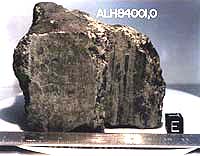
Dayton - Mar 18, 2002 - As NASA's Mars Odyssey spacecraft begins exploring the planet, particularly looking for signs of water that once could have nourished life, a University of Dayton geologist is disproving what some pointed to as scientific evidence of past life on the Red Planet.
Mar 18, 2002

Los Angeles - Mar 18, 2002 - The Martian Radiation Environment Experiment - acronymically known as MARIE -- is back online and collecting more data. As the radiation monitor was fired up, MARIE's scientists reported Tuesday at the 33rd Lunar and Planetary Science Conference that the data she returned last year reveals that space radiation is even more intense than their models had indicated.
Mar 18, 2002

Hanksville - Mar 13, 2002 - The third crew rotation of the Mars Desert Research Station has begun. The rotation, which started March 10, will run through March 24. During this time, the crew will continue the MDRS's program of sustained field exploration of the Utah desert while operating under many of the same constraints that a human crew would in an expedition to Mars. The purpose of this work is to learn how to explore on the Red Planet.
Mar 13, 2002

Washington - Mar 13, 2002 - Scientists have provided new evidence that liquid carbon dioxide, not running water, may have been the primary cause of erosional features such as gullies, valley networks, and channels that cover the surface of Mars.
Mar 13, 2002

Sudbury - Mar 7, 2002 - The Northern Centre for Advanced Technology Inc. (NORCAT) today demonstrated Canadian drilling technology that could be used in a future mission to collect samples on Mars.
Mar 7, 2002

Hanksville - Mar 6, 2002 - The tour of duty for the second crew of the Mars Desert Research Station (MDRS) is coming to a close, formally ending on March 7th, 2002. The past two weeks of activities has marked an exciting, stimulating, and at times challenging environment for everyone here.
Mar 6, 2002

Los Alamos - March 1, 2002 - Scientists today unveiled maps that detail the location of hydrogen, that may indicate water-ice, just below Mars' surface. The maps are based on data from a neutron spectrometer built at the Department of Energy's Los Alamos National Laboratory and flown aboard NASA's Mars Odyssey now in orbit around the Red planet. The data are supported by simultaneous measurements made using the Mars Odyssey's gamma-ray spectrometer.
Mar 1, 2002

Hanksville - Feb 25, 2002 - The first operational crew rotation of the Mars Society's Mars Desert Research Station (MDRS) has been successfully completed. The MDRS went operational on Feb 7 with a crew of 6. For the past two weeks, the station's crew has been conducting a systematic program of exploration of the surrounding desert, while operating under many of the same constraints as an actual Mars crew.
Feb 25, 2002

Tucson - Feb 20, 2002 - Not only lava, but water has recently flooded from fissures near Mars' equator, University of Arizona scientists have discovered. And they're not talking about a trickle. They're talking possibly 600 cubic kilometers of water. That's one and a quarter times as much water as in Lake Erie, four times as much water as in Lake Tahoe, and 65 times as much water as in California's Salton Sea.
Feb 20, 2002

Pasadena - Feb 19, 2002 - NASA's Mars Odyssey spacecraft has begun its science mapping mission. The spacecraft turned its science instruments toward Mars on Monday, February 18. Flight controllers report that the thermal emission imaging system was turned on this morning. The camera system, which takes both visible and infrared images, will go through a period of calibration before the first science images are taken during the next few days. The first images will be released at a news conference on March 1.
Feb 19, 2002

Hanksville - Feb 8, 2002 - The Mars Desert Research Station went operational February 7, 2002 with the first operational crew being led by Mars Society President Robert Zubrin from Feb 7 to Feb 14, after which the hab will be commanded by Mars Society Mission Support Director Tony Muscatello from Feb 14 to Feb 21.
Feb 8, 2002

San Diego - Feb 6, 2002 - In 1979, NASA published Atlas Of Mars, edited by R.M. Batson, P.M. Bridges, and J.L. Inge, of the U.S. Geological Survey in Flagstaff, Arizona. This was a compendium of airbrushed shaded relief maps, controlled photomosaics, and in a few cases albedo (shading) maps, mostly assembled from Mariner 9 survey images, with some gaps filled by Viking orbiter images.
Feb 6, 2002

Pasadena (JPL) Feb 6, 2002 - NASA's Mars Odyssey spacecraft deployed its high-gain communications antenna last night, marking a major technical milestone prior to the beginning of the science mapping mission.
Feb 6, 2002