
Del.icio.us
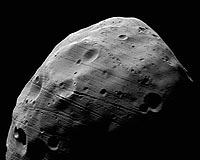
Mars Express Acquires Sharpest Images Of Martian Moon Phobos
Mars Express closed in on the intriguing martian moon Phobos at 6:49 CEST on 23 July, flying past at 3 km/s, only 93 km from the moon.

Mars Express closed in on the intriguing martian moon Phobos at 6:49 CEST on 23 July, flying past at 3 km/s, only 93 km from the moon.
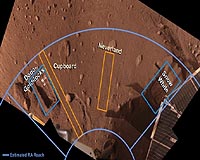
Los Angeles (AFP) July 31, 2008 - NASA scientists said Thursday the agency was extending the Mars mission of its Phoenix lander until the end of September, describing its progress so far as very successful.
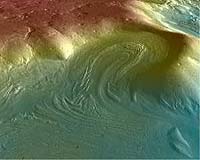
Rochester NY (SPX) Jul 30, 2008 - As the Mars Reconnaissance Orbiter (MRO) approaches the three-year anniversary of its launch, imaging technology from Eastman Kodak continues to enable the orbiter to explore the red planet as never before.
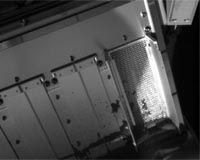
Tucson AZ (SPX) Jul 30, 2008 - Scientists and engineers on NASA's Phoenix Mars Mission spent the weekend examining how the icy soil on Mars interacts with the scoop on the lander's robotic arm, while trying different techniques to deliver a sample to one of the instruments.
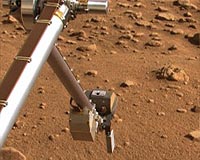
Tucson AZ (SPX) Jul 29, 2008 - NASA's Phoenix Mars Lander's robotic arm will use a revised collection-and-delivery sequence overnight Sunday with the goal of depositing an icy soil sample in the lander's oven.

Moscow (RIA Novosti) Jul 28, 2008 - The discovery of ice immediately under the surface of Mars is increasing the chances of finding life there. Water is more than the key to the origin of life. Water on Mars raises intriguing questions.
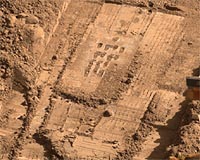
Tucson AZ (SPX) Jul 28, 2008 - NASA's Phoenix Mars Lander's robotic arm collected a more than adequate amount of icy soil for baking in one of the lander's ovens but will need to adjust how it delivers samples.

Tucson AZ (SPX) Jul 25, 2008 - The latest activities of NASA's Phoenix Mars Lander have moved the mission closer to analyzing a sample of material, possibly icy soil, from a hard layer at the bottom of a shallow trench beside the lander.
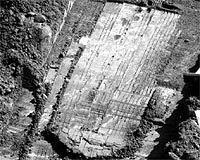
Tucson AZ (SPX) Jul 25, 2008 - NASA's Phoenix Mars Lander has groomed the bottom of a shallow trench to prepare for collecting a sample to be analyzed from a hard subsurface layer where the soil may contain frozen water.
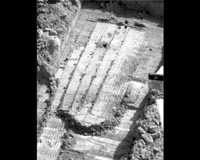
Tucson AZ (SPX) Jul 24, 2008 - Phoenix early Tuesday finished its longest work shift of the mission. The lander stayed awake for 33 hours, completing tasks that included rasping and scraping by the robotic arm, in addition to atmosphere observations in coordination with simultaneous observations by NASA's Mars Reconnaissance Orbiter.

Paris, France (ESA) Jul 22, 2008 - The first robotic mission to return samples to Earth from Mars took a further step toward realisation with the recent publication of a mission design report by the iMARS Working Group.
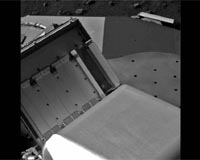
Tucson AZ (SPX) Jul 22, 2008 - To coordinate with observations made by an orbiter flying repeatedly overhead, NASA's Phoenix Mars Lander is working a schedule Monday that includes staying awake all night for the first time.

Moffett Field CA (SPX) Jul 22, 2008 - Later this month, NASA's Spaceward Bound program will send a team of scientists and teachers to explore the permanently frozen landscape of Axel Heiberg Island in the Canadian high Arctic.
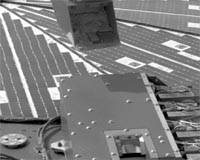
Dallas TX (SPX) Jul 21, 2008 - The average day, or sol, on Mars is 40 minutes longer than our 24-hour day on Earth. UT Dallas Physics Professor John Hoffman has spent more than 50 days on Martian time analyzing soil from the surface of the Red Planet.
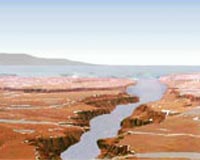
Moffett Field CA (SPX) Jul 21, 2008 - Mars once hosted vast lakes, flowing rivers and a variety of other wet environments that had the potential to support life, according to two new studies based on data from the Compact Reconnaissance Imaging Spectrometer for Mars (CRISM) and other instruments on board NASA's Mars Reconnaissance Orbiter (MRO).

Washington DC (SPX) Jul 21, 2008 - Two studies based on data from NASA's Mars Reconnaissance Orbiter have revealed that the Red Planet once hosted vast lakes, flowing rivers and a variety of other wet environments that had the potential to support life.