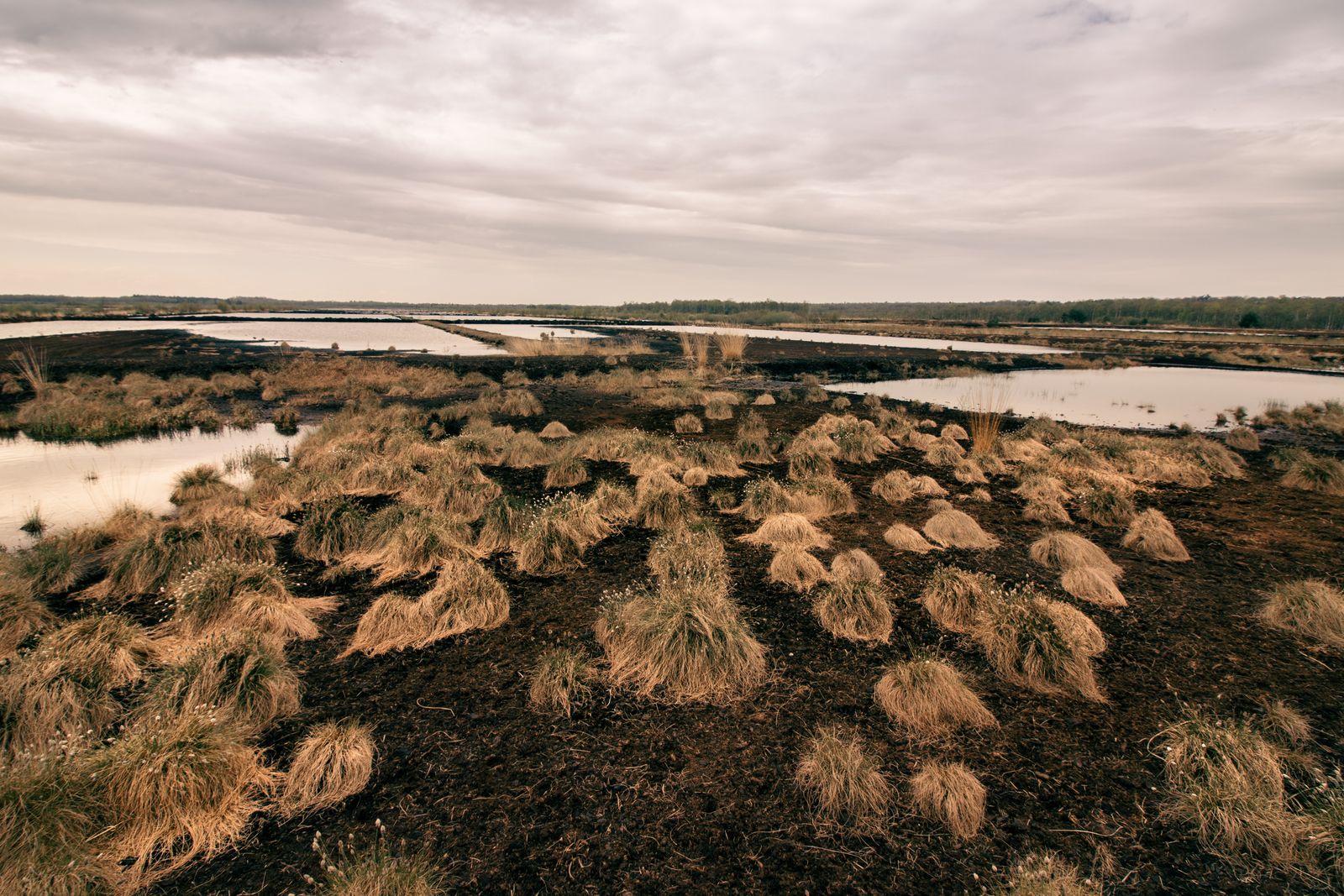
Peatlands cover roughly 3 percent of the planet’s land surface, yet drained and degraded peat releases close to 2 billion tonnes of carbon dioxide a year — more than the entire global aviation industry. The reason sits in a single sentence of soil science: peat is dead plants that never finished dying. Keep them wet and they hold their carbon for millennia. Drain them, and 10,000 years of stored biomass starts oxidising into the sky.
The mechanism was made explicit when the United Nations Environment Programme, the Food and Agriculture Organization, Wetlands International and the Ramsar Convention launched the Global Peatlands Initiative. Their headline number: peatlands cover 3 percent of land but hold twice as much carbon as every forest on Earth combined. Drain them for palm oil, cattle pasture, forestry or fuel, and that carbon leaks out as CO2 — quietly, continuously, and at a scale that dwarfs the airline industry most climate conversations focus on.
What a peatland actually is
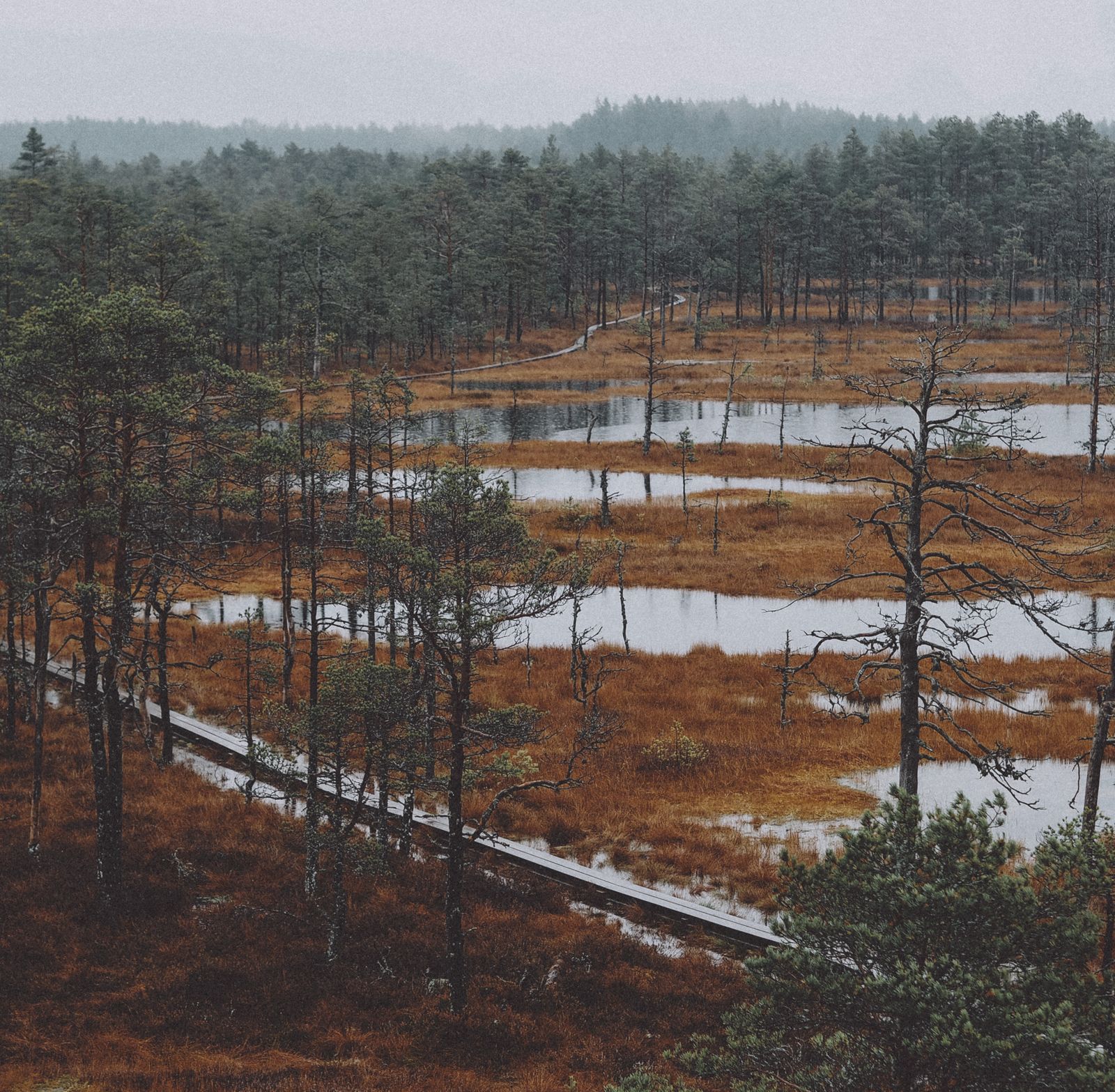
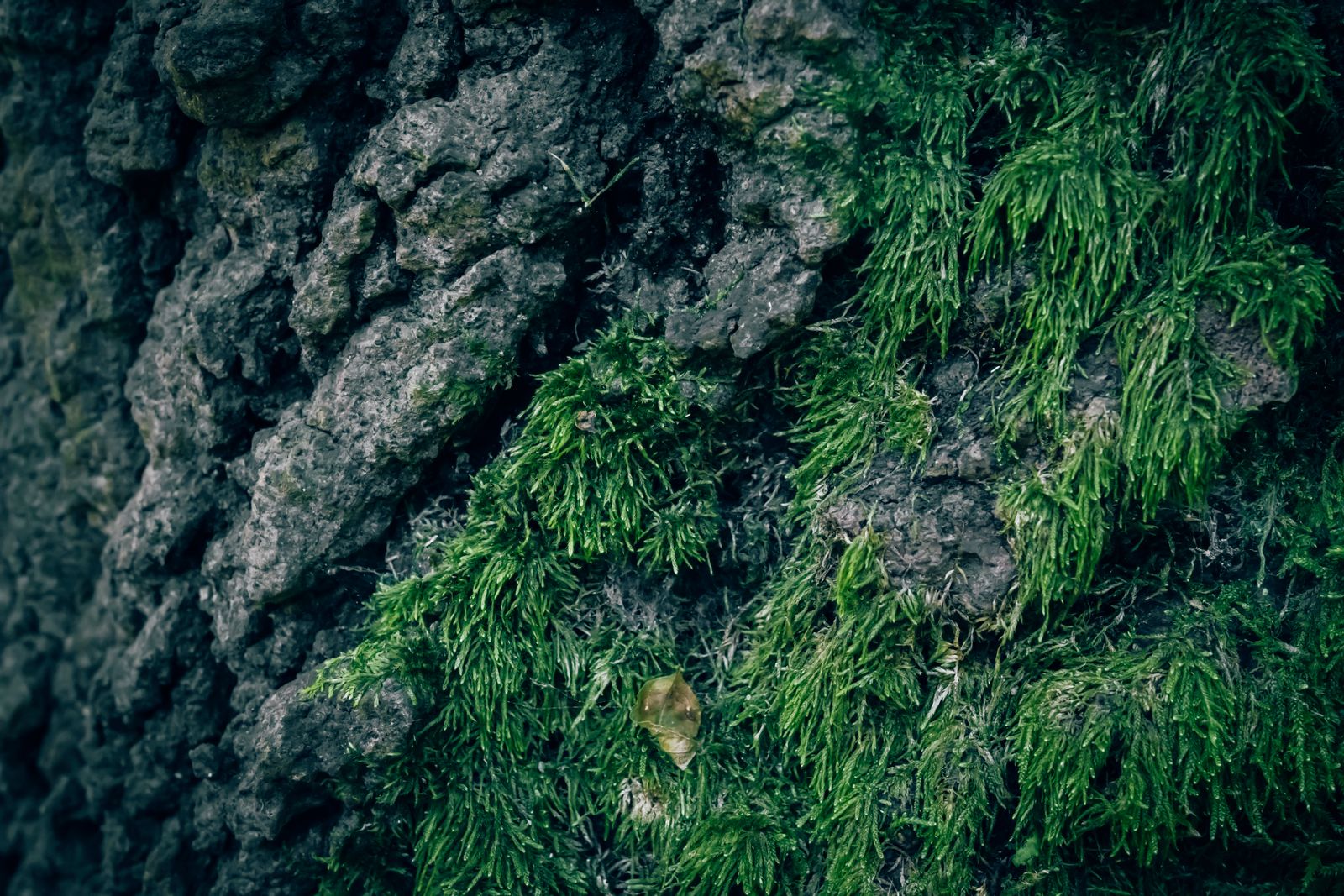
A peatland is a wetland where the ground itself is made of former plants. Sphagnum moss, sedges, cotton grass, black spruce roots — anything that grew, died, fell into standing water, and then failed to rot. The waterlogging is the whole trick. Submerged in cold, acidic, oxygen-starved conditions, the microbes that normally strip dead vegetation down to CO2 cannot function. So the plant matter stacks up. A millimetre a year. Sometimes less.
Given enough time — and peatlands have had a lot of it, most of them dating to the end of the last ice age — those millimetres become metres. Some Finnish and Canadian bogs are more than ten metres deep. Every centimetre is old carbon that never made it back into the atmosphere.
Recent field work summarised by Mongabay in early 2026 puts the storage figure sharply: peatlands cover only around 3 to 4 percent of Earth’s surface but hold up to one-third of the world’s soil carbon, roughly twice the amount held by all global forests combined. That is a lot of carbon on a small footprint.
Why draining flips a sink into a smokestack
Cut a ditch through a peat bog and gravity does the rest. Water drops. Air rushes in to fill the pore space. And the microbes that have been locked out for 8,000 years wake up hungry.
What they eat is the peat itself. Every cubic metre of drained peat is essentially a slow-burning log made of ancient sphagnum. The oxidation reaction is the same one that happens in a wood fire, only slower and colder: carbon plus oxygen, out comes CO2. A drained peatland can lose a centimetre or two of surface every year to this invisible combustion, and that lost centimetre is carbon going up.
Researchers with Michigan Technological University’s Sustainable Wetlands program have documented the same flip in the peatlands of the Andes: left intact and wet, the bogs keep slowly gaining carbon, but once they are drained or degraded by grazing and water diversion they turn into net emitters of both CO2 and methane. It is not a one-off release. It is a leak that keeps leaking, year after year, until the peat is gone or the water table returns.
The 2 billion tonne figure, and where it comes from
The number that sits behind the aviation comparison comes from the Global Peatlands Assessment and related UN work: drained peatlands emit somewhere between 1.9 and 2 billion tonnes of CO2-equivalent a year, or about 4 percent of all human-caused greenhouse gas emissions. Global commercial aviation produces around 2 percent of the total.
So the arithmetic of the headline holds. A single land-cover category, occupying 3 percent of the planet’s surface and mostly not on fire, produces more annual CO2 than every commercial flight combined. And most of the emissions come from a relatively small set of places: Indonesia, Malaysia, the Democratic Republic of Congo, Russia, the European Union member states with drained agricultural peat, and pockets of the North American boreal.
A February 2025 study covered by Mongabay found that only 17 percent of the world’s peatlands sit inside any form of legal protection. The other 83 percent are exposed to drainage, conversion, mining and fire — the four horsemen of peatland carbon loss.
Fire is the accelerant
Drained peat does not just oxidise. It burns. And once ignited, peat fires behave nothing like a grass or forest fire. They burrow underground, follow the dry peat downward, and can smoulder for months — sometimes through an entire winter under snow, resurfacing in spring.
The 2015 Indonesian peat fires released massive amounts of CO2 in a single fire season. Those fires only reached that scale because decades of drainage for oil palm and pulpwood plantations had turned wet swamp forest into a continent-sized fuel bed.
The Arctic version is different but headed the same way. Wildfires are now offsetting the CO2 uptake of the Arctic-boreal region, which is one reason peat scientists have stopped calling the far north a reliable carbon sink.
The Scotch problem, and other everyday drainage
Not all peat loss comes from tropical deforestation or Arctic wildfire. Some of it comes from things people drink. As Discover Magazine reported around COP26 in Glasgow, the smoky character of many Scotch whiskies comes from malted barley dried over burning peat cut from Scottish and Islay bogs. The whisky industry has since started experimenting with peat alternatives, but the wider point stands: peat has been mined for fuel, horticulture, garden compost and whisky flavour for centuries, each cut releasing carbon that had been locked up since before Stonehenge.
European agricultural peat is the quieter offender. Vast areas of the Netherlands, Germany, Poland, Belarus and the Baltic states sit on peat that was drained a century or more ago for dairy pasture and cropland. Those fields are still emitting. The peat below the grass is still oxidising. Drained agricultural peat represents a significant source of land-use CO2 across much of Northern Europe.
Congo, and the ancient carbon problem
The Cuvette Centrale in the Congo Basin is the largest tropical peatland complex on Earth — roughly the size of England, holding enormous amounts of carbon.
Newer work is finding that even undisturbed parts of the Congo peat system are venting carbon in ways that were not previously accounted for. A 2026 ETH Zurich study, published in Nature Geoscience, found that the large blackwater lakes sitting on the Congo peatlands are releasing carbon that had been locked in the peat for thousands of years. How that ancient carbon is being mobilised from the peat to the lakes is still unknown, but the researchers warn the leak could widen if land-use change or a drying climate pushes the water table down.
Which is why peat researchers get nervous when climate models project drier conditions over the tropics. The Congo peat is safe only as long as it stays wet. Push the water table down half a metre across an area that size and the emissions math gets very ugly very fast.
Why the fix is deceptively simple
The remedy for a drained peatland is not exotic. Block the ditch. Let the water come back. Plant sphagnum. Wait.
Rewetting does not undo the carbon already lost, but it stops the leak. As ensia’s reporting on peat restoration describes, blocking the drainage canals and letting water levels recover halts the ongoing oxidation and lets peat-forming vegetation re-establish. The site does not need to be productive farmland afterwards. It just needs to be wet.
Snowchange Cooperative, the Finland-based group profiled by Mongabay, has expanded from restoring 8,800 hectares across eight sites in 2018 to affecting up to 62,000 hectares across 188 sites by 2024, plus about 30,000 hectares in Gwich’in territory in Canada’s Northwest Territories and 10,117 hectares in Minnesota’s Sax-Zim Bog. Sámi leader Bigga-Helena Magga and her sister protected their ancestral Alttokangas boreal peatland in Finland’s Inari municipality after their father’s death — the first Indigenous and community conserved area in Sámi lands in Finland, formally recognised in 2024.
Tero Mustonen, the Snowchange founder and 2024 Climate Breakthrough Awardee, has argued that peatlands deserve to be treated as the equal of the Amazon rainforest for climate regulation and carbon storage. The comparison is not rhetorical. On a per-hectare basis, an intact tropical peat swamp locks away more carbon than the rainforest growing on top of it.
Why so little of it is protected
Peatlands are hard to love in the way rainforests or coral reefs are loved. They are flat, brown, wet, and full of mosquitoes. Most of the biodiversity is either microbial or hidden in the sediment. The archaeology, when it turns up, is dramatic — bog bodies, wooden trackways, preserved leather — but it is rare.
The result is the 17 percent protection figure documented by Carbon Brief’s coverage of the 2025 peatland study. Forests get protected because people can see the trees. Peatlands get drained because from a helicopter they look like empty land waiting for a purpose.
According to the Global Peatlands Initiative launch materials, Ramsar Convention Secretary General Martha Rojas-Urrego noted that few countries have incorporated peatlands management into their national climate plans, calling for increased action on peatlands conservation. Nearly a decade on from Marrakech, that sentence still describes the state of play. Most national climate pledges under the Paris Agreement mention forests. Fewer mention peat.
The comparison that keeps holding
Aviation is the reference point because everyone flies, everyone has an opinion about flying, and everyone knows flying is carbon-intensive. Passenger jets get pilloried in climate coverage in a way that drained Dutch dairy pasture does not.
But the arithmetic keeps saying the same thing. A KLM flight from Amsterdam to Jakarta emits several tonnes of CO2 per passenger. The drained peat under the dairy farms outside Amsterdam, and the drained peat under the oil palm plantations near Jakarta, together emit more than every KLM flight ever scheduled. The peat is invisible. The plane is not.
Mars Daily has covered similar cases where a small, unfamous system does an enormous amount of work — Bangladesh’s mangrove-and-shelter storm defence is the recent example, and John Snow’s 1854 pump handle is the historical one. Peatlands belong on that list. A 3 percent land-cover class holding a third of soil carbon and leaking two aviation industries’ worth of CO2 when disturbed is exactly the kind of leverage point that gets missed because it is not photogenic.
What the sediment remembers
Peatlands are archives as well as carbon stores. Because the water excludes oxygen, they preserve almost anything organic that falls into them — pollen grains, insect wings, human hair, leather shoes, wooden spear shafts. Every metre of peat is roughly a thousand years of local ecological history, stacked in reverse chronological order.
Which is another way of saying that when a peat bog is drained and its carbon burns off into the atmosphere, what is lost is not just a climate service. It is a record. A drained Irish raised bog is a burned library where the books were made of moss.
Somewhere in a Finnish peat column right now there is pollen from a spruce that pollinated in the year Rome fell. It has been sitting there, undecayed, for 1,600 years. If the ditch stays blocked and the water stays high, it will still be there in another 1,600. If the ditch opens, it will be in the atmosphere by the end of the decade.