
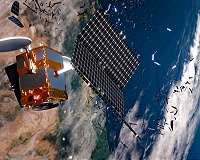
We see more and more reports of debris concern among satellite operators and space observers. Add to this the many recent announcements of multiple broadband satellite constellations that are being funded and developed for launch in the next few years. Just focusing on low Earth orbits (LEO), there are an estimated 15,000 satellites in the works.
For example, Amazon is planning to launch 3,236 satellite and SpaceX is already building the first of 4,000 multi-hundred-kilogram spacecraft. Add all of the broadband satellites to the hundreds of planned CubeSats and we have a new satellite population that is at least an order of magnitude larger than what is now in LEO. This explosion in population will be accompanied by an explosion in debris. The safety and traffic implications are extremely negative.
Assuming no debris removal and control program is implemented, it is estimated that within the next decade the debris population will overwhelm LEO operations to the point that space access may be completely impossible.
This cannot be allowed to happen because the world's economy will be set back for at least one or two generations. Since the military depends heavily on space, national defense capabilities will also be seriously diminished. Just imagine not having GPS, direct-to-home TV broadcasts, satellite weather, missile defense detection and many other services we now take for granted.
Once the debris takes over, there is no known way to then clean up space. It is fair to say that such a cleanup, if possible, could take decades or even centuries. Without space our technological future will be quite limited. Even our present way of life will disintegrate and revert backward by at least 20 years.
The bottom line is that this cannot be allowed to happen. Somebody has to pay to cleanup space, and that somebody is going to be everybody on the planet, one way or another. To paraphrase a popular muffler ad: "You can pay now, or you can pay later. However, the cost is going to be much, much higher if we wait."
