
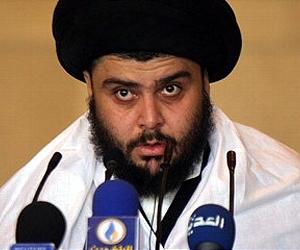
Influential Iraqi Shiite cleric Moqtada al-Sadr said on Wednesday that his parliamentary bloc would back a motion of no confidence in Prime Minister Nuri al-Maliki if that gave it the support of a majority of MPs.
In the lastest twist in a political crisis that has dogged Iraq ever since US troops completed a pullout in December, Sadr denied that he opposed moves by MPs of the Sunni-backed Iraqiya faction to bring down the Shiite premier.
"This is not true," Sadr said in a written answer to a question from one of his followers.
"I promised my partners that if they got 124 votes, I will complete the 164 votes," he added, referring to the 40 MPs who belong to his parliamentary bloc.
Under the Iraqi constitution, a no confidence motion can be put before parliament either by the president or by 50 MPs. To pass, it must be approved by an absolute majority in the 325-seat parliament.
Maliki's critics in Iraqiya, who accuse him of monopolising decision-making in the hard-won national unity government, have called in recent weeks for a vote on a motion of no confidence in the premier after the party abandoned an earlier boycott of both parliament and the cabinet.
The political crisis took on a sectarian edge when, days after the Iraqiya walkout from parliament in December, the Shiite-led government issued an arrest warrant for Sunni Vice President Tareq al-Hashemi on charges he ran a death squad.
Hashemi says the charges are politically motivated.
'Serious problems' with human rights in Iraq: UN report
Baghdad (AFP) May 30, 2012 –
Iraq still has "serious problems" in terms of human rights and the situation remains fragile, despite authorities voicing support for addressing shortcomings, a UN report released on Wednesday said.
The document expressed concern over the still-high level of civilian casualties, arbitrary arrests and prolonged detentions, poor conditions at detention facilities, violence against women and girls, widespread poverty and high unemployment.
"This report highlights a number of shortcomings, some of which are of serious concern and need to be urgently addressed by the Iraqi authorities," said Martin Kobler, the United Nations special envoy to Iraq, in a statement accompanying the report.
"There is no democracy without respect for human rights."
The report noted Iraq had made some progress in improving human rights by finally establishing an independent human rights commission, and deciding to implement UN recommendations on addressing human rights problems.
The UN statement said, however, that "the impact of these measures on the overall human rights situation remained limited."
The report noted that the "human rights situation in Iraq remains fragile. While the government has indicated its willingness and commitment to enhancing the respect and protection of the rights of all Iraq's people, serious problems remain that threaten the gains made in the past few years."
It said the UN mission in Iraq had "serious concerns about the rule of law and respect for due process and fair trial standards," and added that "women and children continue to be vulnerable to violence and abuse, not only from terrorism, but also from domestic violence."
The report concluded: "Crucially, the government of Iraq needs to cultivate an environment where the rights of freedom of assembly, freedom of information and freedom of expression are protected and respected, not only by its own institutions and organs, but by the people of Iraq."
The UN listed 35 recommendations to strengthen human rights in the country, ranging from ensuring independent inspection of jails to abolishing legal protection for honour killings, as well as tightening laws promoting equality.
