
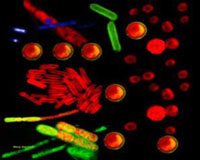
U.S. scientists said they have created a microbe that produces cellulous, which, in turn, can be transformed into ethanol and other biofuels.
The University of Texas researchers said the microbe could provide a significant portion of the nation's transportation fuel if production can be improved.
Along with cellulose, the cyanobacteria developed by Professor R. Malcolm Brown Jr. and researcher David Nobles Jr. secrete glucose and sucrose — simple sugars that are the major sources used to produce ethanol, the scientists said.
Brown and Nobles say their cyanobacteria can be grown in production facilities on non-agricultural lands using salty water that's unsuitable for human consumption or crops.
Nobles said the cyanobacteria — also known as blue-green algae — were created by giving them a set of cellulose-making genes from a non-photosynthetic "vinegar" bacterium, Acetobacter xylinum, well known as a prolific cellulose producer.
The new cyanobacteria produce a relatively pure, gel-like form of cellulose that can be broken down easily into glucose.
"The huge expense in making cellulosic ethanol and biofuels is in using enzymes and mechanical methods to break cellulose down," said Nobles. "Using the cyanobacteria escapes these expensive processes."
The research recently appeared in the journal Cellulose.
