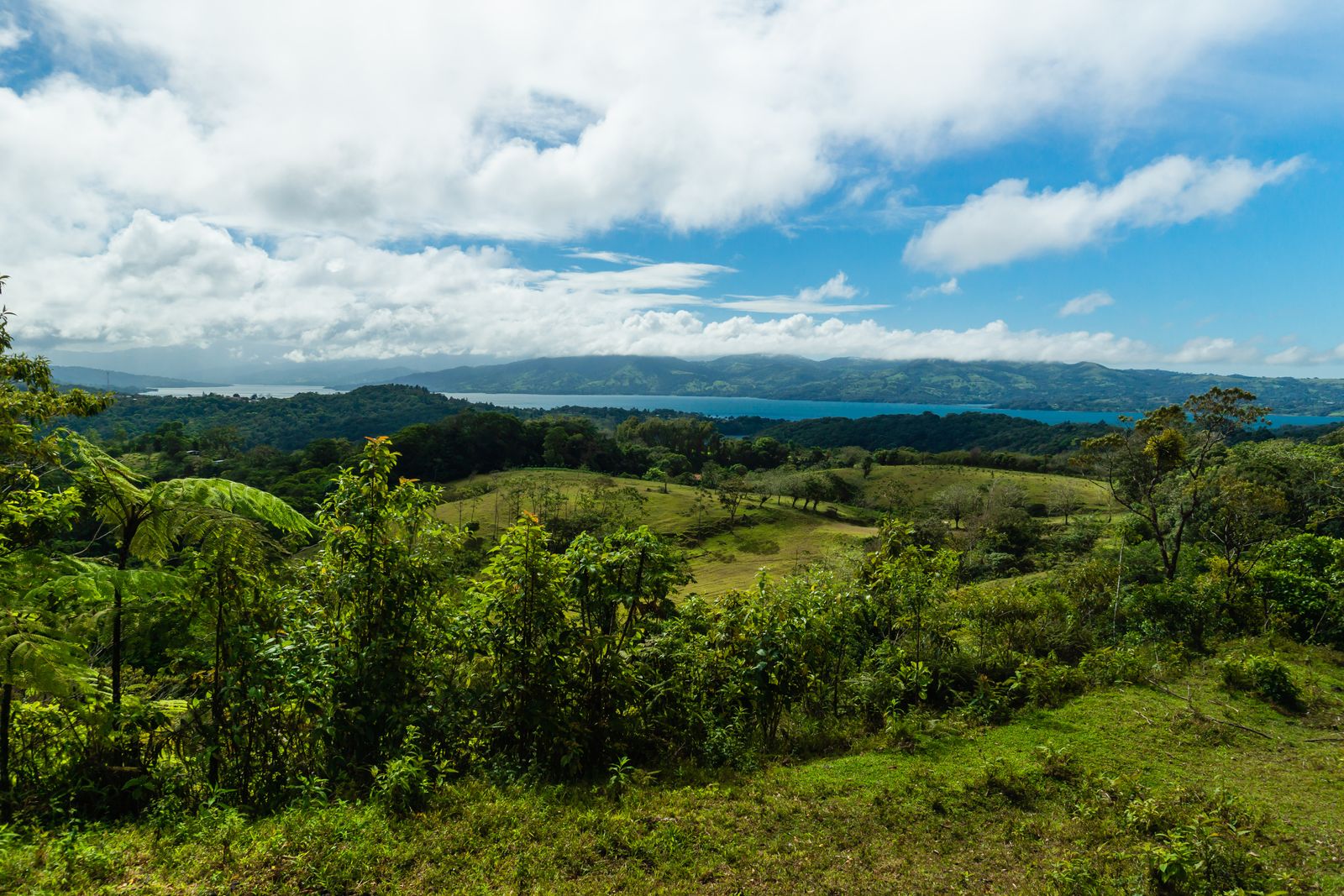
Costa Rica is smaller than West Virginia — a compact territory of ridges, cloud forest and Pacific coast — and by the 1980s it was losing trees faster than almost anywhere on Earth, with forest cover down to roughly a quarter of the national territory. Today it sits near 60 percent. The mechanism that flipped the curve has a name and a launch date: Pago por Servicios Ambientales (Payments for Environmental Services, or PES), created by Forest Law 7575 in 1996, which pays landowners in cash, per hectare, per year, to keep trees standing. In May 2025 the European Union formally classified the country as low-risk for deforestation under its Deforestation-Free Regulation.
The money comes largely from a tax on fossil fuels sold inside the country. Drivers filling up in San José have, for nearly three decades, been quietly bankrolling the forest outside the window.
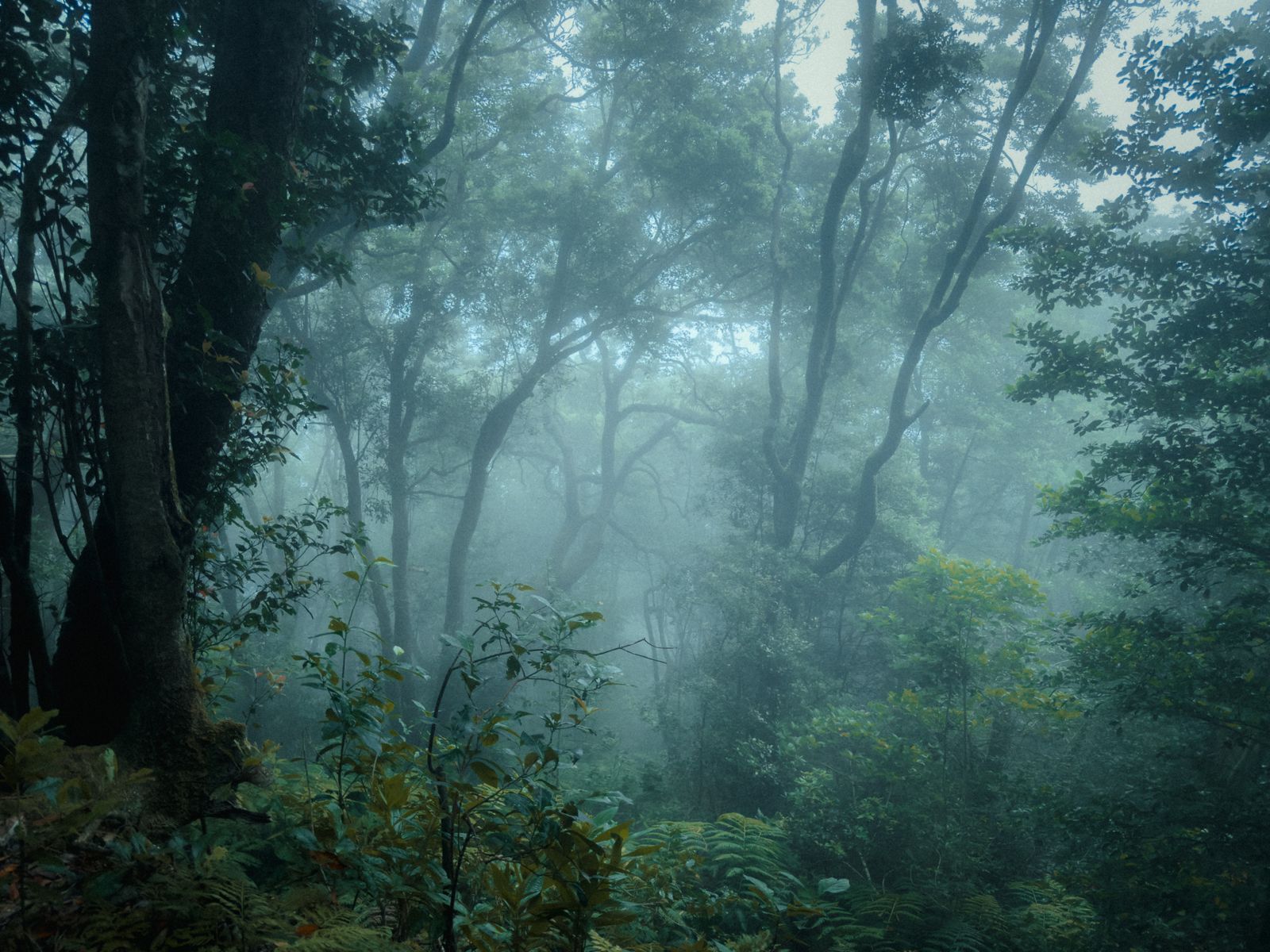
The country that was clearing itself
The immediate driver was beef. Cheap loans from international development banks in the 1960s and 1970s pushed Central American ranchers to expand pasture for export cattle, and Costa Rica — with a stable government, a literate rural workforce and easy Pacific shipping — became one of the busiest hamburger-supplier economies on the isthmus.
Estimates of exactly how low the forest fell vary with the definition used. Contemporary accounts put 1980s cover at about 25 percent; the World Bank puts the trough nearer 40 percent in 1987 and describes Costa Rica as the first tropical country to have reversed deforestation. The direction and the destination are not in dispute: a country that was shedding forest at one of the highest rates on Earth now has close to 60 percent of its land under tree cover.
The clearance had a distinctive pattern. Loggers took the valuable hardwoods — mahogany, cedro, guanacaste — then ranchers burned the rest and seeded jaragua grass. Within a decade the pasture was exhausted, the soil compacted, and the land was often abandoned. That abandonment matters, because it is the raw material a recovery needs.
The 1996 law that changed the math
Costa Rica banned the conversion of mature forest to other land uses in 1996, the same year Forest Law 7575 established PES. The law reframed a standing tree as a producer of four measurable services: carbon sequestration, watershed protection, biodiversity conservation, and scenic beauty. If a forest produced those services, someone should pay for them.
The programme is run by FONAFIFO, the National Forestry Financing Fund. Landowners sign contracts — typically five or ten years — to conserve existing forest, allow regeneration on old pasture, or plant new trees. The scheme has enrolled well over a million hectares since it began.
The payments will not make anyone rich. But for a smallholder with steep, marginal land that would otherwise sit idle or be cleared for a handful of skinny cows, the cheque arrives on time and requires no chainsaw.
Two policy moves outside the PES headline deserve more credit than they get. The first is the conversion ban itself. Without it, PES would have paid people to protect trees on one hillside while their neighbour cleared the next one. The ban set a legal floor; the payments built a ceiling.
The second is land tenure. Costa Rica had a relatively clear cadastral system by the 1990s, which meant a farmer signing a PES contract could actually prove they owned the land. In countries where tenure is contested — much of the Amazon frontier, the eastern DRC — a payments programme has no legal handle to grab. Behind both sits the abolition of the army in 1948, which redirected what would have been a defence budget into education and, later, environment.
Where the money comes from
The funding architecture is what most countries copying the model get wrong. PES is not a foreign-aid line item that vanishes when a donor cycle ends. Its backbone is the domestic fuel tax, which sends a fixed share of gasoline and diesel revenue to FONAFIFO every year. Water utilities pay in too, because clean municipal supply depends on the forested slopes above the intakes. Hydroelectric operators contribute for the same reason — a deforested watershed silts up a turbine.
Layered on top are international carbon deals. Costa Rica signed an emission reductions agreement with the World Bank’s Forest Carbon Partnership Facility in December 2020 worth up to $60 million for 12 million tonnes of verified reductions, and received a first payment of $16.4 million in 2022 — the first such payment to any country in Latin America and the Caribbean.
The polluter-pays logic runs through the whole system. Fuel burners pay for carbon uptake. Water users pay for watersheds. Tourists pay park entry fees that flow back into conservation budgets. Vox’s climate desk has framed Costa Rica as the rare case where putting a price on ecosystem services actually moved the needle.
The 1996 forest law also arrived at the same moment ecotourism was becoming a genuine industry. Monteverde, Manuel Antonio, Corcovado, Tortuguero — the network of national parks and private reserves gave abandoned pasture a second life as habitat visitors would pay to walk through. A farmer choosing between clearing a hillside for another twenty head of cattle or leasing it to a lodge for canopy tours started, for the first time, to see the second option pencil out.
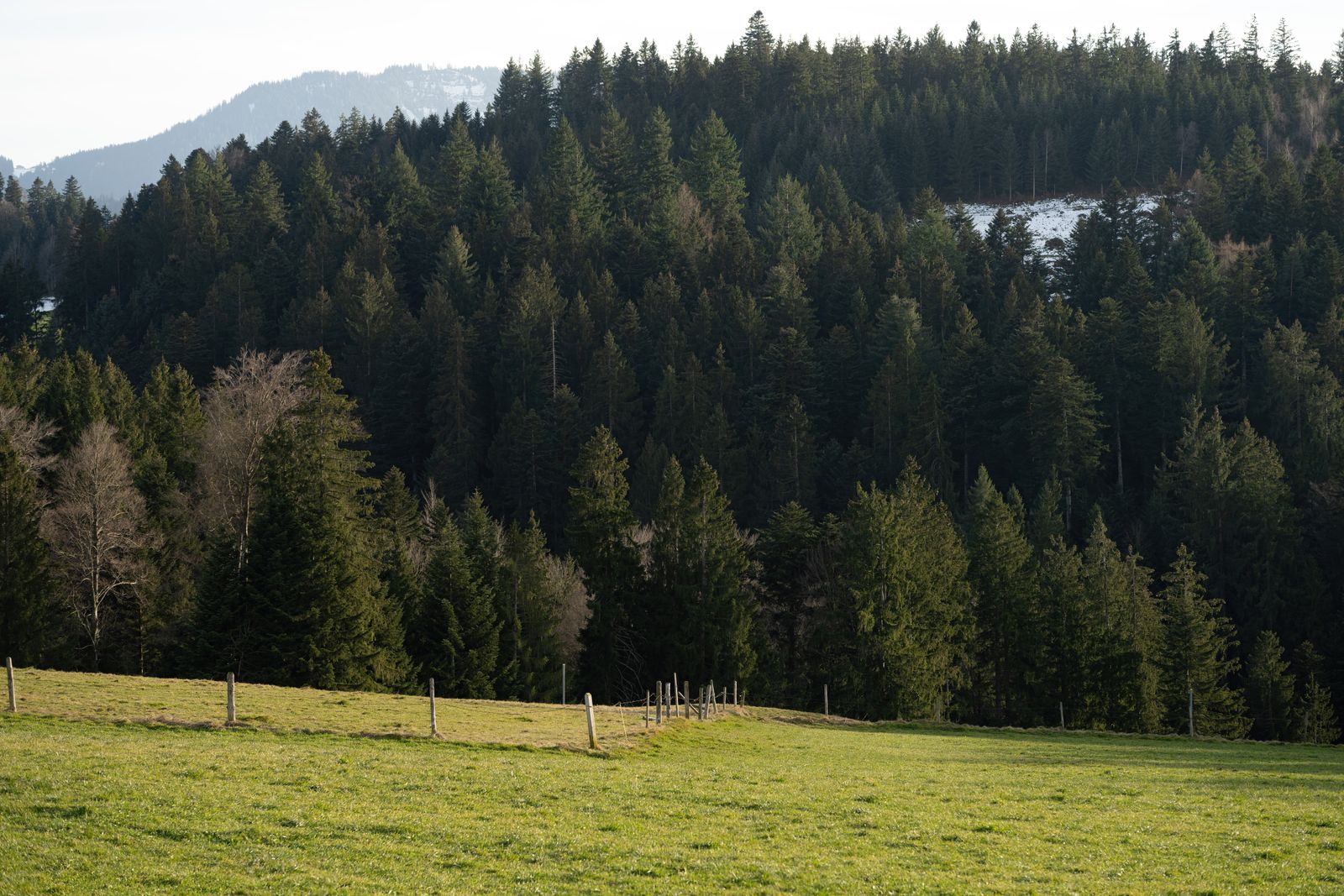
What actually grew back
Not all recovered forest is created equal. A pasture left alone for thirty years in the humid lowlands will regenerate into a structurally complex secondary forest with a recognisable canopy, but the species mix takes far longer to resemble what was there before. Old-growth mahogany does not come back in a human lifetime.
Researchers have started listening for the recovery rather than only counting it. A team led by Giacomo Delgado at ETH Zurich placed recorders at 119 sites across the Nicoya Peninsula and collected 16,658 hours of audio from degraded pasture, PES-enrolled regrowth, timber plantations and mature reference forest. Naturally regenerating PES sites were 1.4 times more acoustically similar to mature forest than to the pastures they had once been; at dusk, the recordings were close to indistinguishable from those inside national parks. The study was published in Global Change Biology in February 2026.
The same recordings drew a sharp line between kinds of green. Monoculture teak plantations came in at 1.24 times more similar to reference forest than to pasture — some uplift, but quieter and less complex soundscapes than land simply left to regrow. A property can look green from a satellite and still be missing most of what makes a forest function.
Acoustics cannot settle everything. As The Tico Times noted in its coverage, the method does not identify every species, and it cannot establish what would have happened on the same land without the payments. What it does show is whether a regrown patch is functionally alive or merely green.
Costa Rica’s trajectory is unusual because most of the tropics are still moving the other way. The UN Food and Agriculture Organization’s Global Forest Resources Assessment 2025 puts global deforestation at about 10.9 million hectares a year over 2015-25 — down from 17.6 million a year in the 1990s, but still overwhelmingly concentrated in the tropics, which account for 88 percent of forest lost since 1990.
Other countries have got forest back by other means. South Korea ran a state-led planting campaign after the Korean War that dramatically increased cover over subsequent decades. The Korean approach was command-and-control; the Costa Rican approach was price signals. Both worked, in radically different political systems.
What the EU decision changes
The European Union’s Deforestation-Free Regulation requires importers of seven commodities — coffee, cocoa, timber, beef, palm oil, rubber and soy — to prove the goods did not come from land deforested after 31 December 2020. After two postponements, it applies to large and medium operators from 30 December 2026, and to micro and small operators from 30 June 2027.
Countries are graded low, standard or high risk. On the Commission’s benchmarking list, Costa Rica is the only Central American country in the low-risk category — Belize, El Salvador, Guatemala, Honduras, Nicaragua and Panama are all standard risk. It shares low-risk status with Chile, Uruguay, Guyana, Suriname and most of the Caribbean, while Brazil, Colombia, Peru and Mexico do not. Franz Tattenbach, then Costa Rica’s Minister of Environment and Energy, said the classification confirmed the country’s Sustainable Agro-landscapes work.
For coffee farmers on the slopes of Poás or Tarrazú, the practical effect is that a European buyer’s compliance officer will need less paperwork to approve a shipment. That is not glamorous, but it is the kind of quiet trade advantage that decides whether a smallholder’s beans clear customs in Hamburg or sit on a dock in Puerto Limón.
What has not been solved
The forest cover figure obscures uneven progress. Pineapple expansion in the northern lowlands has cleared secondary forest and drained wetlands. Illegal logging still hits protected areas, especially in the Osa Peninsula. Climate change is drying the Guanacaste dry forest faster than restoration can keep pace. And PES itself has been criticised for paying wealthier landowners who would have kept their forest anyway, while missing the smallholders most likely to clear.
FONAFIFO has also acknowledged that the money has not kept up with demand. As coastal land values rise, the gap between what a PES cheque pays and what a hectare could earn under cattle, pineapple or a hotel gets wider every year.
The doubling is real. It is also brittle. A future government that raided the fuel tax, or a collapse in international carbon prices, could unwind the arithmetic quickly. Forests take decades to grow and weeks to cut.
A generation of Costa Ricans who grew up watching pasture spread across their grandparents’ land are now watching the forest walk back into it — one abandoned field at a time, one cheque at a time, and, on the Nicoya Peninsula at dusk, one recorded chorus at a time.