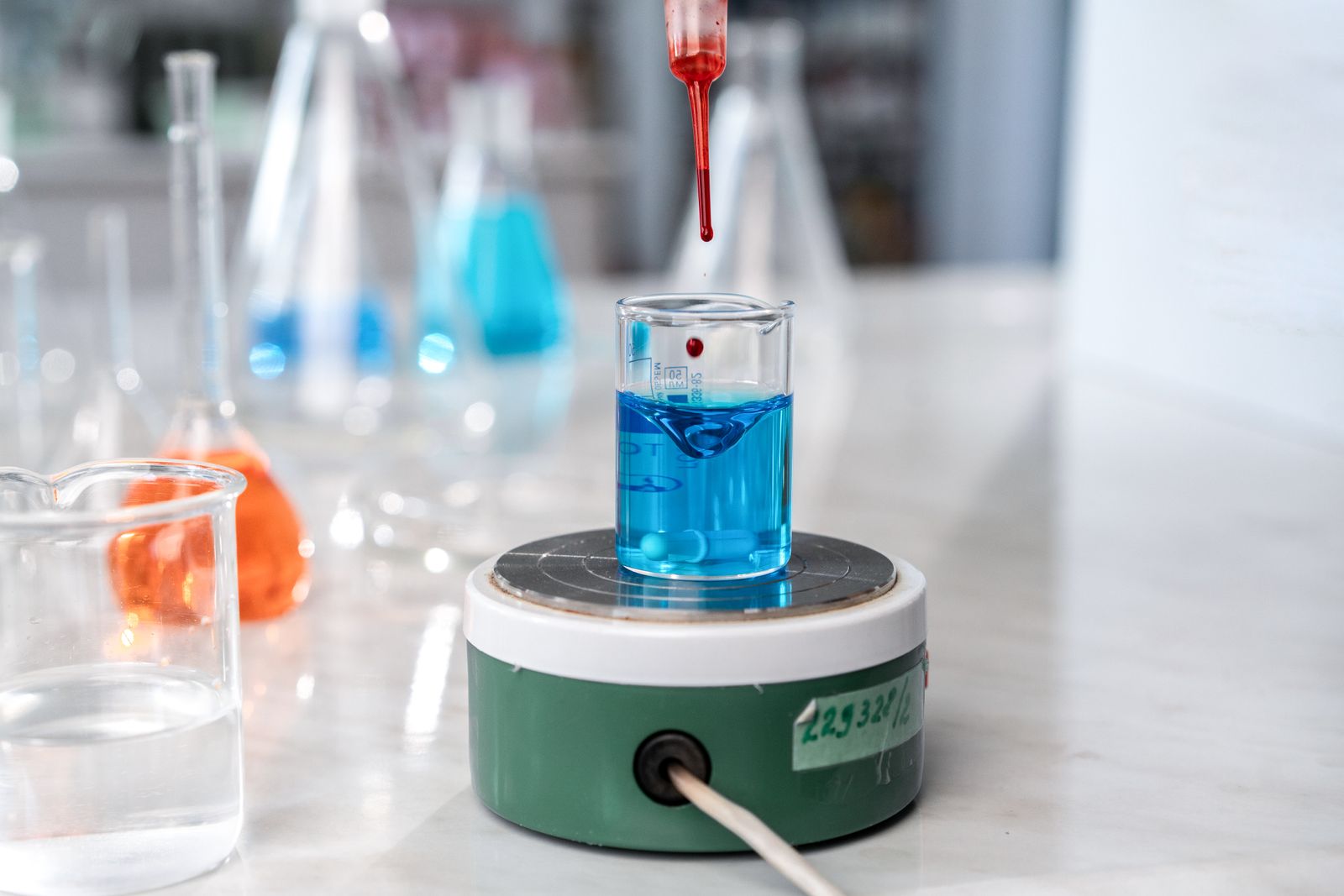
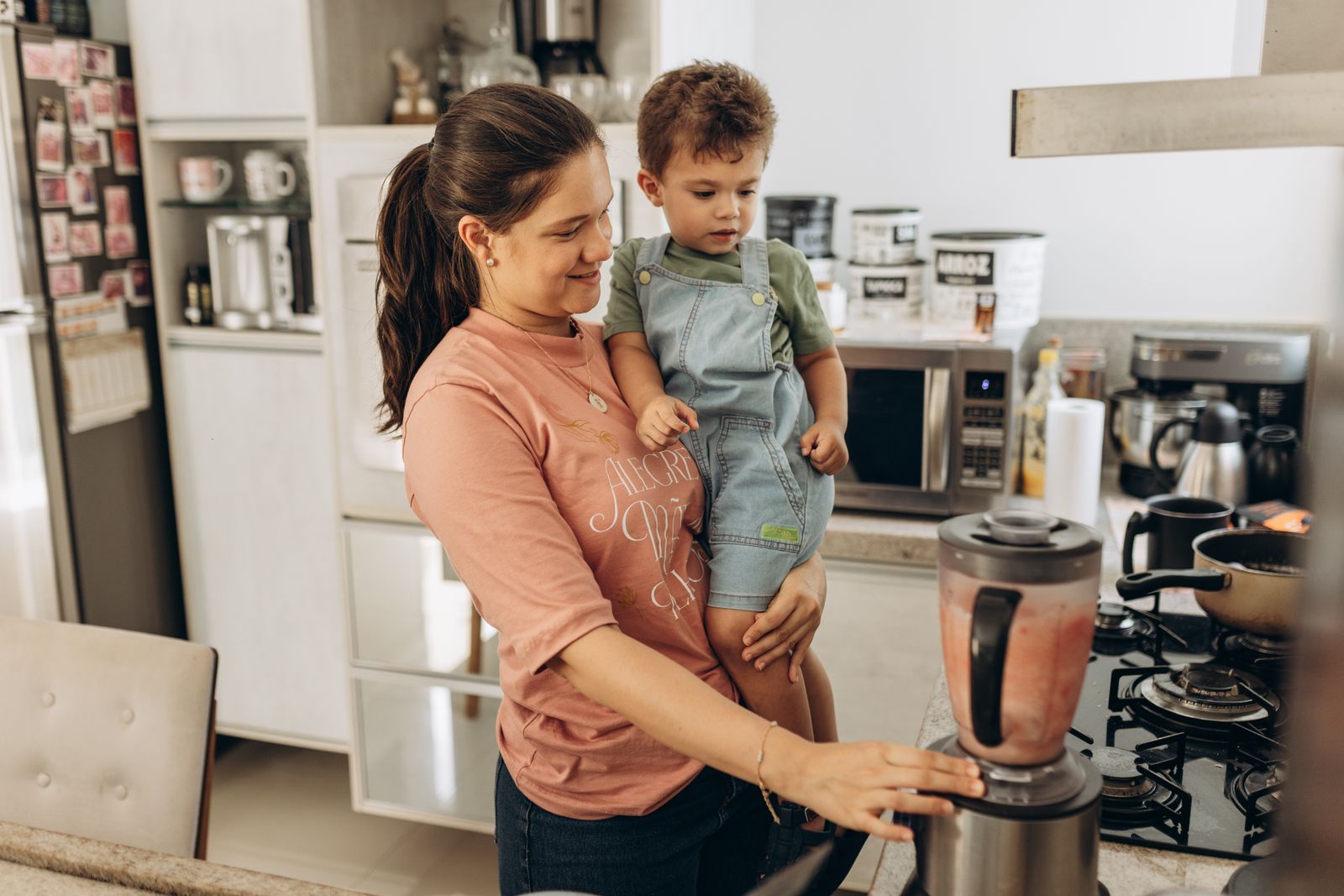
In the summer of 1952, on the north shore of Long Island, two scientists poured a slurry of virus-infected bacteria into the glass jar of a Waring blender — the same countertop appliance sold in American kitchens for milkshakes — and hit the switch. The right duration and speed of spinning sheared the empty protein husks of the viruses off the outside of the bacterial cells, while whatever the viruses had squirted inside stayed put. That whatever, Alfred Hershey and Martha Chase would announce that year, was DNA.
The experiment helped tip a long-running argument in biology toward nucleic acid and away from protein as the molecule of heredity. A year later, Watson and Crick published the double helix. Molecular biology had its founding decade, and it started with a kitchen gadget.
The argument they walked into
By 1952, biologists had known for decades that chromosomes carried genes. What chromosomes were made of was the fight. Chromosomes contained both protein and deoxyribonucleic acid, and most researchers put their money on protein. Proteins came in twenty flavors of amino acid, folded into elaborate shapes, and did nearly every interesting job in the cell. DNA, by contrast, looked monotonous — four bases, strung along a sugar-phosphate backbone, chemically dull.
The case for DNA had been building quietly. In 1928, the English microbiologist Frederick Griffith showed that something released by heat-killed virulent pneumococcus could turn a harmless strain deadly, a phenomenon he called the “transforming principle”. He never identified the chemical. In 1944, Oswald Avery, Colin MacLeod, and Maclyn McCarty at the Rockefeller Institute used enzymes to chew up each candidate molecule in turn. Only the enzyme that destroyed DNA killed the transforming activity. They published. The field mostly shrugged.
Popular opinion still favored protein. Avery’s pneumococcus preparations were suspected of containing trace protein contaminants that might be doing the real work. The community wanted a cleaner demonstration.
Why a virus that eats bacteria was the right tool
Hershey and Chase worked with a bacteriophage called T2 — a virus that infects Escherichia coli. Under an electron microscope, T2 looks like a lunar lander: a polyhedral head packed with DNA sitting on top of a stiff tail that clamps onto the bacterial surface and injects its cargo.
What made T2 useful was its chemical simplicity. It contained essentially two things: protein on the outside, DNA on the inside. If a phage infected a bacterium and produced hundreds of new phages, whichever component went into the cell had to be carrying the instructions to build the next generation.
The trick was labeling. Proteins contain sulfur but almost no phosphorus. DNA contains phosphorus but no sulfur. Hershey and Chase grew one batch of phages in a medium spiked with radioactive sulfur-35, tagging the protein coats. They grew another batch in a medium spiked with radioactive phosphorus-32, tagging the DNA.
Then they let each batch of labeled phages infect fresh E. coli. And they waited a few minutes — long enough for the phages to attach and inject, but not long enough for the next round of viruses to burst out.
The blender
The problem was mechanical. After a phage docks, the empty protein head still clings to the outside of the bacterium. To see which molecule had gone inside, Hershey and Chase needed to knock the ghost coats off the bacterial surface without smashing the bacteria themselves.
A Waring blender turned out to be almost exactly the right instrument. Spun for a few minutes at a moderate setting, the shear forces in the liquid were strong enough to strip the phage husks from the bacterial walls but gentle enough to leave the bacteria alive and intact. It was, in the most literal sense, a kitchen appliance repurposed as a scalpel.
After blending, they spun the mixture in a centrifuge. The heavier bacterial cells packed into a pellet at the bottom of the tube. The lighter phage ghosts stayed suspended in the liquid above.
Then they measured the radioactivity in each fraction.
The sulfur-35 — the labeled protein — was almost all in the supernatant, floating with the discarded coats. The phosphorus-32 — the labeled DNA — was almost all in the pellet, inside the bacteria. And when those infected bacteria eventually burst open and released new phages, the next generation of viruses carried the phosphorus label with them.
Whatever was inherited had gone in as DNA.
What Hershey and Chase actually claimed
The paper is careful to the point of understatement. Read the closing lines and you will not find a triumphant announcement that the gene has been found. You will find this: “This protein probably has no function in the growth of intracellular phage. The DNA has some function. Further chemical inferences should not be drawn from the experiments presented.”
The blender experiment did not, on its own, prove that genes are made of DNA. Some sulfur-35 label did enter the cells. Some DNA stayed outside. The separation was clean but not perfect. What Hershey and Chase had shown, strictly speaking, was that the protein coat was mostly a delivery vehicle and the DNA was doing most of the work inside.
Combined with Avery’s 1944 pneumococcus results, though, the phage experiment tipped the community. Within a year, most working biologists had shifted their bets to DNA. When James Watson and Francis Crick published the double helix structure in April 1953, they were describing the molecule everyone had just agreed to care about.
Martha Chase, and how credit gets distributed
Martha Chase had joined Hershey’s lab at Cold Spring Harbor as a research assistant. She ran the centrifuges, measured the radioactivity, tabulated the counts. She is the second author on the 1952 paper.
Alfred Hershey shared the Nobel Prize in Physiology or Medicine with Max Delbrück and Salvador Luria. Chase did not. She left science in the 1960s after personal setbacks.
The pattern is familiar enough that historians of science have a name for it — the Matilda Effect, describing the systematic under-crediting of women scientists whose work is folded into a male colleague’s reputation. The experiment itself is now known universally as Hershey–Chase. The prize was Hershey’s alone.
Why the Waring blender, exactly
The Waring blender was not chosen at random. By the 1940s it had become a fixture in bacteriology labs because it produced controllable, reproducible shear forces in small liquid volumes. Microbiologists used it to homogenize tissue, to break open cells, to mix reagents. It was cheap, it was durable, and every stockroom already had one.
Hershey’s insight was tuning the speed. Too slow and the phage coats stayed stuck to the bacteria. Too fast and the bacteria themselves ruptured, spilling their contents and confusing the radioactivity readings. The right setting had been worked out empirically over dozens of trial runs.
The experiment ran through the summer of 1952 in the modest brick buildings at Cold Spring Harbor, the same institution that today runs one of the largest genomics and neuroscience programs in the world. The Hershey–Chase paper is still cited in undergraduate genetics courses seven decades later.
What it opened
Once DNA was established as the material of heredity, the questions cascaded. What is its structure? Watson and Crick, 1953. How does it copy itself? Meselson and Stahl, 1958. How is the sequence translated into protein? Nirenberg and Matthaei, cracking the first codon in 1961. By the late 1970s, Sanger sequencing let researchers read the letters directly. By 2003, the Human Genome Project had drafted all three billion base pairs of the human sequence.
That last number is the punchline of every genetics lecture. Three billion letters, and chimpanzees share about 96 percent of them with humans. Cats share around 90 percent. Mice share about 85 percent of protein-coding genes. Even bananas — a fruit — share roughly 60 percent of the same DNA as humans. All of that comparison, all of that shared ancestry, is legible only because Hershey and Chase, and Avery before them, established which molecule to read.
The technology that flows out of that reading now touches almost every branch of biomedicine: PCR tests, mRNA vaccines, gene therapy, ancestry kits, CRISPR editing of embryos and crops. Each one traces back to a lineage of experiments in which the founding move was showing that the four-letter molecule, not the twenty-letter one, was the one carrying the message.
The receipts
The original T2 phage strain Hershey used is still maintained in reference collections. The Waring Products Corporation is still in business, still selling blenders that look, in silhouette, remarkably like the 1952 model. Cold Spring Harbor still runs summer phage courses, though the shear step is now more often done with a vortex mixer or a sonicator.
Mars Daily has written before about how a single well-designed measurement can reset a whole field — the Dark Energy Spectroscopic Instrument’s 3D map of the universe is a modern example, using 5,000 fiber-optic eyes to trace dark energy across 11 billion years. The Hershey–Chase blender is the older, cheaper cousin. A kitchen appliance, two isotopes, one centrifuge, and a question that had been open since Gregor Mendel counted pea plants.
In the 1952 photograph of the Cold Spring Harbor lab bench, the blender jar is visible on the counter next to a rack of test tubes. It has a chrome base and a glass top with a rubber gasket. The paper it produced is six pages long. The reference list has fifteen entries.
Every genome sequenced since — every ancestry result mailed to a customer, every CRISPR edit made to a mouse, every mRNA vaccine dose administered — sits downstream of what came out of that jar.