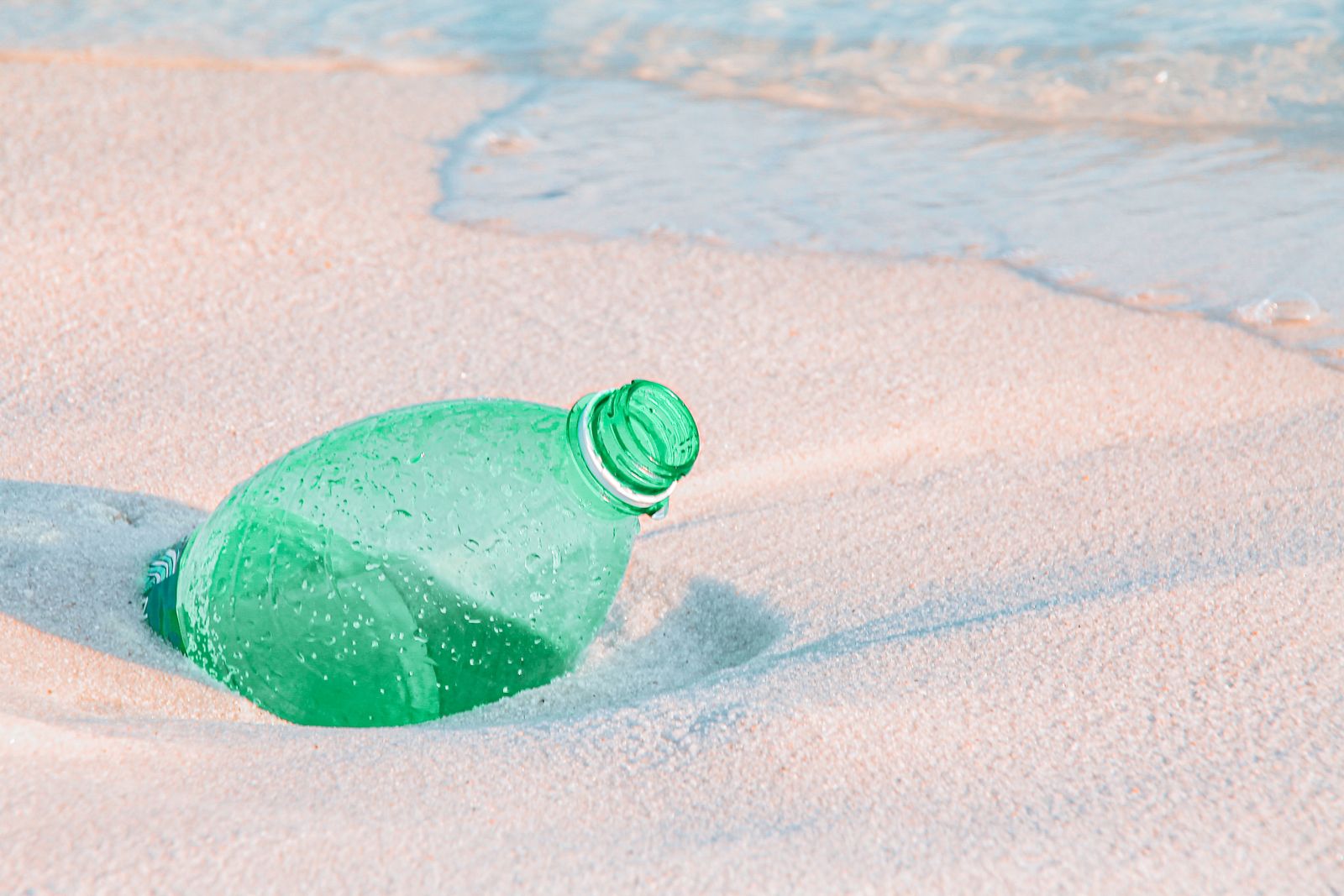
Americans generate broadly similar amounts of plastic packaging waste across income and education levels. What changes dramatically is what happens after that packaging leaves the household. A University at Buffalo study published in April 2026 mapped recycling infrastructure across the contiguous United States and found that wealthier and more college-educated communities are much more likely to recycle plastic packaging.
The peer-reviewed study in Communications Sustainability found that proximity to material recovery facilities is associated with higher recycling rates, making infrastructure access a key determinant of recycling performance. The finding complicates decades of consumer-facing messaging that treated recycling mainly as a matter of household discipline.
The map behind the claim
The research team plotted all 419 major material recovery facilities on the U.S. mainland. These are industrial-scale plants where municipal recycling trucks, businesses and other large waste generators deposit mixed recyclables before they are sorted and processed.
The researchers then calculated the distance from roughly 130 million buildings to the closest material recovery facility. They also measured the distance from each recovery facility to the nearest plastic reclaimer and combined those measurements with census data on income, education and other socioeconomic factors.
Roughly 30 miles became a working baseline for accessibility. The study found that most people in regions with high plastic recycling rates live within that distance of an industrial recycling facility. The researchers also tested smaller and larger distances to see whether the socioeconomic pattern persisted.
Residents in well-served areas were 30% to 55% wealthier and 14% to 19% more college-educated than people in areas with limited access. California, Massachusetts, Rhode Island, Connecticut, New Jersey and Maryland were among the regions identified as having both high plastic-waste generation and high recycling rates.
Where the plastic piles up instead
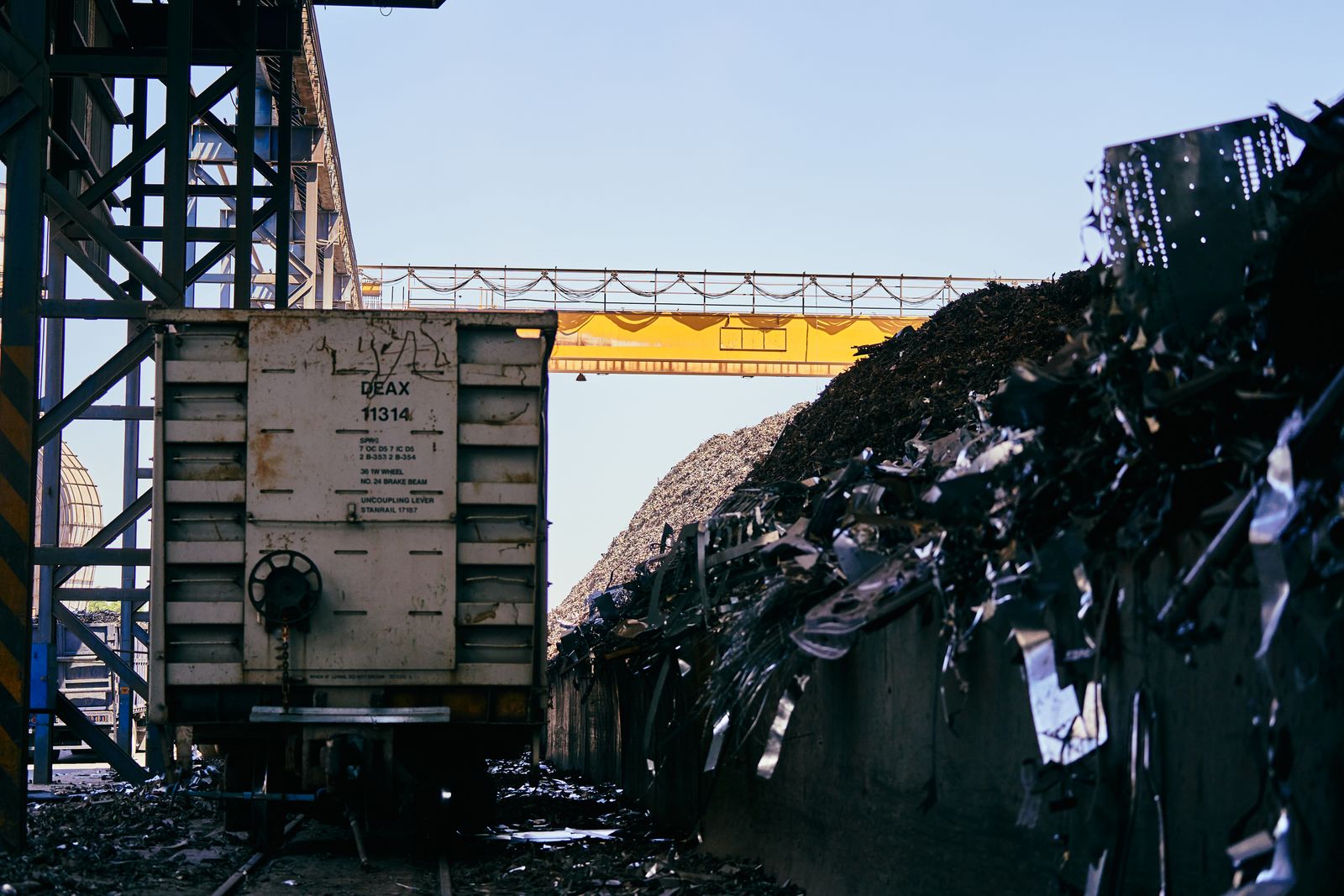
Texas, Alabama, Mississippi, Georgia, South Carolina, Louisiana and Oklahoma, along with parts of Arkansas, were identified as places where plastic-waste generation is high but recycling rates are low. These regions generally have fewer large-scale recycling facilities and lower levels of income and college education than better-served regions.
The study found that many communities in the South and Southeast generate similar amounts of plastic packaging waste to communities elsewhere while sitting much farther from recovery and processing infrastructure. That distance can make recycling more expensive and logistically difficult.
The word feasible matters here. The study does not claim that distance alone determines whether any individual town offers curbside pickup, and the researchers explicitly note that they did not model every local regulatory, economic or political factor. What their national map does show is that access to the infrastructure needed to sort and process recycling is distributed unevenly.
The plastic-justice framing
The Buffalo authors situate their work within a framework known as plastic justice, which examines plastic pollution through environmental justice and inequality. Their analysis asks whether communities with fewer economic and social resources are also being left with poorer access to the systems required to recover plastic waste.
That framing changes the policy conversation. If infrastructure is a major constraint, education campaigns and better household sorting cannot solve the problem by themselves. The authors recommend adding recycling infrastructure in high-waste regions that lack it, investing in underserved rural and lower-income areas, and expanding policies such as container-deposit laws.
The study found that states with bottle bills, which require refundable deposits on beverage containers, have plastic-packaging recycling rates roughly twice the national average. The researchers argue that policy and physical infrastructure work together in determining how much material is actually recovered.
Why household virtue is an incomplete story
The Buffalo team’s central finding, that plastic-packaging waste generation varies little across most socioeconomic measures while recycling rates vary much more, challenges a purely behavioral explanation for the country’s recycling gap.
There is also a longer history behind the emphasis on individual responsibility. Keep America Beautiful’s famous 1971 campaign featuring actor Iron Eyes Cody presented pollution as something individuals could stop through their own behavior. Environmental historian Finis Dunaway has documented how the organization, backed by major beverage and packaging interests, helped move responsibility for litter toward individual action rather than corporate production.
The broader empirical picture remains difficult for recycling alone. A 2026 study analyzed thousands of shoreline litter surveys across more than 100 nations and found that food and beverage plastics were the most common litter category in 93% of the countries surveyed.
Food packaging, caps and lids, and plastic bottles were especially widespread, including across China, India, the United States, Indonesia and Pakistan. The researchers argued that waste-management technology alone cannot keep pace with the volume of avoidable plastic being produced.
What actually happens to some exported plastic
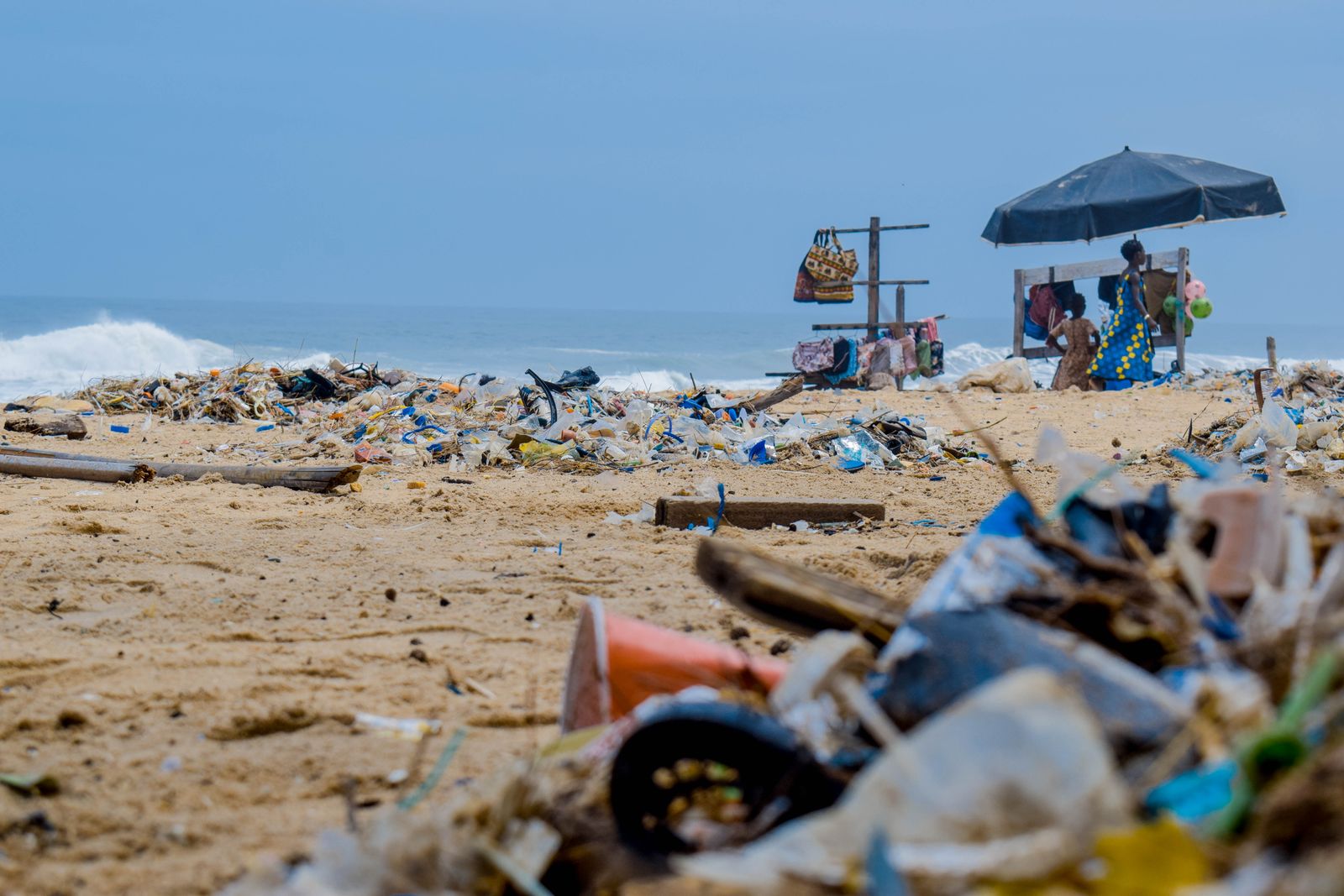
Even material collected for recycling does not necessarily become another bottle or container. A June 2026 analysis by University of Colorado Boulder researcher Ellen M. Considine, republished from The Conversation, examined what happened as international plastic-waste flows shifted after China’s 2018 import restrictions.
The analysis focused in particular on Indonesia, which became a major destination for imported plastic waste. Researchers found that particulate-matter pollution increased around large open dump sites there relative to expected levels after the trade shift, highlighting the environmental and health risks that can accompany poorly managed imported waste.
So the gap identified by the Buffalo study sits inside a larger problem. Better access to domestic recycling infrastructure can improve recovery, but collection alone does not guarantee that plastic will ultimately be processed safely or returned to commercial use.
The facilities, mapped
The scale of the Buffalo dataset gives the finding much of its weight. Researchers mapped 419 major material recovery facilities across the U.S. mainland and calculated the average straight-line distance from nearly every building in the country to the nearest one.
They also measured the distance from each material recovery facility to the nearest plastic reclaimer. The study notes that longer downstream transport distances increase costs and logistical constraints, which can reduce the likelihood that sorted plastics are ultimately reprocessed.
The authors also acknowledge that geography is only part of the system. Facility capacity, local economics and policy decisions can all influence whether a recycling program succeeds, and those factors were not fully captured in the national model.
The technology gap the study did not measure
Sorting mixed plastics remains a technical challenge even inside a well-served material recovery facility. Existing identification technologies can suffer from limitations involving sensitivity, selectivity, speed, black plastics and the ability to identify materials from a distance.
A separate University at Buffalo project announced in June 2026 is developing what researchers call three-dimensional transient thermal barcodes. The system shines selected mid-infrared wavelengths onto plastic, creating temporary heat patterns that reflect each polymer’s molecular structure and can be measured with a thermal camera.
Researchers demonstrated the technique on six common plastic types, including PET, HDPE, LDPE, PVC, polypropylene and polystyrene, as well as black plastics. The system is not yet ready for industrial deployment, and the team is working on faster hardware, more economical light sources and software capable of handling high-speed sorting.
The work illustrates how infrastructure and technology can become separate bottlenecks. A community far from a recovery facility cannot benefit much from improved sorting equipment, while a facility with inadequate sorting capability may struggle to recover value from the material it receives.
Producers, lawsuits, and the shift upstream
The debate over responsibility has also reached the courts. In November 2023, New York Attorney General Letitia James filed a public-nuisance lawsuit in Erie County Supreme Court against PepsiCo and its Frito-Lay subsidiaries, arguing that their packaging contributed heavily to plastic litter around the Buffalo River.
That case did not establish producer liability. On October 31, 2024, the Erie County Supreme Court dismissed the complaint in its entirety, rejecting the state’s public-nuisance and related theories against PepsiCo and Frito-Lay.
The litigation nevertheless illustrates how the policy debate has expanded beyond what households put in a recycling bin. Extended producer responsibility programs, which require manufacturers to contribute financially to managing packaging waste, are another way governments are testing that upstream approach.
Muhammad Reza Cordova, a marine scientist at Indonesia’s National Research and Innovation Agency and a co-author of the global shoreline study, told Mongabay that low-income communities often rely on single-use plastics such as sachets because they are affordable. He argued that refill and reuse systems and producer-responsibility frameworks need to remain affordable rather than simply shifting costs onto consumers.
Where this leaves the American recycling bin
The Buffalo authors end with three broad policy directions: add recycling infrastructure in high-waste regions that lack it, invest in underserved rural and lower-income areas, and expand policies such as bottle bills. All require decisions about infrastructure, funding and legislation rather than household sorting alone.
The researchers are clear about their model’s limitations. It does not account for the capacity of each material recovery facility, and it does not fully capture the regulatory, economic or political conditions that influence recycling in individual communities.
What it captures especially well is geography. Across the United States, households may generate similar amounts of plastic packaging, but they do not all have the same physical system waiting beyond the curb. The recycling bin is only the first step. Whether its contents go any farther depends heavily on what infrastructure exists after the truck arrives.