
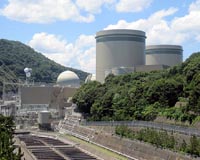
Japan's atomic regulator declared Wednesday that two reactors at the Takahama nuclear power plant were safe, making a step toward restarting them for the first time since the 2011 Fukushima disaster.
The reactors are both over 41 and 42 years old, falling under the regulation by the national Nuclear Regulation Authority (NRA) which banned reactors that have turned 40 years from operating. NRA later extended the allowed service period by 20 years if they pass a security screening.
Takahama reactors in the Fukui Prefecture are still to clear two more equipment security checks and a seismic test by July. If they get the clearance from NRA, Takahama operator Kansai Electric Power will have to spend some $1.3 billion on security updates over the next three years.
Japan toughened nuclear regulations after a 9.0-magnitude earthquake and an ensuing tsunami crippled the Fukushima power plant in 2011, triggering a meltdown that caused the facility to leak radioactive material into the sea.
Japan Begins Work onRestarting Takahama Plant'sFourth Nuclear Reactor
Work to restart the fourth nuclear reactor at the Takahama power plant began in Japan's western prefecture of Fukui on Friday, just days after a radioactive water leakage there, the plant's operating company said in a statement.
In February, 34 liters of radioactive water were found in a room next to the 4th reactor at Takahama. Following the discovery, Japan's Kansai Electric Power Company (KEPCO) temporarily suspended the preparations to restart the reactor. However, after KEPCO adopted appropriate measures, the preparations were resumed.
According to the company's statement, KEPCO experts have begun lifting control rods that inhibit chain reactions. A stable self-sustained chain reaction is expected to start functioning on Saturday, which will mean a successful restart of operations, the company noted in the statement. All going to plan, the reactor will start producing electricity on Monday.
The Takahama plant was shut down soon after the Fukushima nuclear power station disaster in 2011. Two of its nuclear reactors were restarted in early January 2016. On January 29, its third nuclear reactor restarted operations.
