
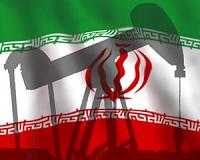
Iranian President Hassan Rouhani told visiting officials from Venezuela it was incumbent upon producers to improve the situation in the global energy market.
"The Islamic Republic of Iran and Venezuela are friends and will do their utmost in favor of their nations' economic development and welfare," the Iranian president told visiting Venezuelan President Nicolas Maduro.
Iran is eyeing a return to the global energy stage as sanctions pressures ease in the wake of a July nuclear agreement reached between Tehran, the five permanent members of the U.N. Security Council and Germany.
By the end of the year, Iran is expected to start up dozens of oil and gas projects, worth an estimated $185 billion. Production from Iran is already rising, holding steady at around 2.85 million barrels per day from the 2013 average of 2.67 million bpd.
Iran's return comes at a time when an excess of oil on the market is keeping crude oil prices suppressed. Oil prices started moving lower in late 2014 when Saudi Arabia, the de facto leader of the Organization of Petroleum Exporting Countries – of which Iran and Venezuela are members – said production needed to remain steady in anticipation of future demand growth.
Some market watchers interpreted Riyadh's move as an effort to price rival U.S. oil production out the market. The move, however, may hurt weaker economies within the 12-member production group.
The Central Bank of Venezuela blamed last year's collapse in oil prices for a drop in gross domestic product. Speaking from Tehran, Venezuelan Oil Minister Eulogio Del Pino said oil could drop below $30 per barrel without some coordinated action from OPEC members.
"We cannot allow that the market continue controlling the price," he was quoted by Bloomberg News as saying. "The principles of OPEC were to act on the price of the crude oil, and we need to go back to the principles of OPEC."
Russian oil producer adds to global glut
Moscow (UPI) Nov 23, 2015 –
Russian oil producer Gazprom Neft added to the oversupplied market, saying its output for the first nine months of the year increased more than 20 percent.
Crude oil prices are 45 percent lower than at this time last year in part because the increase in global production is more than a weakened economy can absorb. That's hurt economies like Russia, whose finances depend in part on export revenue.
Gazprom Neft, a division of Russian energy giant Gazprom and the country's fourth-largest crude oil producer, said production volumes of 436.4 million barrels of oil equivalent represented a 22.2 percent increase year-on-year. The company credited the gains in part to an increase at its arctic Prirazlomnoye field.
The company reached a milestone at the field in September 2014 with the production of its 1 millionth barrel of oil. After tapping the second production well in August, Gazprom Neft said the oil field, located in the Pechora Sea, should eventually double the full-year 2014 production level of 2.2 million barrels.
Sales for the oil arm of Gazprom were down less than 1 percent from last year, a drop the company attributed to declining oil prices. Net income fell 6.2 percent to $2 billion for the first nine months of 2015.
"The negative impact of foreign exchange rate differences in loan revaluations held back net income growth," the company said.
Sanctions and macroeconomic pressures had a negative impact on the value of the Russian currency, the ruble.
