
The long-awaited resumption of international talks in Vienna to revive the 2015 Iran nuclear deal will take place Monday afternoon, a diplomatic source said.
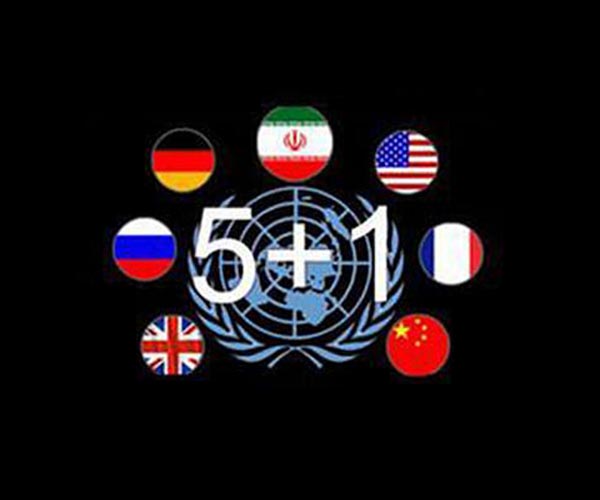
The talks between the remaining partners to the deal — Iran, China, Russia, Germany, France and the UK — will restart at around two pm local time (1300 GMT), the European diplomat told AFP on Sunday.
The US will also send a delegation headed by Washington's Special Envoy for Iran, Rob Malley, which will participate in the talks indirectly.
Russia's ambassador to the UN in Vienna Mikhail Ulyanov had said this week that "informal meetings" between the participants were expected ahead of the formal talks beginning in the Austrian capital's Palais Coburg hotel.
Ulyanov noted that Monday would mark more than five months since the talks were suspended, "a very protracted pause".
"The talks can't last forever. There is the obvious need to speed up the process," Ulyanov tweeted on Saturday.
On Saturday Iranian media reported that the country's chief nuclear negotiator Ali Bagheri had arrived in Vienna, days after visiting Kuwait and the United Arab Emirates.
The 2015 deal known as the Joint Comprehensive Plan of Action, or JCPOA, was designed to prevent Iran from acquiring a nuclear arsenal by imposing strict limits on its nuclear programme in return for the lifting of some sanctions.
But it unravelled in 2018 when then president Donald Trump unilaterally withdrew the US from the accord.
A year later Iran began retaliating by rolling back its nuclear-related commitments, for example breaching the limits laid down in the accord on its stockpile of enriched uranium.
Trump's successor Joe Biden has said he wants the US to return to the accord but Washington has accused Iran of dragging its feet and making "radical" demands.
US options when Iran nuclear deal talks resume
Washington (AFP) Nov 28, 2021 –
The United States under President Joe Biden is to resume on Monday indirect negotiations with Iran in Vienna — but is far less optimistic than in the spring about the possibility of saving the Iranian nuclear deal.
And its options to prevent Tehran from developing a nuclear bomb are limited if talks fail.
– Relaunching the 2015 deal –
As president, Donald Trump withdrew from the international deal in 2018 and reimposed US sanctions lifted under the accord's terms.
In response, the Islamic Republic has flouted many of the restrictions set on its nuclear program.
Biden has said he wants to return to the deal — negotiated in 2015 by then-president Barack Obama, under whom Biden served as vice president — so long as Iran also resumes the original terms.
The indirect negotiations in Vienna resume Monday after a five-month suspension imposed by Iran.
"There is room to quickly reach and implement an understanding," a spokesperson for the US State Department said Wednesday.
But the American envoy on Iran, Rob Malley, has said that Tehran's attitude "doesn't augur well for the talks."
Washington has accused the Middle Eastern nation of dragging its feet and increasing its "radical" demands — while still making progress that would bring it significantly closer to developing a bomb.
– An interim agreement –
If, when talks resume, it quickly becomes apparent to the United States that Iran only wants to buy time to step up its nuclear advances, then Washington will not "sit idly by," Malley warned.
"We're going to have to see other efforts — diplomatic and otherwise — to try to address Iran's nuclear ambitions," he said.
One of the diplomatic options mentioned was a possible interim agreement.
"The Biden administration could look at a short-term deal, a limited agreement that freezes some of the most proliferation-sensitive activities in Iran in exchange for some modest sanctions relief," Kelsey Davenport, the head of nonproliferation policy at the Arms Control Association, told AFP recently.
The goal is to buy some time, as Tehran is much closer to possessing a nuclear bomb than before.
But such a move risks provoking an outcry in Washington, among Republicans but also among several members of Biden's Democratic Party, who would see it as too generous a concession to Iran.
– More comprehensive –
"If Iran comes back to the negotiating table with a long list of demands outside of the JCPOA, the US could reciprocate" and present its own list about Iran's role in regional conflicts and its ballistic missiles, said Davenport, using the official acronym for the nuclear deal.
But doing so would open up long and complex negotiations with an uncertain outcome.
And there is nothing to prevent Iran from continuing to develop its nuclear program during that time.
– More pressure –
For Suzanne DiMaggio, a researcher at the Carnegie Endowment for International Peace think tank, the "options beyond restoring the deal are not great."
"If there was a better plan out there, we would have heard it by now," she said Friday during an exchange with reporters.
One possibility would be to increase economic sanctions, even as the Democratic administration continues to blast the Trump era "maximum pressure" approach as a failure.
Punitive measures could also target China, which continues to buy Iranian oil despite a US embargo. But Beijing is unlikely to change its stance.
US hawks opposed to the 2015 deal — and there are many, particularly among conservatives — argue that Washington should increase economic, diplomatic and even military pressure without waiting for the outcome of the Vienna negotiations.
– The military option –
Accused of weakness by proponents of a harder stance, the Biden administration began to toughen its approach in October, warning that "other options" than diplomacy were on the table to prevent Iran from becoming a nuclear power.
The White House did not specify what those options were, but it has clearly hinted at the possibility of military action.
However, in a noted op-ed, former US diplomat Dennis Ross said that the "routinized" reference to "other options" had become insufficient, as "Tehran no longer takes Washington seriously."
"The Biden administration needs to put the prospect of military escalation back on the table if it hopes to make progress on the nuclear issue," he wrote in the essay, published October 27.
Israel, for its part, has clearly embraced this option as a possibility.
But for DiMaggio, military force "will not ultimately solve the problem.
"In fact, precedent is for the Iranians to meet pressure with pressure," she warned.
"More aggressive steps beyond sanctions, including further sabotage of Iran's nuclear program, run the risk of resulting in a miscalculation, mistake or an escalation that cannot be managed, potentially sparking violent conflict."
