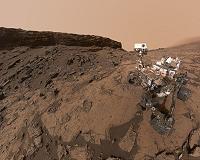
NASA's Curiosity Mars rover, which landed near Mount Sharp five years ago this week, is examining clues on that mountain about long-ago lakes on Mars.
On Aug. 5, 2012, the mission team at NASA's Jet Propulsion Laboratory in Pasadena, California, exalted at radio confirmation and first images from Curiosity after the rover's touchdown using a new "sky crane" landing method.
Transmissions at the speed of light took nearly 14 minutes to travel from Mars to Earth, which that day were about 154 million miles (248 million kilometers) apart.
Those first images included a view of Mount Sharp. The mission accomplished its main goal in less than a year, before reaching the mountain. It determined that an ancient lake environment on this part of Mars offered the conditions needed for life – fresh water, other key chemical ingredients and an energy source.
On Mount Sharp since 2014, Curiosity has examined environments where both water and wind have left their marks.
Having studied more than 600 vertical feet of rock with signs of lakes and later groundwater, Curiosity's international science team concluded that habitable conditions lasted for at least millions of years. With higher destinations ahead, Curiosity will continue exploring how this habitable world changed through time.
Curiosity Mars Rover Begins Study of Ridge Destination
The car-size NASA rover on a Martian mountain, Curiosity, has begun its long-anticipated study of an iron-bearing ridge forming a distinctive layer on the mountain's slope.
Since before Curiosity's landing five years ago next month, this feature has been recognized as one of four unique terrains on lower Mount Sharp and therefore a key mission destination. Curiosity's science team informal … read more