
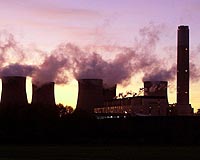
EU governments on Wednesday agreed to tighten up limits to industrial pollution, though without getting as tough as some nations, and environmentalists, would have liked.
The new rules, agreed by European Union environment ministers in Luxembourg, regulate emissions of sulphur and nitrogen compounds, dust particles, asbestos and heavy metals, in an effort to reduce air as well as water and soil pollution.
They will apply to heavy industry such as steel and power plants and oil refineries, obliging them to use state-of-art green techniques by 2016 and to respect nationally set pollution limits.
However, under pressure from most EU nations, the rules do not include existing operations, such as old coal-fired power stations until 2020.
Nor do they apply to carbon dioxide emissions.
Originally five EU nations — Austria, Denmark, France, Germany and the Netherlands — had wanted to rule out any such waivers.
However the Dutch broke ranks on Wednesday, leaving the other four without sufficient heft to force their will, according to one diplomatic source.
British Environment Secretary Hillary Benn voiced satisfaction at the decision.
"In particular the agreement will help ensure a smooth transition to low emissions and low carbon power generation by 2020 and beyond, without risking locking in continuing high carbon energy generation," he said.
However he said the challenge was for member states to ensure that the legislation once introduced is implemented.
The WWF said the new measures lacked bite as CO2 which it called the "most polluting product in the world" was not included.
The new legislation is primarily designed not to fight global warming but to improve air quality as, according to scientific study, the material in question actually ease global warming.
The text must now go to the European parliament for approval, which is bound to take at least six months, according to a European official.
Share This Article With Planet Earth
