
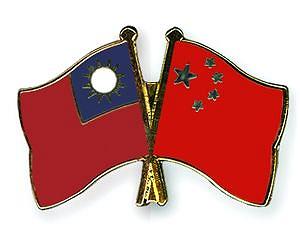
China on Wednesday welcomed a proposal by Taiwan's president for a peace treaty, but dismissed calls by the island's opposition for a referendum on political talks as a "stunt".
Taiwan President Ma Ying-jeou last week suggested the island should consider signing a peace treaty with China in the coming decade to put a formal end to a civil war that finished in 1949.
A peace treaty is considered one of the thorniest issues in the complex relations between China and Taiwan. Beijing claims sovereignty over the island and has never ruled out the use of force to bring about unification.
Yang Yi, spokesman for China's Taiwan Affairs Office, said a peace treaty was in the interest of "the Chinese nation", which refers to people living in both the mainland and Taiwan.
"It is a shared wish of compatriots on both sides of the Strait and a position we have upheld for many years," he said at a news conference.
"I hope both sides of the Strait will strengthen communications on this and build on mutual trust to gradually create conditions (for such a treaty)," he said.
Taiwan's pro-independence opposition camp has reacted furiously to the peace treaty proposal, accusing Ma of leading Taiwan down the road to reunification with the mainland.
Ma has repeatedly sought to reassure voters in recent days, emphasising it would only be signed if it were approved in a referendum.
However, when the opposition Democratic Progressive Party submitted a proposal to subject any political talks with China to a referendum, Ma's ruling Nationalists prevented it from being added to the parliamentary agenda.
Yang denounced the opposition camp's push as an attempt to gain political capital.
"Political consultations are something natural for the future when conditions are created. No political force ought to be allowed to use this as an opportunity to create a political stunt," he said.
Ma's first term has been focused on economic exchanges with China, based on the philosophy that trade and investment are less contentious issues than political talks.
