
A British-led initiative by clean tech company Ultra Green International (UGI) to rescue the Gulf of Mexico from the effects of the BP Deepwater Horizon oil disaster will announce its six week plan to capture the majority of the floating BP oil spill by combining innovative technology with grass roots action.
UGI believes that, unlike other clean-up proposals, if necessary its scheme can be funded entirely from oil recovered, as well as providing work for local fishermen and harnessing the enthusiasm and knowledge of the frustrated local community, whose offers of help to BP have so far been largely ignored.
UGI has pooled its resources with its USA science partner Algaeventure Systems (AVS), which has an established relationship with the US military and the US Department of Energy, to provide a rapid and scalable method of clearing-up and salvaging the oil spill and deploying barriers to protect beaches.
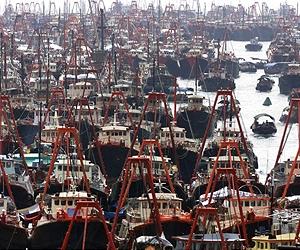
With help from the Commercial Fishermen of America and USA volunteer groups, Brighton-based UGI intends to mobilise 168 fishing boats towing technology platforms specifically designed to remove the oil threatening the beaches of the Gulf of Mexico and the waters around Deepwater Horizon and transfer it to specially chartered tankers.
The company has hired Major David McPherson, the man who successfully moved Margaret Thatcher's Falkland's war machine 8,000 miles in 5 weeks, to head up this complex logistics exercise.
Funding for the first full scale floating platform was provided by UGI, a consortium of individuals and companies from the UK and Northern Ireland, including Pounds 0.3 million (approximately US $400,000) from Belfast-based Lightstep Technologies.
The joint venture is continuing its funding efforts and has pulled together an international team of eminent scientists, engineers (mechanical, marine and petrochemical) and logistics experts to draw up a plan which they believe will clear the spillage within the few critical weeks remaining before the hurricane season begins.
As well as engaging the support of some of the industry's greatest experts, UGI's clean-up operation will tap into the potentially massive help available from local volunteers and fishermen to implement the scheme on the ground and in the water. The volunteer taskforce from the four threatened states will patrol beaches and call in UGI emergency technology to stop breakaway oil slicks damaging or destroying local economies and environments.
At the heart of UGI's plan is a unique membrane developed by AVS which acts like blotting paper in attracting oil that can then be released only by mechanical pressure. Drawing on methods that have been rigorously tested in laboratory conditions, the team has designed a 21 metre roller system to be mounted on towed platforms that will draw oil out of the water using belts of membrane at the rate of at least 25,000 gallons a day per boat.
It will then be pressed out of the membrane and siphoned into marine bladders which can be towed away to waiting tankers. Significant marine and oil spill safety features have been built into the system, which is designed to recover the oil from the surface of the Mexican Gulf down to 1.5 metres, the depth which encompasses the most damaging oil.
The aim is to prevent the oil from reaching the coast and transfer it from the platforms to floating bladders before loading it on to conventional oil tankers.
A major USA manufacturer, Park Ohio Inc, has set aside a brand new computer driven robotic production plant to build the roller system arrays which will be fitted to the floating platforms to be towed by locally based working boats.
Antony Blakey, Executive Chairman of UGI, who has been the driving force behind the development and the implementation of the solution observes: "Even though BP is a multi-national business, it is perceived by many to be a British company, so it seems appropriate that British people and companies should show that we're doing all we can to help the people of the coast save their economy and ecology rather than just salvage the mess. We already have funding from private individuals and companies for the first full-scale platform, which will be ready and in the waters of the Gulf of Mexico early in July."
UGI's team also includes David Weaver, former Managing Director of BP Northern Europe Gas, Power and Renewables and an expert in oil spill clear-up, who explains "We hope that BP appreciates the fact that we are trying to help them. The losses they are facing are catastrophic and we have all seen the impact on their share price. I know from the inside that they are bureaucratic, which is why they are so slow, but BP knows only too well that damage to the environment and the local economy increases every day and will be magnified appallingly if it is not dealt with before the first hurricane."
Share This Article With Planet Earth
