
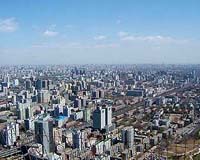
Beijing planned to direct some of its frenetic development underground to ease congestion and other urban growing pains plaguing the city, state media reported Sunday. City planners have identified 17 key areas of the city for subterranean development, and envision an eventual "underground town" spanning 90 million square meters by 2020, Xinhua news agency said.
The plan would quadruple the amount of underground space now being utilized in the city, which is currently at about 30 million square meters, Xinhua quoted Shi Xiaodong, a designer with the Beijing Municipal Institute of City Planning and Design, as saying.
The plan would help ease traffic congestion, tensions over land use in downtown areas, and environmental problems, Xinhua reported.
The areas targeted for subsurface development included the thriving Wanfujing shopping area and the bustling central business district.
Underground floor space had expanded by three million square meters in Beijing annually, and accounted for 10 percent of the city's total floor space completed each year, Shi said.
About 30 percent of the new space developed annually was used for commercial and cultural purposes, with the rest devoted to parking and other traffic use, Xinhua said.
Beijing is in the midst of a building boom, fuelled by a surging economy and huge pent-up housing demand, and new residential and office towers are sprouting all over the city.
The growth spurt has resulted in traffic-clogged city streets, as more Chinese can afford cars, and worsening air quality in the Chinese capital.
Source: Agence France-Presse
