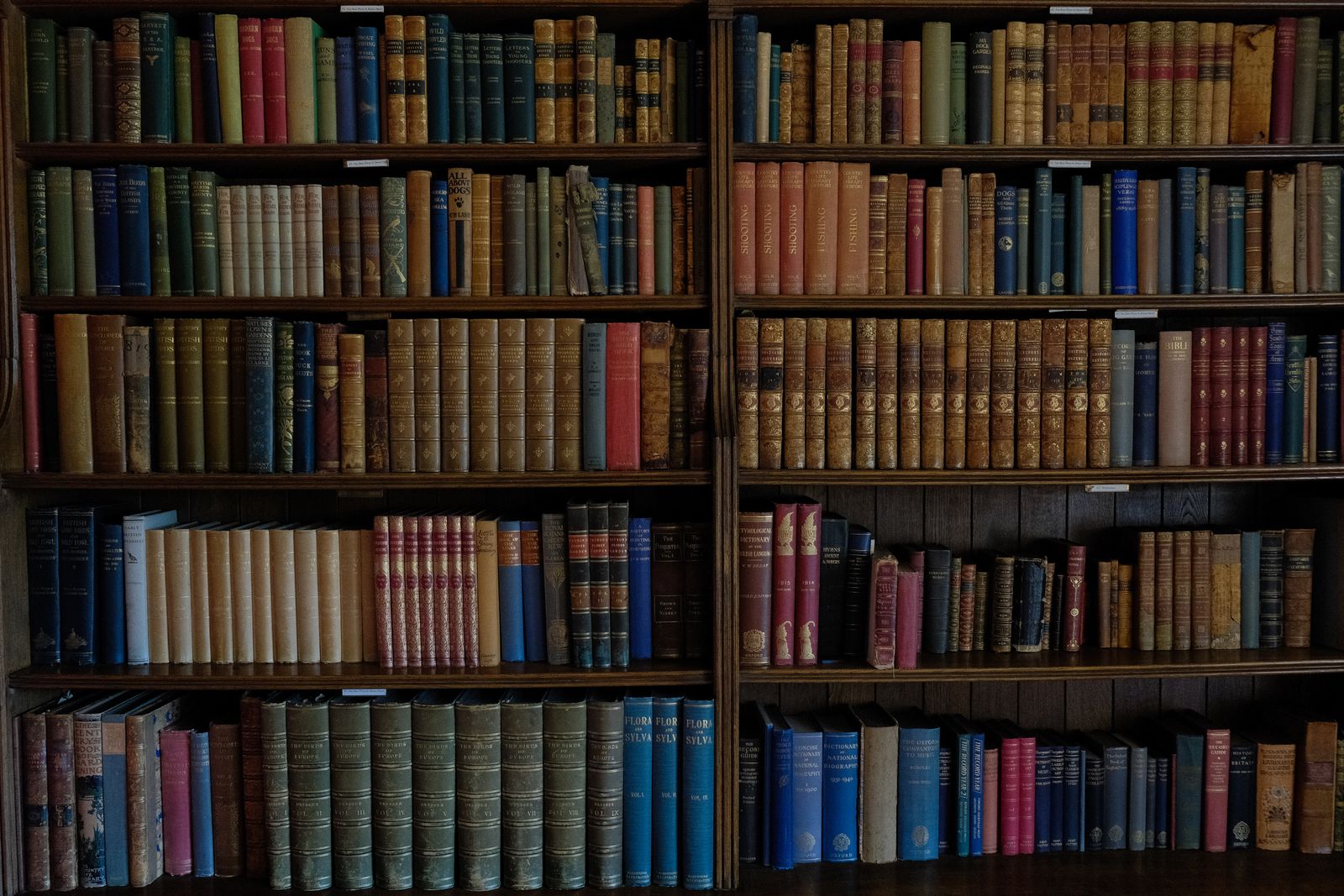
Dr. Ann Garrett Robinson died on June 27, 2026, three weeks after celebrating her 92nd birthday, according to the New Haven Independent. In her final years she had been sorting through oil paintings, oral histories, photographs, and the paper record of a life that broke several colour lines in Connecticut higher education, at her longtime home in the Dixwell neighbourhood of New Haven — working, as she did, with an archivist from Yale’s Beinecke Rare Book and Manuscript Library, one of the most significant repositories of rare books and manuscripts in the world.
Robinson was the first Black woman to join the faculty of Trinity College in Hartford, according to Trinity’s own institutional history. She was also the first Black certified psychological examiner in the New Haven public school system, according to YaleNews. The collection she built over decades was, in her final years, being triaged into what would stay, what would go to an institution, and what would get a finding aid so a future researcher could actually locate it.
A personal archive with oil paintings in it
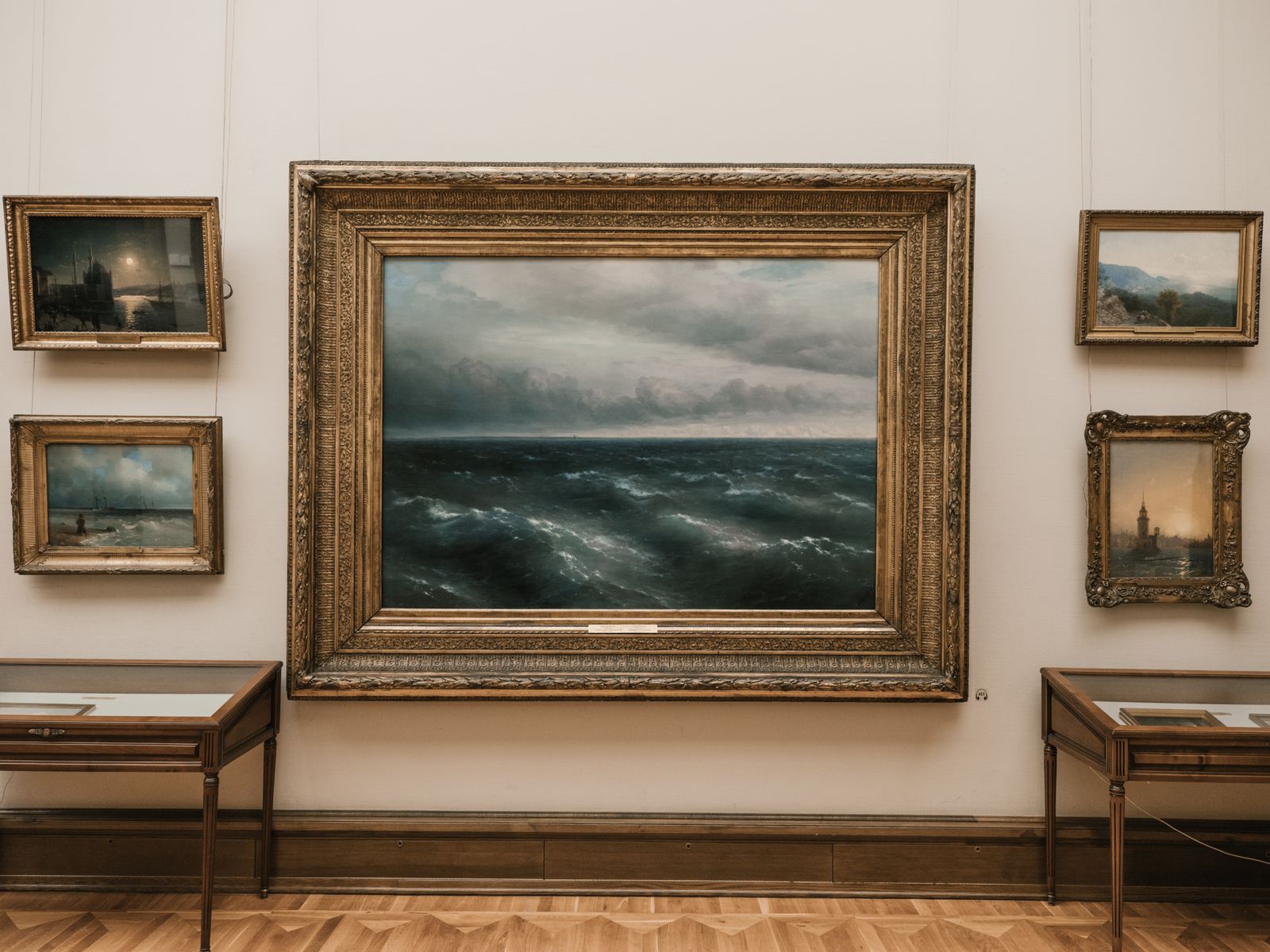
Most personal archives are boxes of paper. Robinson’s was not. It included a wide range of materials, from small photographs and records to large oil paintings. The physical range is the first problem an archivist has to solve. A letter can be sleeved in Mylar. A framed canvas cannot.
The collection also included records from the Little Red Brick Schoolhouse Museum, which Robinson founded to commemorate the first school for African Americans in New Haven. And it held her research on Lucretia, the first known Black resident of New Haven, who was enslaved by the governor of the New Haven Colony. Robinson led the successful drive that got a downtown street corner renamed in Lucretia’s honour.
The scale was unusual for a private collection. So was the subject matter — a single scholar’s papers that double as one of the more complete community records of Black New Haven from the 17th century to the present.
Why the Beinecke got involved
The Beinecke is best known for institutional-scale acquisitions. It bought the papers of the humorist David Sedaris in 2018, as YaleNews reported at the time. It holds a substantial cache of Sylvia Plath family material, which the library’s own announcement of the acquisition said would offer previously unavailable views of her life and work. It houses the archive of the novelist Cynthia Ozick, an intimate window onto 20th century American letters, as Connecticut Public reported.
Robinson’s engagement with the library had been different. She was not selling her papers. She was being helped to organise them.
The mechanism was the New Haven Community Archive Support program, run by Jennifer Coggins, the Beinecke’s community engagement archivist. The program runs workshops, often at branches of the New Haven Free Public Library, and offers one-on-one consultations. It supplies archival-grade folders, boxes, and access to specialist scanning equipment. The premise is that the tools used to preserve a Nobel laureate’s manuscripts can also be pointed at a family album or a neighbourhood association’s meeting minutes.
Coggins explained that the Beinecke helps people develop strategies for preserving materials that matter to them, providing guidance when the process feels overwhelming.
What archivists actually do
The image of archival work as neat filing is misleading. The first stage is triage — deciding what a collection is about. Robinson’s ran across several overlapping identities: academic psychologist, community historian, museum founder, oral historian, painter of and subject of paintings.
The second stage is arrangement. Original order is preferred where it exists. If Robinson kept her Trinity faculty papers in one drawer and her Lucretia research in another, an archivist will usually preserve that separation. It carries information about how the creator thought.
The third stage is description. Every folder gets a label. Every series gets a scope note. A finding aid is written so a stranger — a graduate student in 2075, say — can walk in and locate a specific 1978 committee memo without reading through 40 boxes.
The fourth stage is preservation. Acid-free enclosures. Climate control. Digitisation of the fragile items.
That last step mattered for a collection like Robinson’s. Frank Carrano, founder of the Wooster Square Italian Immigrant Historical Association, brought Coggins a copy of an early 20th-century book about New Haven’s Italian community. His copy had been sitting in an attic. The paper was brittle. Coggins tracked down a better copy inside the Beinecke’s own holdings and had it digitised on one of the library’s specialist scanners — creating what archivists call a digital surrogate, so the text can circulate without the original being touched.
The Trinity College record
Robinson’s appointment to the Trinity faculty in Hartford was the sort of institutional first that often survives in fragments — a hiring letter, a photograph in a departmental newsletter, an oral history recorded decades later. Her advocacy work, teaching materials, and research files together documented a Connecticut academic career that began when Black women on tenure-track appointments at private liberal arts colleges in the state were vanishingly rare.
She also held the distinction of being the first Black certified psychological examiner in the New Haven public schools, a credential that put her inside the assessment machinery of a large urban district at a moment when the assumptions built into standardised testing were being publicly challenged.
Both roles generated paper. Both roles generated relationships. The archive holds both.
Why keep it at all
The question every archivist eventually asks a donor is: why does this matter to anyone but you? Coggins framed the answer in terms of stewardship. Coggins emphasized that historical materials were preserved by ordinary people who made deliberate choices to protect and pass on records over generations. Coggins noted that everyone serves as stewards of historical records, whether they realize it or not.
The instinct to hold on to physical evidence of a life is not eccentric. Many people keep old birthday cards, faded ticket stubs, and handwritten notes in drawers they rarely open — not as sentimental hoarding, but as proof that certain moments actually happened. Robinson’s collection was that same impulse at scale, and pointed outward rather than inward. The oil paintings and oral histories are proof that a community existed.
New Haven had already recognized that stewardship in its own way. In September 2024, the city’s Board of Alders voted unanimously to rename the corner of Dixwell Avenue and Argyle Street — across from Robinson’s home — “Dr. Ann E. Garrett Robinson Way,” the New Haven Independent reported, citing her decades as a psychologist, researcher and local historian.
The 17th-century thread
The Lucretia research was the most striking of Robinson’s projects, because it reaches back nearly four centuries. Lucretia was enslaved in the New Haven Colony by Theophilus Eaton, the colony’s governor, on an estate near what is now the corner of Orange and Elm streets. She is the earliest known Black resident of New Haven. For most of the intervening centuries, she existed in the historical record as a footnote in colonial account books.
Robinson’s 25-year research and advocacy effort led that corner to be renamed Lucretia’s Corner in 2023, the New Haven Independent reported. The research files behind that campaign — the transcriptions, the correspondence with city officials, the drafts of the petition — formed part of the archive Robinson and Coggins sorted together.
The kind of forensic reconstruction Robinson did on a 17th-century enslaved woman is close cousin to the work that recently reunited six missing pages of a medieval English manuscript held at the Beinecke with the rest of the book, held 3,500 miles away in an archive in Brighton. Researchers Katie Walter of the University of Sussex and James Wade of Girton College, Cambridge, matched a fragment catalogued in Sussex to a gap in Takamiya MS 20 at Yale, a 15th-century copy of Nicholas Love’s Mirror of the Blessed Life of Jesus Christ. The fragment had been sitting in the Gage family papers since 1929, hidden in plain sight.
Both projects — Lucretia and the Mirror fragment — depend on the same premise. Someone kept something. Someone else, decades or centuries later, worked out what it was.
Where the collection might live
Robinson had said she was looking to house parts of her collection at libraries or similar institutions. That plural was deliberate. A modern personal archive rarely goes to a single home. The Trinity College papers might logically go to Trinity. The Little Red Brick Schoolhouse Museum records might stay with the museum. The oral histories of Dixwell residents might go to the New Haven Museum or the New Haven Free Public Library’s local history collection. The oil paintings are a separate question again — some may go to institutions, some may stay with family.
Coggins’s role was not to decide any of that. Robinson said that Coggins had taught her to approach her collection holistically, considering both the whole and its individual parts. Robinson emphasized that while Coggins provided frameworks for thinking about the archive, the final decisions remained hers.
The Beinecke’s community engagement director, Michael Morand, put the strategy plainly: Morand explained that the Beinecke’s expanded role now includes supporting the development of new local archives in addition to showcasing existing collections.
The teaching hospital model
There is a way to describe what Coggins’s program does that borrows from medicine. A teaching hospital treats patients and trains the next generation of doctors on the same premises. The Beinecke’s community program treats the same problem — how to preserve a life’s worth of material — and trains community members in the methods on the same premises. The archival supplies flow one way. The knowledge flows both ways, because a scholar who called New Haven home for nearly six decades knew things about the city that no Ivy League library holds.
Robinson had the archive. The Beinecke had the folders, the scanners, and the vocabulary. The finding aid, whenever it is finished, will bear her name on the cover.
She died at 92, three weeks after her last birthday, according to the New Haven Independent. The oil paintings are still on the wall in the house in Dixwell. The boxes, many of them now catalogued, are what’s left to open.