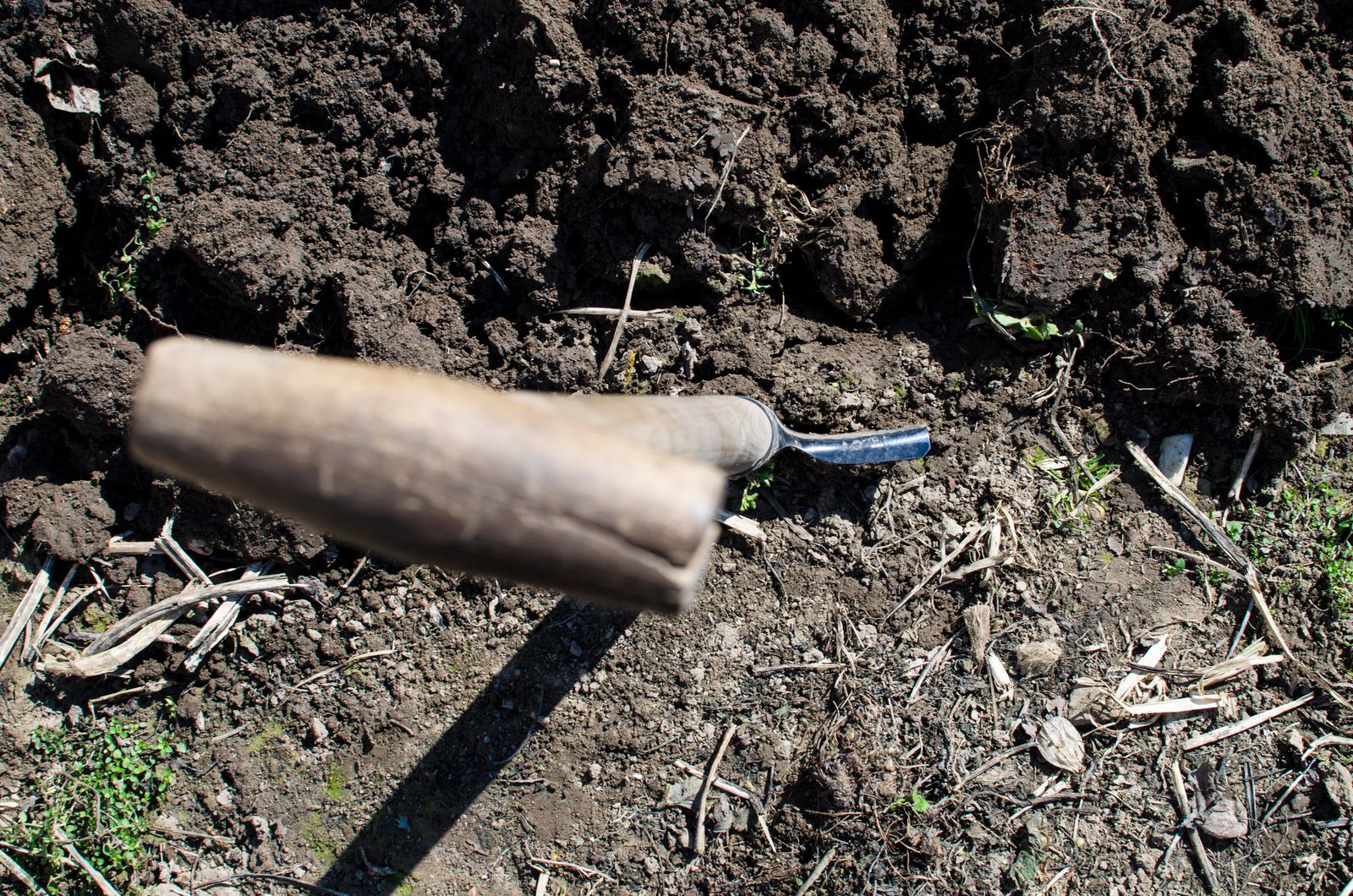
In late April 2026, a first-grader named Henrik Refsnes Mørtvedt was walking home from a school trip through a farmer’s field in Brandbu, northwest of Oslo, when he bent down to collect rocks for an arts and crafts project. What caught his attention instead was part of a roughly 1,200-year-old iron sword protruding from the soil.
He tried to bend the blade. It would not bend.
So he told his teacher.
A rock hunt that turned into an Iron Age find
The field belonged to farmer Ola Rækstad. Mørtvedt’s class had been on an outing, and the walk home took them across the property. Their assignment was simple: collect stones for a school craft project. Mørtvedt noticed something else, a rust-covered piece of metal sticking out of the ground.
He later explained that he worried a tractor might drive over it and puncture a tyre. He also thought the object looked like something that might belong in a museum, so he alerted his teacher rather than leaving it in the field.
Asked how old he thought it might be, the six-year-old considered several possibilities before settling on about a hundred years. The real estimate was more than a millennium older.
What the sword actually is
The weapon is what Norwegian specialists call an enegget, a single-edged blade sharpened on one side. Archaeologists initially placed it in the Merovingian period or the beginning of the Viking Age. Senior adviser Øystein Lia later told Fox News Digital that its shape suggested it was probably produced in Norway between 750 and 850 A.D.
Lia also explained that these early sword blades developed from larger seaxes, long fighting knives that were gradually lengthened into single-edged swords before double-edged blades became common.
The sword is heavily corroded, but its pommel and hilt remain largely intact. Lia said Innlandet typically produces a Viking Age sword find roughly once every two years.
Who may have carried it
The sword was not necessarily an ordinary possession. Lia said the weapon probably belonged to someone of relatively high status, most likely a free landholding man and significant warrior, perhaps someone who served as a military adviser to a local chieftain.
The archaeological setting strengthens the possibility that it was once a grave good. The find spot lies about 40 metres, or 131 feet, from a documented group of small Iron Age burial mounds.
Because the sword was found in cultivated ground, archaeologists believe farming may have displaced it from its original context. That makes a nearby grave a plausible origin, although the identity of the person buried there remains unknown.

Why the find is unusually well preserved
County archaeologists described the sword as exceptionally well preserved for its age. The blade is corroded, but enough of the hilt and pommel survives for specialists to recognise its type and date it from its form.
The cultivated field is also important to the story for another reason. Archaeologists say ploughing probably disturbed the original archaeological context, which may explain how an object associated with the nearby burial area eventually became visible at the surface.
Norwegian children keep making remarkable finds
The Brandbu discovery is not the first time a Norwegian child has noticed an archaeological object that adults might easily have overlooked. In 2023, eight-year-old Elise, a student at Our Children’s School in Osøyro on Norway’s west coast, was outside with classmates when she noticed a roughly 3,700-year-old Neolithic flint dagger.
A separate account reported that the flint knife was found among stones in the schoolyard. Because flint does not occur naturally in Norway, archaeologists said the object may originally have come from Denmark.
Adults with metal detectors have made notable discoveries too. In 2023, Erlend Bore was detecting on Rennesøy, north of Stavanger, when he uncovered nine gold pendants, three gold rings and ten gold beads dating back more than 1,500 years. Bore had taken up the hobby after his doctor advised him to get more exercise.
In November 2025, detectorists Kim Erik Fylling Dybvik and Warren Schmidt were near Åndalsnes and preparing to finish for the day when a detector signalled. Just below the surface they found a small gilded bronze figure of Christ roughly 800 years old. Archaeologist Aaron Johnston said the object may once have belonged to a stave church at the site.
Why reported finds enter Norway’s archaeological record
Norwegian law gives people a clear reason to report protected antiquities rather than quietly keep them. Under the country’s Cultural Heritage Act, qualifying medieval and pre-medieval objects whose owners cannot be traced can become state property. Finders are required to report protected objects, and the law allows the authorities to award a reward shared between the finder and landowner.
Archaeological discoveries also continue to emerge across the country. Science Norway’s national roundup of discoveries from 2024 noted that there had been fewer excavations than in previous years, while still highlighting finds including child graves in Østfold, Viking Age silver and a site that may represent Norway’s first stone church.
What happens to the sword now
The Brandbu sword has been transferred to the Museum of Cultural History in Oslo for preservation and further study. Lia said X-ray examination may reveal details of its construction that cannot be seen through the corrosion.
What an X-ray cannot reveal is the name of the person who carried it or the precise circumstances in which it entered the ground. Archaeologists can narrow the blade to roughly 750–850 A.D., identify it as a single-edged sword and point to the nearby burial mounds as evidence that it may once have been deposited in a grave.
The size of the coincidence
For roughly forty human generations, the sword remained in the ground while the landscape and the country around it changed. Christianity became established in Norway, the Black Death reached Scandinavia, farming changed, industrial machinery arrived and generations worked the same countryside without knowing the blade was there.
Then a six-year-old looking for rocks noticed a piece of metal sticking out of the soil.
The sword is now with the Museum of Cultural History in Oslo. Its find spot remains only about 40 metres from documented Iron Age burial mounds, and archaeologists believe cultivation may have moved the weapon from its original context. What else, if anything, remains beneath the field is still unknown.