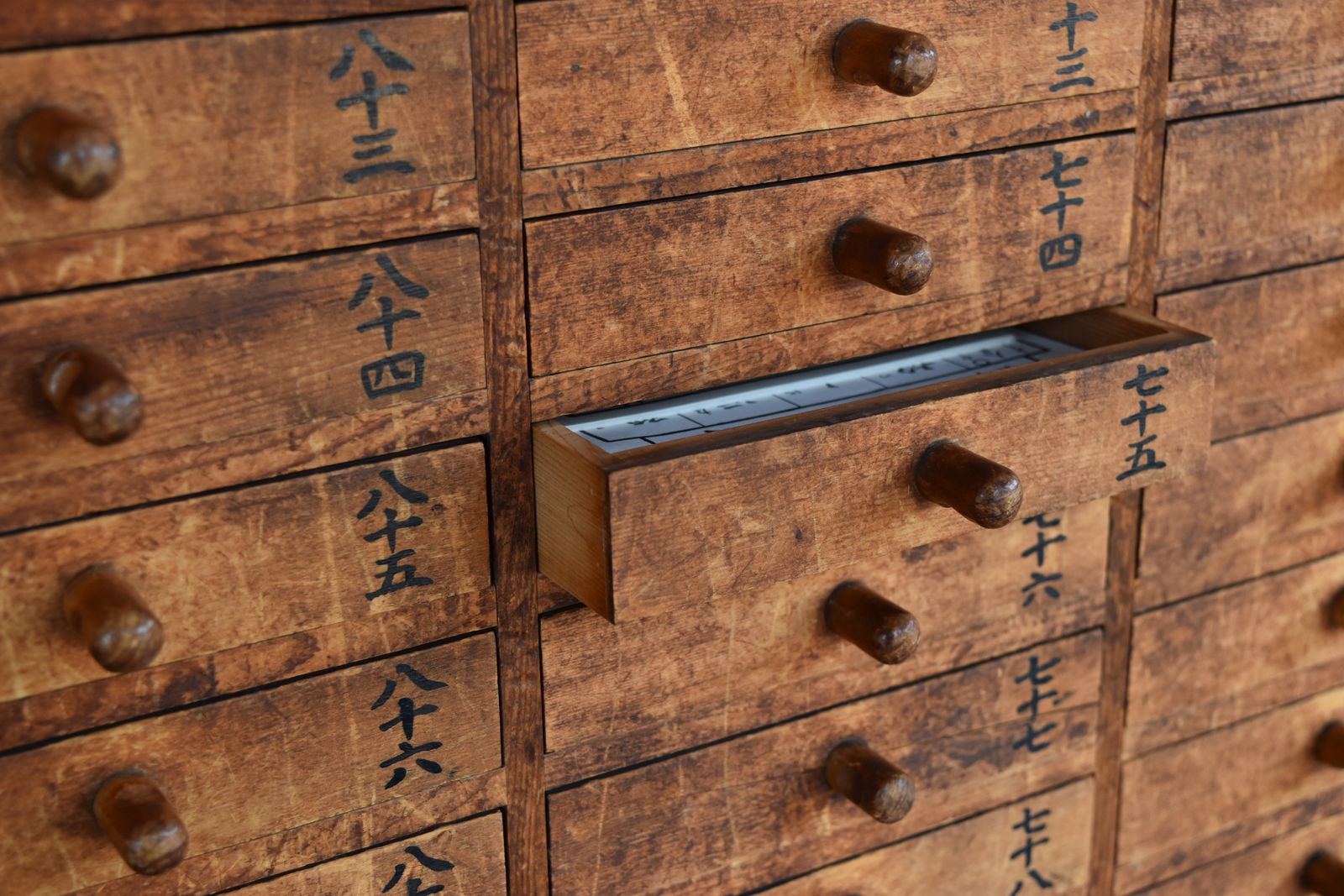
Decluttering culture runs on a rule of thumb that has outlived its evidence: if you have not touched it in a year, throw it out. Marie Kondo is usually invoked to justify that rule, but it is not hers, and her published guidance on keepsakes points the other way. Sentimental items come last in her method, on the grounds that judging them takes more skill than judging anything else in the house, and people who want to hold on to things are told they can. The drawer full of ticket stubs, dried corsages, and folded notes on lined paper is not clutter waiting to be processed. It is doing quiet work that a photo roll on a phone does not do.
People who keep these objects rarely open the drawer. That is the tell. If the point were sentiment, they would look often. The point is knowing the drawer exists.
The drawer is a corroboration device
Human memory is reconstructive, not photographic. Each time a memory is retrieved it is subtly rewritten, and confidence in a memory tends to outpace its accuracy. This creates a peculiar unease, particularly around formative experiences: how do you know the summer you remember actually happened the way you remember it? A physical object with a date printed on it settles the question. The ticket stub from a concert in 2011 is not there to be admired. It is there as evidence, admissible in the court of your own recollection.
This is why the objects tend to be small, dated, and specific. A birthday card in someone’s handwriting, a boarding pass, a wristband from a festival. They are not decorative. They are notarised.
Why analogue objects hold weight that files do not
A bloated camera roll and a shoebox of twenty prints do different things to a person. Sebastian Ocklenburg, writing on what he calls analogue nostalgia, notes that people are drifting back to vinyl records, film cameras, and physical DVDs even though the digital alternatives are cheaper and easier. Part of the pull is the exhaustion of infinite choice: a finite collection is restful. But part of it is that a physical object carries constraints a file does not. It occupies space. It ages. It can be lost.
That fragility is what makes it feel like proof. A jpeg can be duplicated a thousand times without loss, which paradoxically drains it of testimonial weight. A folded note that survived three house moves has, in effect, been verified by time.
Nostalgia as a steadying device, not a sentimental one
Nostalgia was once treated as a medical condition, diagnosed in soldiers and understood as a form of homesickness serious enough to warrant attention. Modern psychology has rehabilitated it. Shurong Cao’s 2024 paper in Frontiers in Psychology sets out what she calls a cognitive processing model of nostalgia, in which the interesting question is not whether the feeling is pleasant but how it regulates negative states and soothes emotional conflict. Recalling the past, on that account, does something useful in the present.
Some of the measured effects are more physical than you would expect. In a 2022 study in the Journal of Neuroscience, Ming Zhang and colleagues found that a nostalgia task reduced participants’ perception of pain, particularly at lower pain intensities. A drawer that reliably produces that feeling when opened is, in a small way, something a person can reach for on purpose.
Continuity of self across time
One of the harder problems of adult life is that the person you were at nineteen no longer exists in any obvious way. The friends have scattered. The apartment has been rented to strangers. Without some anchor, the past can begin to feel like something that happened to a different person, and that distance is quietly unsettling.
Constantine Sedikides and Tim Wildschut, who have spent two decades on this, argue in a 2024 Emotion Review paper that nostalgia augments self-continuity along with meaning in life, authenticity and social connectedness. They also note that nostalgia attaches itself to tangible things as readily as to people and events: toys, books, jewellery, clothing. A physical object from an earlier version of yourself functions as a handshake across time. The handwriting on the card is yours, or belonged to someone who chose you. The ticket in the drawer is proof that the nineteen-year-old and the forty-year-old are the same person, in some legally defensible sense.
Which is also why objects from childhood carry disproportionate weight, and why letting them go can feel like a small bereavement. The drawer is populated with things that reflect earlier versions of the self back accurately. It is a hedge against being misremembered by yourself.
The people who keep the drawer
A few patterns show up consistently in people who maintain a quiet archive of small objects.
They tend to trust felt experience over documented experience. Someone who keeps a program from a play does not need to check whether they went. They know. The program is not for them. It is for the version of them who, in twenty years, might doubt.
They tend to be private about it. The drawer is rarely displayed. It is not curated for guests. This distinguishes the behaviour from collecting, which is oriented outward, and from indiscriminate accumulation, where what matters is not parting with anything rather than the meaning of any particular thing.
They tend to have a low-threshold definition of what counts. A receipt from a diner where a difficult conversation was survived. A bar coaster. A folded napkin. To an outsider, indistinguishable from rubbish. To the keeper, indexed with precision.
Why the “rarely open” part matters
The people described here are not the ones flipping through the box every Sunday afternoon. That is a different habit, closer to going back over something that has not finished happening. The keepers of the rarely-opened drawer are doing something more like insurance. They need to know the evidence exists. They do not need to consult it.
This is closer to how people relate to a passport or a birth certificate. You do not read your birth certificate for pleasure. You keep it because its non-existence would be a problem. The birthday card from a grandmother who is no longer alive works the same way. Its physical presence in a drawer means the relationship happened and has left a trace outside your own head.
There is a strange comfort in externalised memory. Knowing you do not have to carry the whole burden alone lets you hold it more loosely.
The counterexample: when it becomes a burden
None of this is an argument for keeping everything. The behaviour tips into a problem when the volume of kept objects overwhelms the meaning of any individual one, or when the thought of throwing anything away becomes a constant source of unease. A shoebox is functional memory storage. Three rooms is not.
NPR’s Life Kit, reporting on how hard it is to give up childhood things, lands on a more forgiving method than the purge advice: decide up front how much storage space you are willing to give the past, then work within it, aiming for roughly one box for each chapter of your life. Its actual counsel to the sentimental is permission rather than pressure. If you want to hold on to something, hold on to it; you can always get rid of it later. The constraint is the shelf, not the feeling.
There is also a difference between objects kept out of meaning and objects kept out of obligation. A wedding gift from an aunt who would be hurt to learn it was discarded is a social artefact, not a personal one. Those can go with far less cost than drawer keepers usually assume.
The physicality that a phone cannot replace
Modern devices are extraordinary memory machines. A phone can hold more images from one weekend than most families accumulated across decades of film. And yet the drawer persists. Why?
Part of the answer is that handling a thing involves the body in a way scrolling does not. An old letter has weight, texture, a fold that someone else made. It has to be picked up, opened, held at a distance your eyes can manage. The memory that arrives tends to be fuller for it.
Physical objects also age in ways that mirror the person keeping them. Paper yellows. Ink fades. A ticket stub from 2005 looks like it comes from 2005. A digital photo from 2005 looks identical to one taken this morning, which subtly flattens time. The wear on an object is itself a record.
A quiet form of self-knowledge
People who keep these drawers rarely describe themselves as sentimental. Ask them and they will often shrug and say they just never got around to throwing the stuff out. That undersells what is happening. The drawer is a small, private act of resistance against the compression of time. It says: this happened, this mattered, and the evidence is here if the memory ever begins to blur.
The paper is stable. The brain is not. Which is exactly why the drawer earns its keep.
If you have one, the advice to purge it is worth ignoring. What looks like clutter to someone else is, for you, a private archive of proof. You do not need to open it often. You only need to know it is there.