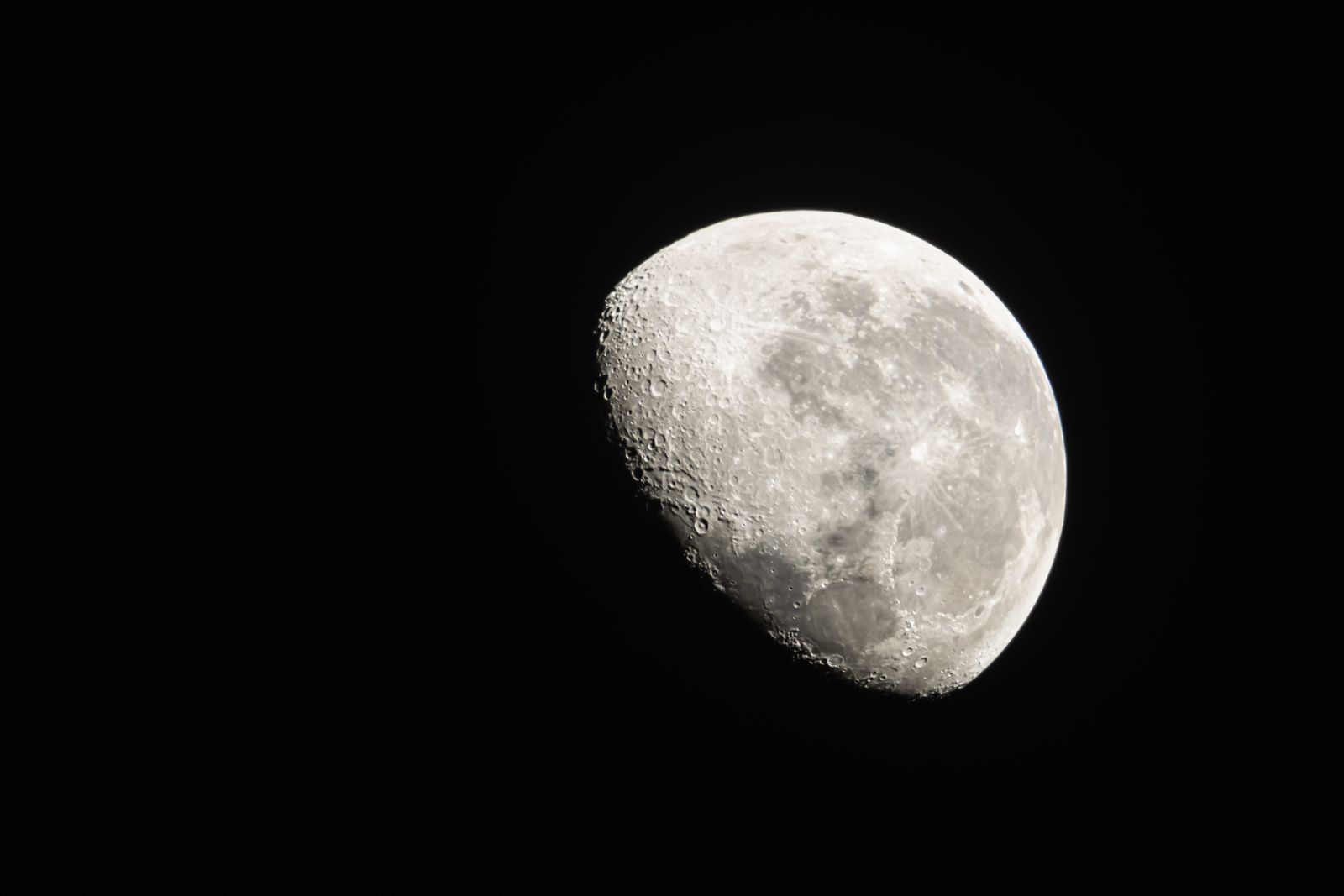
On 1 June 1966, a three-legged spacecraft the size of a small car settled onto the dusty plain of the Ocean of Storms at less than 3 metres per second, fired its vernier thrusters for the last time, and became the first American craft to survive a lunar landing. Within thirteen days, Surveyor 1 had radioed back 10,338 photographs of its own shadow, its footpads, and the pockmarked ground stretching to a horizon only about 2 kilometres away.
It weighed 2,200 pounds. It carried a single television camera. And it worked on the first try — something that had never happened before in the American lunar program, and something that would not happen again for many missions to come.
A soft landing at 3 metres per second
Surveyor 1 lifted off from Cape Kennedy on 30 May 1966 atop an Atlas-Centaur rocket. About 63 hours later, it was falling toward the Moon at nearly 6,000 miles per hour. The landing sequence was almost entirely automatic. A solid-fuel retrorocket fired first, killing most of the velocity in 40 seconds and then being jettisoned. Three small vernier engines took over for the final descent, throttling down as radar altimeters counted the last few metres.
At about 3.4 metres above the surface, the verniers cut off. Surveyor fell the rest of the way under lunar gravity — one-sixth of Earth’s — and touched down at roughly the pace of a person hopping off a low step. The site, inside a 100-kilometre crater north of Flamsteed in Oceanus Procellarum, was chosen because it looked flat and boring. Boring was the point.
According to NASA’s own account of the mission, engineers at the Jet Propulsion Laboratory watched the telemetry drop cleanly into the expected values and knew, within minutes, that the craft was upright and healthy on the surface.
Why it mattered that it didn’t crash
To understand the cheering that erupted at Caltech that night — captured in Los Angeles Times photographs from the JPL control room — you have to remember what came before.
The Ranger program, Surveyor’s predecessor, had been designed to crash. Rangers 1 through 6 either failed outright or hit the Moon without returning useful data. Only Rangers 7, 8 and 9 delivered the close-up images engineers had been waiting for, and even those ended in deliberate high-speed impacts. The Soviet Luna 9 had achieved the first survivable lunar touchdown four months earlier, in February 1966, but it was a small pressurised ball tossed onto the surface by an airbag-like arrangement — not a controlled descent.
Surveyor 1 was different. It was a real lander, with legs and shock absorbers and throttleable engines, and it had to prove that the physics of a soft touchdown worked before astronauts trusted their lives to the same idea. There was also a live question about what the surface itself was made of. Some geologists had argued that billions of years of micrometeorite bombardment might have ground the maria into a dust so fine and deep that a spacecraft would simply sink out of sight.
Surveyor’s footpads pressed into the ground about 2.5 centimetres. That single measurement — visible in the first pictures back — was worth years of theoretical argument.
10,338 pictures, one frame at a time
The camera on Surveyor 1 was a slow-scan television system built by Hughes Aircraft. It sat inside a housing near the top mast and viewed the world through a movable mirror that could be tilted and rotated by radio command from Earth. Each frame took several seconds to scan and transmit. There was no film. There was no onboard storage in the modern sense. Every image was radioed line by line to receivers in California, Australia and South Africa.
In the first eleven hours after landing, Surveyor sent back 144 pictures. Over the following two weeks — until the lunar night forced a shutdown on 14 June — it returned more than 10,000 more. Astronomy Magazine reports that the tally ran past 11,000 frames across the entire first lunar day of operation.
The pictures showed a scene that had never been photographed from ground level before. Small craters scattered like bomb blasts. Rocks casting shadows sharper than any on Earth, because there is no atmosphere to scatter the sunlight. A footpad half-buried in grey soil that looked, in the words of engineers at the time, something like wet beach sand — except it was bone dry and had been undisturbed for perhaps three billion years.
Temperature, bearing strength, and the shape of Apollo
Beyond the images, Surveyor 1 measured surface temperature swings and the mechanical properties of the lunar regolith. The temperature at the landing site ran from roughly 117°C at lunar noon to below −150°C at night. The soil was firm enough to support a heavy vehicle without collapsing — a data point that fed directly into the design of the Apollo Lunar Module’s landing pads three years later.
The Smithsonian’s Apollo to the Moon exhibition materials place Surveyor squarely in the chain of small technical victories that made the crewed landings possible. President Kennedy’s 1961 commitment had asked half a million people to solve problems nobody had solved before. Could a rocket engine restart in vacuum? Could a spacecraft navigate to a specific patch of ground a quarter of a million miles away? Would the surface hold?
Surveyor answered the last question for the engineers at Grumman who were then bending aluminium into the shape of the LM. When Neil Armstrong stepped off the ladder on 20 July 1969, the footpad beside him was not a wild guess about lunar geology. It was the descendant, in a very literal engineering sense, of the pad Surveyor 1 had planted three years earlier.
How rare a first-try success really was
Six more Surveyors followed. Two of them — Surveyor 2 and Surveyor 4 — failed. Surveyor 3 landed successfully in April 1967 and was later visited on foot by the Apollo 12 astronauts, who cut off pieces of its camera and brought them home. Surveyor 5, 6 and 7 all worked.
Lunar landing has remained hard. A 2023 analysis in The Conversation noted that roughly half of all Moon missions ever attempted have failed, and the recent commercial attempts by Japanese and American companies have reinforced the pattern. Israel’s Beresheet crashed in 2019. India’s Chandrayaan-2 lander crashed the same year. Japan’s ispace lander crashed in 2023. Landing softly on an airless world with no GPS, no atmosphere for parachutes, and a 1.3-second radio delay to Earth is still an unforgiving problem in 2026.
That is what makes the June 1966 result stand out. The Americans had been humiliated by six Ranger failures and were working under enormous political pressure to close a perceived gap with the Soviet Union. They built a spacecraft with a brand-new engine system, a brand-new radar, and a brand-new launch vehicle stack. They fired it at the Moon. It landed.
Vanished, then found again
Surveyor 1 fell silent on 7 January 1967, after surviving several lunar days and nights it had never been designed to endure. Its location was known approximately — it had been imaged from lunar orbit — but the exact spot became fuzzy over the decades, as archival navigation records aged and cross-referenced images went out of sync with newer maps.
Recent work using machine-learning image analysis on Lunar Reconnaissance Orbiter photographs has re-pinpointed the lander. High-resolution orbital imagery helped confirm the exact resting place of the craft, which sits where it landed almost sixty years ago, its shadow still traceable in modern photographs.
Why the number 10,338 still matters
Numbers like that get lost in the bigger story of the space race. Apollo 11 tends to swallow everything that came before it. But 10,338 pictures in thirteen days, from a machine with a single camera and a bit-rate measured in the low thousands, is a staggering data return for 1966. It is roughly one photograph every 108 seconds, continuously, for nearly two weeks — with the constraint that Earth had to be above the horizon and the mission clock had to fall in daylight.
Each frame was small. Each was slow. Each was received by a room of engineers in Pasadena watching a green oscilloscope, marking down exposure settings on paper, deciding by radio command what the mirror should look at next. The pictures were not beautiful in the modern sense. They were 200 lines, then later 600 lines, of grainy black and white. But they were the first sustained ground-level survey of another world, and they closed the argument about whether the Moon could be landed on at all.
Small missions, huge questions
Mars Daily has written before about the era’s fragile margins — how a single missing overbar in a guidance equation destroyed Mariner 1 in 1962, and how a mistranslated bit of code could turn a Venus mission into confetti over the Atlantic in under five minutes. Surveyor 1 belongs to the other side of that same coin: a mission where the engineering held, the software behaved, and the machine did exactly what it was asked to do. The margin between those two outcomes, in the mid-1960s, was often the width of a soldered joint or the tolerance of a valve.
The broader tradition Surveyor helped launch — small, robotic scouts that arrive at a planetary surface and start sending pictures immediately — continues today at Mars. When rover teams at JPL tried to live on Mars time in the early 2000s, they were carrying on a working culture that started in the same building, with the same institution, sending commands to Surveyor’s mirror.
Standing on the Ocean of Storms
Surveyor 1 is still there. Its footpads are still pressed 2.5 centimetres into the regolith. The mirror on its camera mast still faces where the last command left it. The Moon has no wind, no water, and no biology to disturb a thing. In another million years, if nothing collides with it, the lander will look almost exactly as it does now — a scuffed aluminium tripod, its instruments cold, its antenna pointed forever at a spot in the black sky where Earth used to be during working hours in June 1966.
The photographs it sent, all 10,338 of them, are still in the archives. They were the first pictures ever taken from the surface of another world by a machine that arrived intact. Everything that came afterward — the astronauts, the rovers, the sample-return campaigns being planned right now for Mars — traces some part of its lineage back to a thirteen-day burst of grainy black-and-white frames from a plain called the Ocean of Storms.