Most people assume the person who wears a decade-old coat and keeps the thermostat at 62 is just cheap, or maybe eccentric about money. The research complicates that read. These are often people who learned scarcity early enough, and thoroughly enough, that the body never quite accepted the news that the emergency ended.
Frugality is a behavior. What sits underneath these habits is closer to a reflex, set during years when the margin for error was thin, that keeps running long after the bank account has changed. The distinction matters because it explains why raises, promotions, inheritances, and even genuine wealth rarely dissolve the pattern. A person can look at a healthy balance and still feel, somewhere below language, that the ground could shift by Friday.
The habits look like discipline from the outside
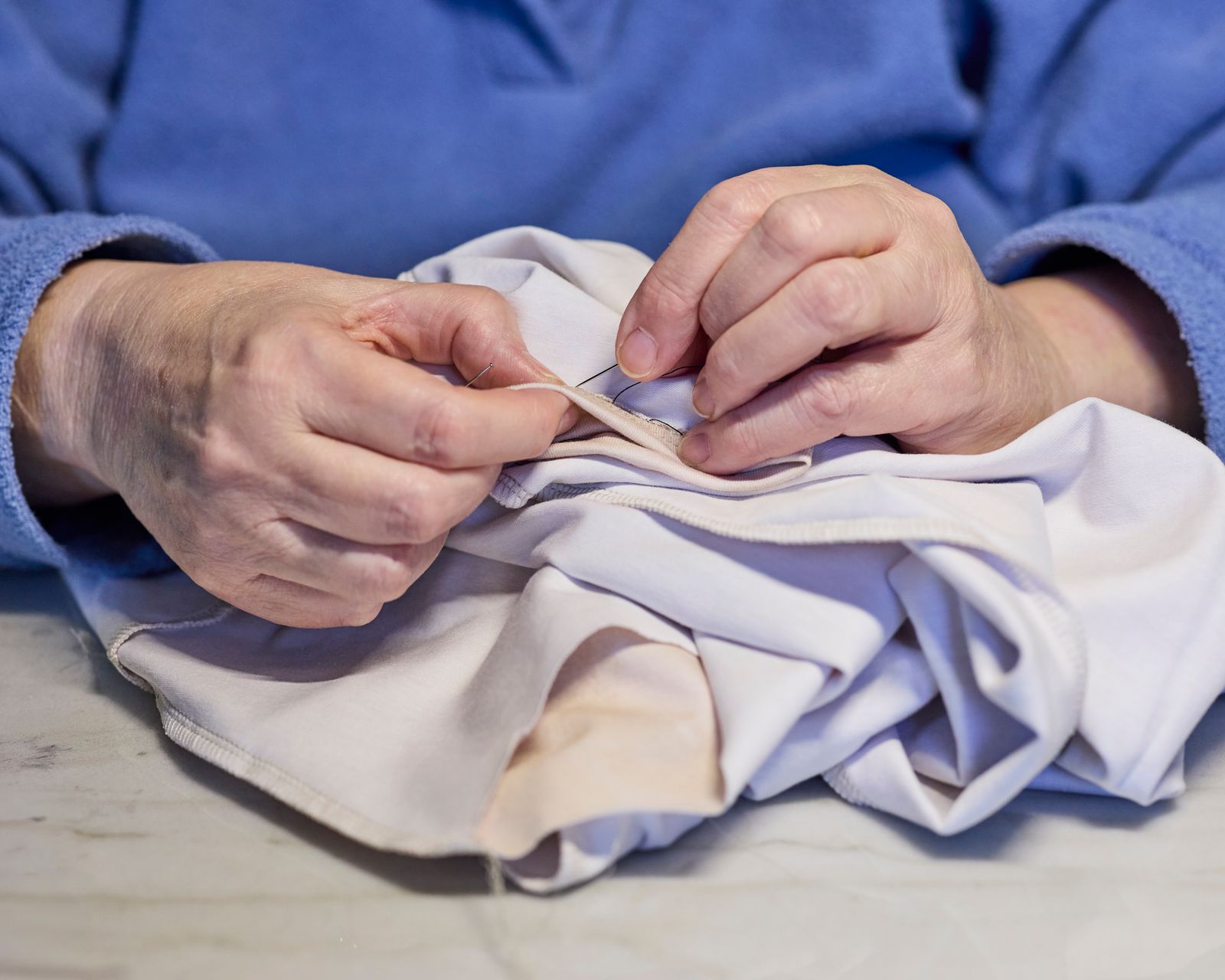
Watch closely and you’ll see a consistent vocabulary of behavior. The thermostat stays lower than guests find comfortable. The coat is patched, then patched again. Jam jars are washed and stacked in a cupboard for future use. Leftovers are never thrown away, only rearranged. Shampoo bottles get another few days of life with a splash of water. None of this is theatrical. Most of the people doing it don’t talk about it, because to them it isn’t a choice worth discussing.
From the outside, it reads as thrift, restraint, maybe environmental virtue. From the inside, it reads as safety. Each small act of preservation is a whisper to the body: there is enough, you did not waste, you will not be caught short. The habits are less about the money saved than about the feeling produced.
People raised without financial security often describe a familiar cluster: hunting for bargains long after the hunting stops being necessary, feeling guilty about treating themselves, treating food as something that might run out, avoiding debt with near-religious intensity, finding it hard to ask for help. The habits tend to survive the move into middle-class and even affluent adulthood intact.
What childhood scarcity actually does to the brain
The most-cited experiment here isn’t about childhood at all. In a 2013 study published in Science, Anandi Mani, Sendhil Mullainathan, Eldar Shafir and Jiaying Zhao stopped shoppers in a New Jersey mall and asked them to think through a hypothetical car repair before sitting unrelated reasoning and cognitive-control tests. When the repair cost $150, richer and poorer participants performed about the same. When it cost $1,500, the lower-income group’s scores fell away and the higher-income group’s did not. The Association for Psychological Science has summarised the size of that effect as a drop in cognitive function comparable to losing 13 IQ points. Not because the participants were less capable. Because the financial problem was already occupying the room.
Mullainathan and Shafir called that narrowed state “tunneling”: the urgent crowds out the long-term, and non-essential decisions get pushed off the table. Their own data cut both ways, though. The second half of the study followed sugarcane farmers in Tamil Nadu, who performed better on the same tasks after harvest, when they were flush, than before it, when they weren’t. Tunneling tracks present conditions. It lifts when the pressure lifts. What the habits in this article describe is something adjacent and more durable: not a live cognitive deficit, but a set of behaviors laid down while scarcity was present and left running after it wasn’t.
For that durability, the stronger evidence is longitudinal. A study led by Gene Brody and colleagues, published in Psychological Science in 2019, tracked African American youths in the rural South from ages 11 to 18 and then scanned them at 25. More years spent living in poverty during adolescence predicted weaker connectivity in the neural networks that support cognition and emotion regulation — but only among those who had received low levels of supportive parenting. The developing brain adapts to the environment it is given. That adaptation persists, and it is not evenly distributed.
Why the body keeps running the old program
The nervous system is not sentimental about updates. It calibrates during the years when the margin for error is zero, and then it keeps scanning for the threat that once was real. This is why someone can have six months of expenses in savings and still feel the flicker of dread when the electricity bill arrives a week early.
Resilience researcher Robyne Hanley-Dafoe, writing in a Psychology Today piece on shifting out of a scarcity mindset, describes scarcity thinking as a lens rather than a passing mood: rooted in fear, fixed on what is lacking, and capable of holding the nervous system in a low-grade state of stress even when the objective picture is stable.
The habits, then, are not stinginess. They are the body’s compromise. It cannot rewrite the childhood record, so it negotiates in the present. Wear the old coat. Turn down the heat. Keep the jars. Feel a little safer for another day.
Frugality that isn’t really about the money
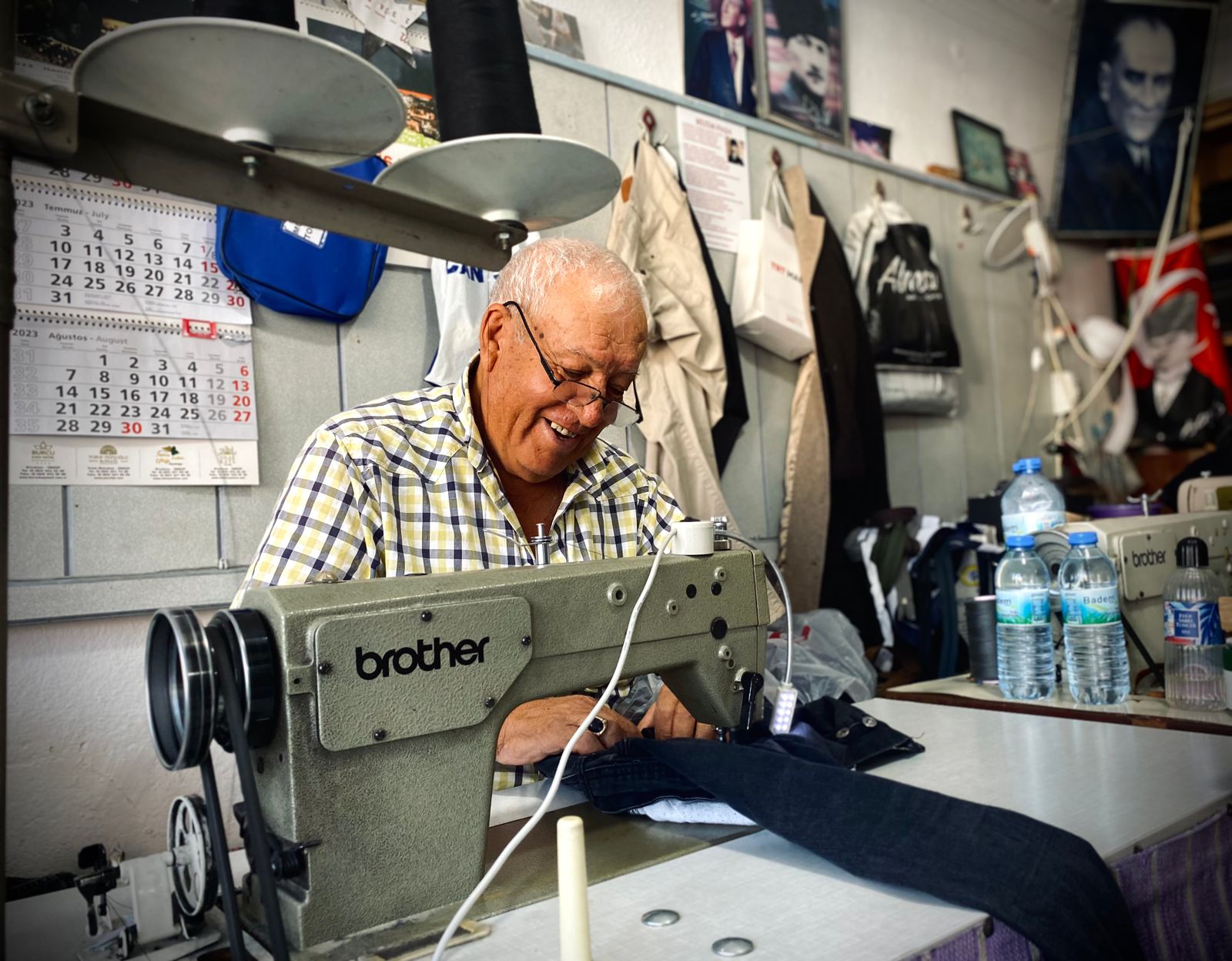
A useful test: ask someone who behaves this way what they would do if they suddenly had ten times more. Most will not describe a life of comfort. They will describe more saving, more security, a paid-off house, help for their children. The imagined future rarely includes the coat being replaced.
This is why external evidence of wealth rarely lands. The person who grew up watching a parent count out coins for milk does not experience a healthy balance as arrival. They experience it as a temporary reprieve that must be defended. The pattern travels, too. Psychologist Marisa T. Cohen, writing on the scarcity mindset in dating, describes people who feel inadequate enough to settle for whatever relationship is available, fearing that if this one ends there will not be another. Scarcity doesn’t stay in the wallet.
The famous marshmallow test, reconsidered
Generations of parents were told that a child’s ability to wait for a second marshmallow predicted future success. The story was tidy: self-control matters, teach your kids to delay gratification, and life will reward them. A larger replication complicated that picture. As Global Citizen reported, Tyler Watts and Greg Duncan rebuilt the experiment with roughly 900 children instead of the original 90, across a full range of backgrounds, and found that once family income and home environment were accounted for, differences in the ability to wait stopped translating into meaningful differences later on. Children from stable homes waited more often — not because they had more self-control, but because they had learned that adults kept their promises and that food would still be there tomorrow.
Children who grew up in unstable environments made a rational bet: eat the marshmallow now, because later might not come. That same logic carries into adulthood in reverse form — save now, because the future remains uncertain. Both stem from the same underlying belief about impermanence.
The cost of the positive-thinking prescription
A common cultural response is to tell people to reframe their relationship with money: cultivate abundance thinking, practice gratitude, believe there is enough. The advice isn’t wrong, exactly, but it can be tone-deaf when applied to people whose scarcity is real, or was until recently. Jennifer Sheehy-Skeffington, a social psychologist at the London School of Economics, argues in a Psyche essay on why we shouldn’t push a positive mindset on those in poverty that mindsets are not free-floating things anyone can simply choose. They are embedded in material conditions, and framing hardship as an attitude problem asks the person with the least slack to do the emotional labor of pretending they have more.
For adults who have escaped material scarcity but still carry its imprint, the same caution applies. Telling them to adopt an abundance mindset ignores that their vigilance was, at one point, keeping them afloat. The nervous system does not respond well to being told its early adaptations were foolish. It responds better to slow, repeated evidence that the emergency has passed.
How the pattern presents in adulthood

Look for a cluster, not a single trait. The person who keeps the thermostat low is often the same person who calculates the cost per use of every purchase, who feels physically uncomfortable in expensive restaurants, who cannot bring themselves to throw away a container that still has a quarter-inch of product left. They may also be strikingly generous — quietly paying for a friend’s dinner, sending money home, giving more than they can afford — because the same wiring that fears waste also remembers what it was to receive help.
There is often a parallel pattern of over-responsibility. People raised in unpredictable households frequently develop a habit of scanning for other people’s moods and adjusting themselves to fit. Mars Daily has written elsewhere about people who apologise for things that aren’t their fault. The overlap isn’t accidental. A childhood spent tracking scarcity — of money, of stability, of a parent’s attention — trains a person to feel responsible for keeping the whole system upright.
What actually helps
Advice that starts with willpower tends not to land. What seems to move the needle is slower and less dramatic. Three things matter.
Naming the gap between circumstance and nervous system. The account says one thing. The body says another. Both are true. Treating them as the same conversation misses the point. A person can be objectively fine and still feel unsafe, and pretending otherwise only adds shame on top of vigilance.
Small, repeated proofs that the emergency has passed. Buying the better coat once. Turning the thermostat up to a comfortable setting for a week. Eating the good cheese instead of saving it for a guest who never comes. Not as gestures of abundance, but as small experiments the body can log. The point isn’t to spend — it’s to build evidence that spending did not produce catastrophe.
Distinguishing values from wounds. Some frugality is genuinely values-driven: environmental, ethical, aesthetic. Some is protective, born from fear. The two can look identical from the outside but feel very different from within. A person who mends a coat because they love the coat is doing something different from a person who mends a coat because throwing it away would produce a wave of dread. Sorting which is which is quiet, private work.
When the pattern gets passed down
Children of people who grew up in scarcity often inherit a strange inheritance: material comfort layered over vigilance. The parents give them everything they didn’t have and then, without meaning to, transmit the underlying wariness anyway. The child grows up in a warm house with a full fridge and still absorbs the message that resources are precarious, that pleasure must be justified, that the floor could give way. An Inquirer essay on when children stop dreaming describes how early adversity narrows what children believe is available to them — not just materially, but imaginatively.
Breaking that transmission is harder than paying for the piano lessons. It requires the parent to model something they may not feel: that enough is a state one can actually rest inside.
The kinder frame
Calling these people cheap misreads the situation entirely. They are running a program that once saved them, or saved someone they loved. The coat, the thermostat, the refilled jar — these are artifacts of a person who learned to survive and has not yet been fully convinced they can stop.
The more useful question is not why they still do these things. It is what it would take, and how long, for the message to land that the emergency has ended. For some, it never fully arrives. For others, it comes in small increments over years, usually not through advice, but through quiet accumulations of evidence that today, at least, there is enough.
The habits may never go away entirely. That’s not a failure. It’s a record — of what someone came through, and of what part of them is still, gently, standing guard.