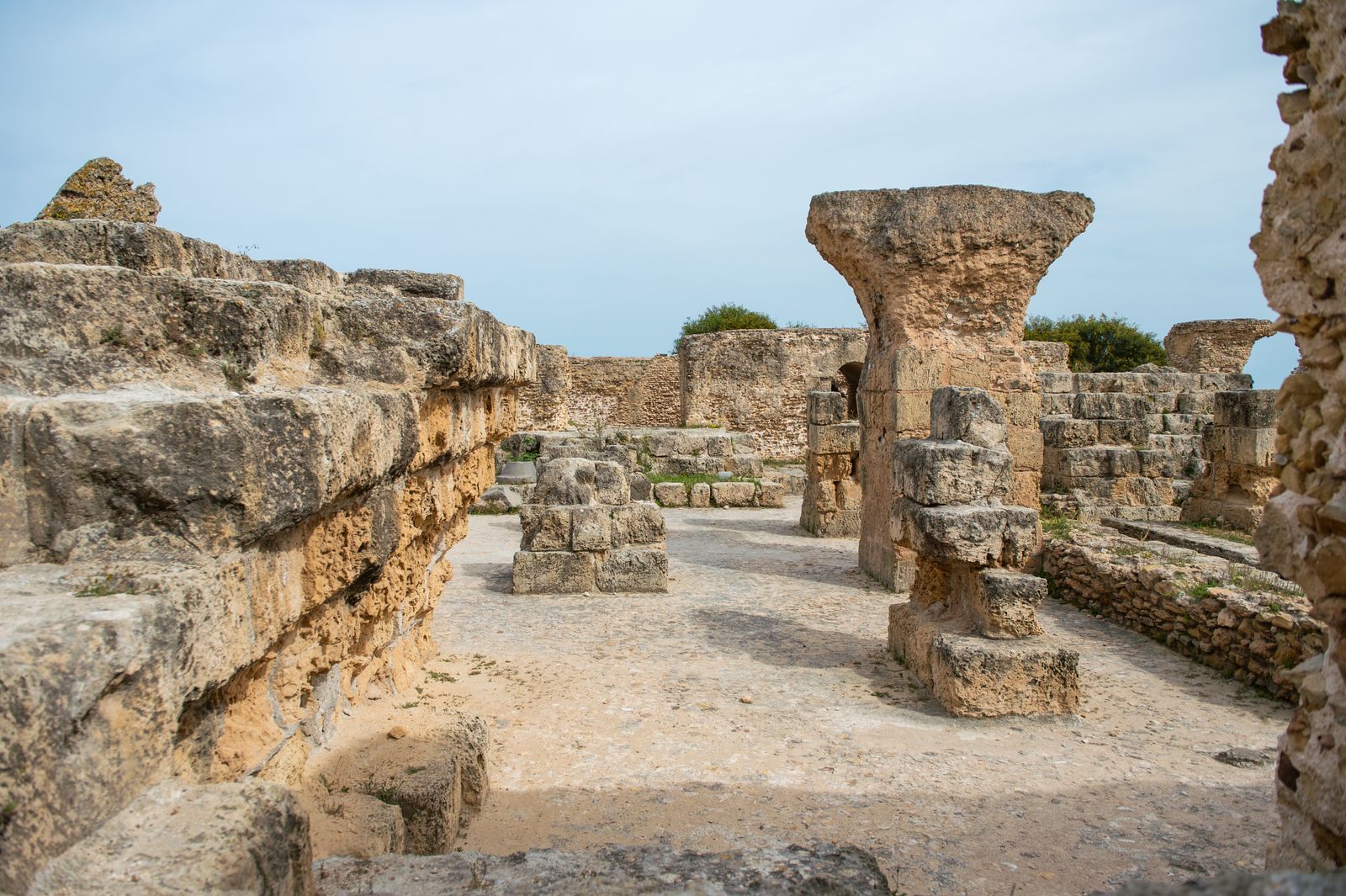
The concrete lining Roman harbours was poured more than 2,000 years ago, and it is still there — not just standing, but chemically stronger than the day the Romans walked away from it. Modern reinforced concrete piers built into Mediterranean coastlines routinely need major repair within decades, and many are demolished before their first century. The gap between those two lifespans is not a mystery of lost craftsmanship. It comes down to two ingredients the Romans used that modern builders replaced: a lime that was mixed hot, and no steel bar anywhere inside.
A recent analysis of concrete from Hadrian’s Villa shows that Roman binders kept slowly turning residual lime into calcite for nearly two millennia, sealing cracks and filling pores long after the masons had gone home. Modern Portland cement, by contrast, cures rapidly, and the steel rebar buried in it starts rusting the moment seawater finds a way in.
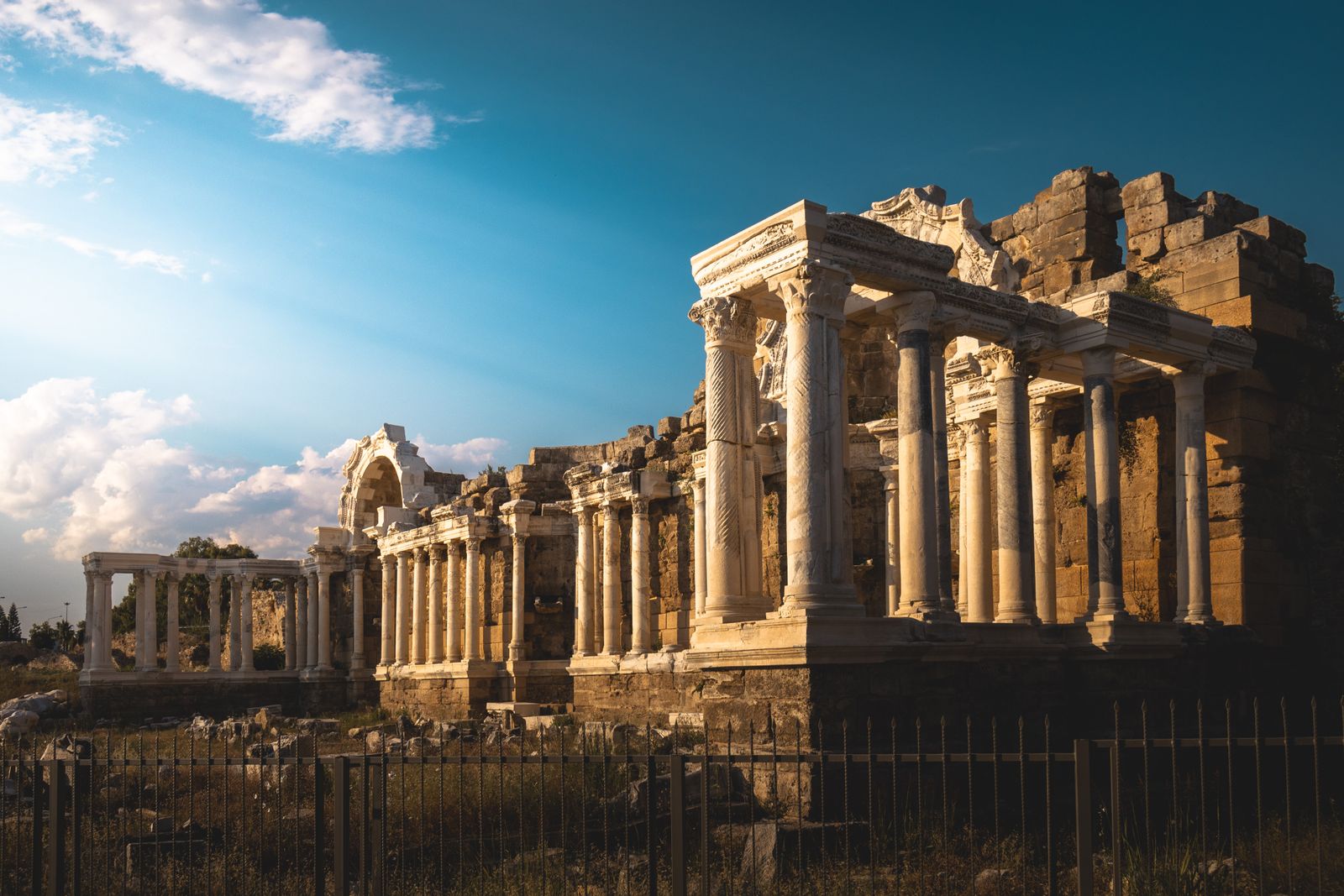
The harbours that refused to fall
The Roman engineer Vitruvius wrote in the first century BC that the best mortar came from mixing lime with a grey volcanic ash from the town of Pozzuoli, on the Bay of Naples. That ash — pozzolana — is what makes Roman marine concrete famous. Cast into wooden forms and lowered into the Mediterranean, it set underwater and kept setting for centuries.
Roman harbour structures are still recognisably intact. The Smithsonian noted in its coverage of the Hadrian’s Villa study that ancient Roman buildings, roads and aqueducts have survived roughly two millennia, while modern concrete typically crumbles within about 100 years — and in aggressive marine settings, far faster.
The missing ingredient: hot mixing
For most of the twentieth century, chemists assumed the Romans slaked their lime first — soaking quicklime in water to make a smooth paste — before mixing it with ash and aggregate. That is how any modern mason would do it. The problem was that this reconstructed recipe never quite matched the real thing under a microscope.
Roman samples are peppered with small white blobs called lime clasts, millimetres across, that older scholarship dismissed as sloppy mixing. In 2023, an MIT-led team argued the clasts were deliberate: the Romans had used quicklime directly, dry, mixing it with the ash and water at high temperatures. A construction site excavated at Pompeii has now backed that up. Analysis of a wall left half-built when Vesuvius erupted in AD 79 found unslaked lime lumps and evidence of hot mixing, confirming that Vitruvius’s tidy textbook recipe was not what builders were actually doing on the ground.
Hot mixing did two things. It drove the reactions faster, cutting construction time. And it left those lime clasts scattered through the finished wall like tiny chemical reservoirs.
Part of the reason modern engineers were slow to figure this out is that they trusted the written record. Vitruvius described lime being slaked before use, and for two thousand years that is what everyone assumed the Romans did. The Pompeii construction site, buried mid-project by Vesuvius, was the first place where the actual working practice could be read directly off the wall. Reporting on the Pompeii findings emphasised that the on-site evidence contradicted the textbook — the masons were mixing hot, cutting the slaking step Vitruvius prescribed.
A separate account of the Pompeii excavation noted that the site preserved every stage of the mixing sequence, from stockpiles of quicklime to partially reacted mortar in wooden hoppers. The white clasts that generations of archaeologists had waved off as poor workmanship turned out to be the whole point.
The self-healing trick
Those clasts are the reason a Roman harbour wall gets stronger when it cracks. When water — fresh or salt — seeps into a fracture and reaches a lime clast, the clast dissolves. The calcium-rich fluid runs along the crack and recrystallises as calcium carbonate, filling the gap. The crack seals itself shut, sometimes within weeks.
The MIT team demonstrated this in the lab by fracturing hot-mixed samples, dripping water through them, and watching the flow stop as new mineral filled the fissures. Coverage in reporting on the MIT findings described the mechanism as a passive self-healing system baked into the mix itself, with no additives or bacteria required.
Seawater makes it better. Pozzolana contains aluminosilicate glass that reacts slowly with dissolved chloride and sulphate ions in the ocean, growing rare crystals — aluminous tobermorite and phillipsite — inside the pores. Those crystals interlock like felt, reinforcing the matrix from within. A modern concrete pier’s worst enemy is exactly what the Roman pier eats for breakfast.
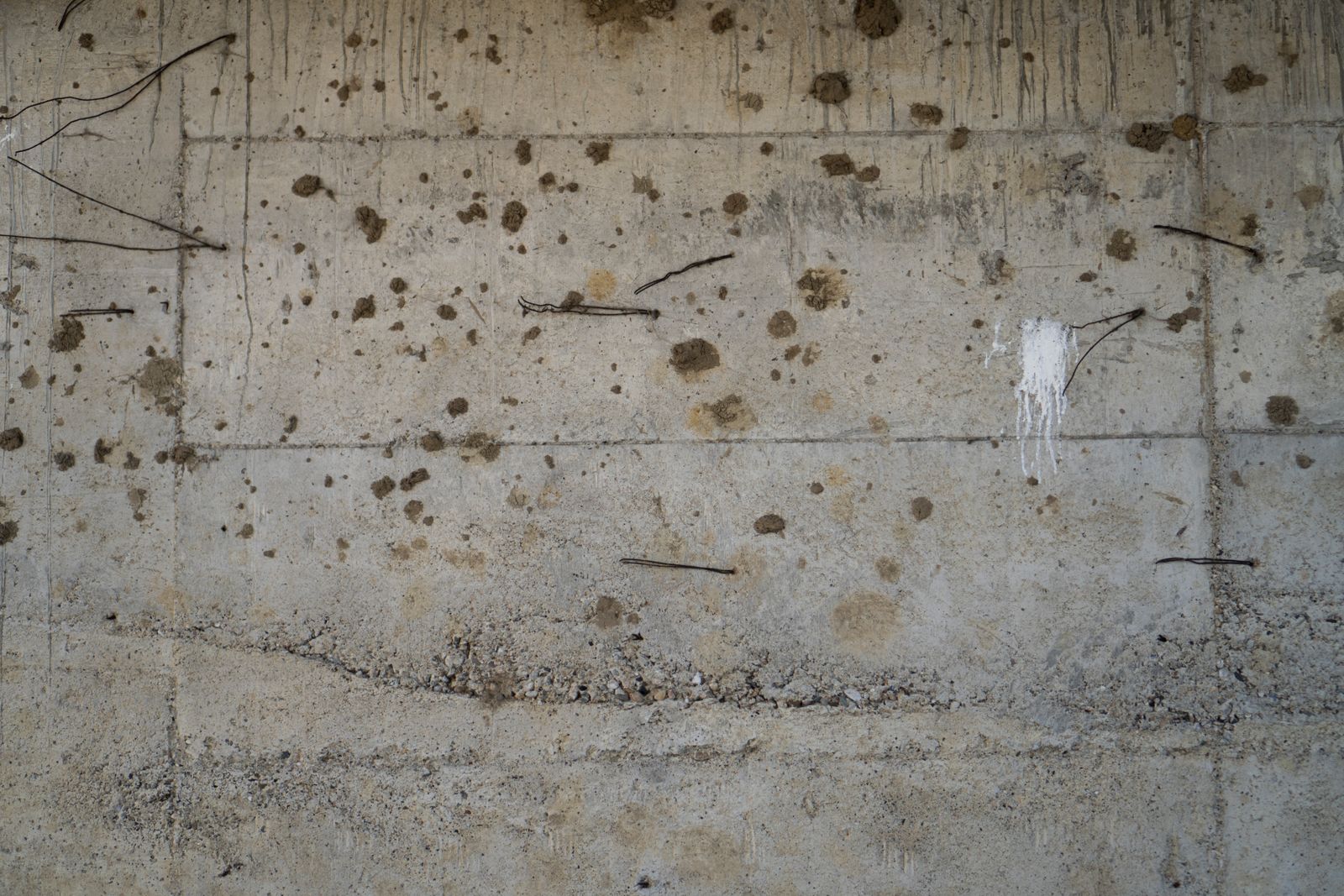
The Hadrian’s Villa study pushed the timeline further. Looking at a concrete latrine wall from the second century AD, researchers used X-ray diffraction, electron microscopy and synchrotron micro-CT to trace how the binder had evolved. They found that the famous calcium-aluminium-silicate-hydrate gel — the pozzolanic reaction product everyone credits — accounted for only a small share of the binding.
The dominant binder, after 1,900 years, was calcite. Residual lime had gone on reacting with atmospheric carbon dioxide and moisture for centuries, slowly precipitating fan-shaped crystals called radiaxial fibrous calcite that grew outward from reaction rims and bridged pores together. The pore network kept refining itself. The concrete was, in a real sense, still curing when the excavators found it.
The authors were careful to note that this slow carbonation happens on a timescale of centuries to millennia. It is not a climate fix for modern buildings. But it explains why the ancient material improves with age while the modern one does not.
Why modern piers rot in 50 years
Combine the mechanisms and the picture is clear. A block of Roman marine concrete has three overlapping self-repair systems running at once. Lime clasts dissolve and reseal cracks on a timescale of weeks. Pozzolanic reactions with seawater grow interlocking crystals in the pores on a timescale of decades. Residual lime carbonates slowly to calcite on a timescale of centuries, filling voids and refining the pore structure.
None of these require maintenance. None require external inputs beyond water and air. And crucially, none involve steel.
Modern reinforced concrete has none of them. It cures fast, stops curing, and then the countdown to rebar corrosion begins the moment the first chloride ion crosses the cover layer.
Portland cement, patented in 1824 by Joseph Aspdin in Leeds, is a different animal. It is fired at high temperatures, producing calcium silicates that hydrate rapidly and reach most of their strength within 28 days. That is a feature — it lets contractors pour a bridge deck on Monday and drive on it by the end of the month. It is also the ceiling. Once the hydration is done, the material is essentially inert. There is no leftover lime to fill future cracks.
Then there is the steel. Reinforced concrete, developed by Joseph Monier in the 1860s, embeds steel rebar inside the pour to carry tensile loads. In dry air, the alkaline concrete forms a passive oxide layer on the steel and protects it. In seawater, chloride ions diffuse through the concrete’s pores, reach the bar, and strip that layer away. The steel rusts. Rust occupies multiple times the volume of the parent iron, and the expanding oxide splits the surrounding concrete from the inside out.
Once cracks open, more chloride gets in, more steel corrodes, more concrete spalls. The cycle accelerates. Chloride-induced rebar corrosion is the leading cause of premature failure in marine reinforced concrete infrastructure.
Bringing the recipe back
Engineers are trying to put some of this chemistry back into modern mixes. Fly ash and silica fume — industrial byproducts with pozzolanic behaviour — are already common substitutes for a fraction of the Portland cement in marine concrete. Companies including DMAT, a startup spun out of the MIT work, are commercialising hot-mixed lime formulations aimed at seawalls and coastal defences.
Basalt-fibre and glass-fibre reinforcement, which do not corrode, are being trialled as alternatives to steel bar in marine applications. Bacterial concretes seeded with Bacillus spores that precipitate calcite when water reaches them borrow the same self-healing logic the Romans built in by accident.
None of this is a straight substitute for Portland cement, which still wins on speed, cost, and compressive strength for most jobs. But for structures that need to sit in salt water for a very long time — sea walls, tidal barriers, offshore wind foundations — the two-thousand-year datapoint from Roman harbours is finally being taken seriously.
The editorial team has covered similar cases where old solutions outperform new engineering, including the coastal mangrove seawalls that outperformed concrete in Bangladesh and the Voyager 1 electronics still running on 22 watts after nearly 50 years.
What the harbour walls are still doing
At low tide along certain Mediterranean coasts, you can wade out to blocks of Roman concrete that have been submerged for the entire span of recorded European history. They were poured before the Gospels were written. They were already ancient when the Ottomans took Constantinople. They are, today, chemically more integrated than they were the day Trajan died.
A steel-reinforced pier laid down in the same water in 1975 is, right now, cracking along the lines of its rebar cage, orange stains bleeding down the concrete face. Sometime in the next couple of decades it will be demolished and replaced. The Roman blocks a few hundred metres away will still be growing calcite bridges across their own pores, doing quietly what they have done every year since the reign of Augustus.