
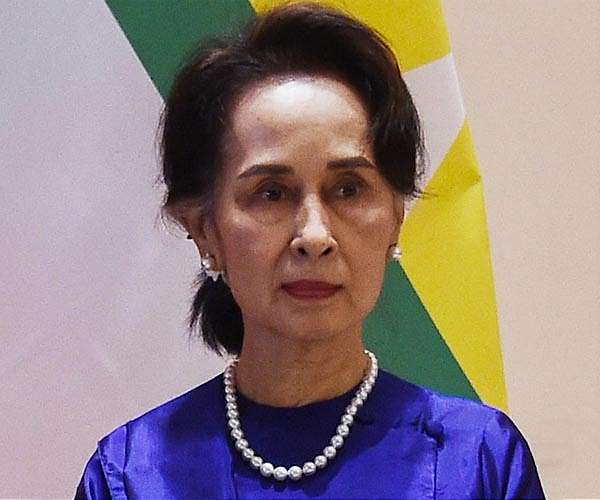
Two years after a coup snuffed out Myanmar's short-lived democratic experiment, the country's military is planning elections that analysts warn could spark further bloodshed as opposition to junta rule rages on.
Observers also say the planned poll cannot be free and fair under the present circumstances, with one analyst characterising it as a mere "performance" aimed at justifying the junta's hold on power.
Allegations of voter fraud in the last election in November 2020 — won resoundingly by democracy figurehead Aung San Suu Kyi's party — were the army's excuse for seizing power on February 1, 2021.
Though the claims were never substantiated, the generals arrested Suu Kyi and other top civilian leaders in a series of pre-dawn raids.
With the political opposition now decimated, and the junta buttressed by tacit backing from close allies Russia and China, the military is expected to hold a new election later this year — no later than August, according to the constitution.
But with resistance raging from the hilly jungles of the borderlands to the plains of the army's traditional recruiting grounds, people across swathes of the country will be unlikely to vote — and run the risk of reprisals if they do.
Any junta-held poll will be "like a cart with only one wheel", a former civil servant in Yangon who has been on strike since the coup told AFP.
"There is no way it will bring any progress," he said, requesting anonymity for fear of reprisals.
In the jungle near the border with Thailand, Lin Lin, a member of one of the dozens of "People's Defence Force" groups battling the junta, vowed elections would have no bearing on their mission to oust the military from Myanmar's politics.
"We will hold on to our weapons until we get our elected government," he told AFP.
More than a million people have been displaced by violence since the coup, according to the UN, with the military accused of bombing and shelling civilians and committing war crimes as it struggles to crush resistance.
Last week UN human rights chief Volker Turk said the country faced a "catastrophic situation, which sees only deepening human suffering and rights violations on a daily basis".
– Elections –
The junta-imposed state of emergency is due to expire at the end of January, after which the constitution says the authorities must move to hold fresh elections.
The government of junta supremo Min Aung Hlaing has not set a date, but last week gave all existing and aspiring political parties two months to register with its election commission.
Military negotiators are working to stitch together a large enough patchwork of constituencies to make an election credible, including ethnic rebel groups that have stayed out of the post-coup chaos, and smaller, regional parties.
But voting will likely be impossible in many areas of the country, said Htwe Htwe Thein at Curtin University in Australia.
"In areas they do control, it is possible that people could be forced to vote, and vote for the junta-affiliated party or parties," she told AFP.
"People would certainly assume that they are being watched — and there could be punishment for not voting or voting against the junta."
Threats have also been made by anti-coup fighters against those cooperating with the election, with local media reporting several attacks on teams verifying voter lists in commercial hub Yangon.
The junta's "technical ability to conduct anything approaching even clearly fake elections will be circumscribed by lack of bureaucratic capacity, confusion, boycotts and violence," independent analyst David Mathieson told AFP.
Any poll would be "beyond fraudulent", Mathieson warned.
"These aren't real elections, remember. They're a squalid performance to justify the (junta's) coup d'etat claims of a corrupt 2020 election," he said.
– 'Determination and defiance' –
With the generals shielded at the United Nations by Moscow and Beijing — and the international community grappling with crises in Ukraine and Afghanistan — many in Myanmar have given up on help from outside.
It would take nothing short of "a miracle" for Myanmar's opposition to get the kind of weapons support currently rolling into Ukraine, said Mathieson.
Close ally Russia has already come out in support of the polls, and while Washington has urged the international community to reject any election as a "sham", diplomatic sources say neighbours such as Thailand, India and China will likely give their tacit approval.
But whatever the outcome, it is unlikely to end the violence that is convulsing the country.
"The mission is to attack the military dictatorship with the determination of defiance," said Lin Lin from the jungle near the Thai border.
"When an elected government is selected by people, we will rest."
Two years of turmoil: Myanmar's coup
Yangon (AFP) Jan 31, 2023 –
Myanmar's military seized power on February 1, 2021, ousting the civilian government and arresting its de facto leader, Aung San Suu Kyi.
More than 2,800 people have since been killed in the junta's bloody crackdown on dissent, according to the United Nations, while thousands more have been arrested.
Here is a look back at the two years since the coup, which ended a decade-long experiment with democracy after half a century of military rule.
– Pre-dawn raids –
Soldiers detain Suu Kyi and her top allies during pre-dawn raids on February 1 ahead of the opening of the new parliament.
The generals claim fraud in the November 2020 election, which Suu Kyi's National League for Democracy (NLD) party won by a landslide.
Their actions spark global condemnation, from Pope Francis to US President Joe Biden, and soon the United States, European Union and others announce sanctions.
– Growing crackdown –
Mya Thwate Thwate Khaing, a young woman shot on February 9, dies 10 days later after becoming a national symbol of opposition to the junta.
Violent crackdowns on street protests escalate, and by March 11, Amnesty International says it has documented atrocities by the junta including the use of battlefield weapons on unarmed protesters.
A day later, a UN rights expert on Myanmar accuses the military of crimes against humanity.
– Deadliest day –
More than 100 civilians are killed in protest crackdowns on March 27, 2021 — Armed Forces Day, the military's annual show of strength. It is the deadliest day since the coup.
The next month, ousted civilian lawmakers forced into hiding announce the formation of a shadow "National Unity Government".
– Suu Kyi's trial begins –
In June, more than four months after she was detained, Suu Kyi goes on trial in a closed junta court.
She faces an eclectic mix of charges, including illegally importing walkie-talkies and flouting Covid-19 restrictions during the 2020 elections.
– Election results cancelled –
In late July, the junta cancels the results of the 2020 polls, claiming more than 11 million instances of voter fraud.
– Suu Kyi jailed –
On December 6, Suu Kyi receives her first jail sentence — four years for incitement against the military and breaching Covid-19 regulations. The sentence is then cut to two years.
– Executions –
In July 2022, the junta announces it has executed a former lawmaker from Suu Kyi's party along with a prominent activist over allegations of "terrorism" — the country's first use of capital punishment in decades.
The news sparks renewed outrage. A junta spokesman later says the pair, along with two others who were executed for allegedly killing an informer, "deserved many deaths".
– Lavrov visits –
Days later, Russian foreign minister Sergei Lavrov visits and says Moscow backs the junta's efforts to "stabilise" the country and hold elections in 2023.
– Ex-ambassador arrested –
In August 2022, authorities arrest former British ambassador Vicky Bowman for allegedly breaching immigration rules.
The arrest came as Britain announced new sanctions on firms it said had helped raise funds for the military during its 2017 crackdown on the mostly Muslim Rohingya minority.
Bowman and her husband, prominent artist Htein Lin, are later jailed for a year.
In November, they are freed in a mass amnesty, along with a Japanese journalist arrested at an anti-coup protest and an Australian former adviser to Suu Kyi detained since the early days of the coup.
– Air strikes –
In September, at least 11 schoolchildren are killed in a junta air strike on a school in the northern Sagaing region as the military ramps up the use of its air power.
In October, air strikes on a concert held by a major ethnic rebel group kill about 50 people and wound 70, according to the Kachin Independence Army, which has clashed regularly with the junta since the coup.
– Suu Kyi trials finish –
After 18 months, Suu Kyi's trial wraps up on December 30 with a final jail term of seven years for corruption — taking her total sentence to 33 years.
The junta gives no details on whether she will be allowed to serve her sentences under house arrest.
– Elections? –
In January 2023, the junta gives political parties two months to re-register under a strict new electoral law in the latest sign it is planning fresh polls this year.
The United States has said any elections would be a "sham". Close ally Moscow says it supports holding polls.
