
A hike in temperatures projected across Canada due to global warming jeopardizes Ontario's hydro-electric power production and booming Alberta oil sands sector, said a study released Monday.
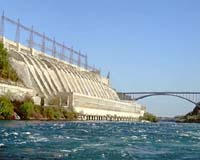
The report by the Sage Centre and the World Wildlife Fund (WWF) examined the impact of a small rise in temperatures on the Athabasca River, which feeds Canada's oil sands industry, and on its Great Lakes region, where vast hydro-electric power is generated for Ontario province and exported to the northeastern United States.
Global temperatures have already risen by an average of 0.8 degrees Celsius (1.4 degrees Fahrenheit) in the past century and are expected to rise by 2.0 degrees Celsius (3.6 degrees Fahrenheit) between 2026 and 2060, the report notes.
Different regions in Canada could warm by as much as 6.0 degrees Celsius (11.8 degrees Fahrenheit), it says.
This could lead to changes in rainfall patterns, more evaporation from lakes and rivers, and reduced glacial flow resulting in lower river and lake levels, the WWF said in a statement.
Ontario would be forced to cut hydro power generation by 2.0 to 17 percent and Alberta would have to curtail new oil sands projects, which currently use 2.0 to 4.5 barrels of water to produce one barrel of oil as well as large amounts of energy.
"Canada's fastest-growing source of global warming pollution — the Alberta tar sands — is boiling off the very water supplies it needs, and in Ontario, burning coal for electricity is undermining access to clean hydro power," Julia Langer, director of WWF's global threats program, said in a statement.
"Only decisive action to dramatically cut fossil-fuel pollution can stop this tragic irony," she said.
The WWF called for reduced greenhouse gas emissions that cause global climate change, particularly the carbon emissions released from the production of oil from the Alberta oil sands, and no new water-taking permits for oil sands firms.
At an estimated 179 billion barrels, Canada's oil sands rank second behind Saudi Arabia in petroleum reserves. However, due to high extraction costs, the deposits were long neglected, except by local companies.
While crude is pumped from the ground, oil sands must be mined and bitumen separated from the sand and water.
Since 2000, skyrocketing crude prices and improved extraction technology have persuaded several foreign companies to invest billions of dollars in projects.
Source: Agence France-Presse
