
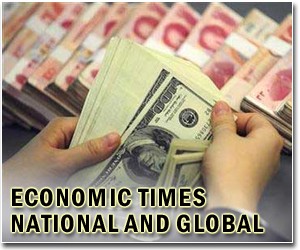
The days when China could rely solely on exports to fuel economic growth are over and Chinese policy makers should let their currency strengthen at a faster pace to spur domestic buying, U.S. Treasury Secretary Timothy Geithner said.
"We want to see the exchange rate appreciate more rapidly," Geithner said Tuesday, a week before a high-level U.S.-China Strategic and Economic Dialogue. "It is not sustainable for China to maintain an exchange rate this undervalued. It is untenable for that strategy to work over time."
China has been criticized before by the United States for pegging the yuan to the U.S. dollar at a cheap level by buying up greenbacks with the proceeds from its trade surplus. This strategy allows the world's second-largest economy to keep its exports attractive as foreign buyers flock to China to purchase undervalued goods. The United States is China's largest trade partner.
Now that inflation is picking up, however, China's so-called export strategy may be fading. China's consumer prices rose at a 5.4 percent pace in March, the fastest since 2008.
Last week, the yuan strengthened to a 17-year high and has gained about 5 percent against the dollar since last summer, when the Chinese government said it would allow a more flexible currency.
But the dollar itself has dropped against most major currencies during the same period, meaning the yuan hasn't had comparable gains against China's other trade partners. Asia's largest economy also posted its first quarterly trade deficit in seven years in April and evidence of higher imports may ease pressure to allow its currency to strengthen.
The International Monetary Fund, of which both the United States and China are members, appears to agree with Geithner. Anoop Singh, director of the IMF's Asia and Pacific department, told reporters last week that a stronger yuan would help encourage domestic consumption within China.
"We have noted for some time that among the policy steps that China should pursue is greater exchange rate flexibility," IMF spokesman William Murray said in an e-mail message. "We see its exchange rate as undervalued."
Geithner and U.S. Secretary of State Hillary Clinton will meet with Chinese Vice Premier Wang Qishan and State Councilor Dai Bingguo, for two days beginning next Monday.
Geithner said he would press the Chinese officials to "dismantle a set of protections" for Chinese companies that give them access to artificially low borrowing costs.
China, meanwhile, wants looser export controls and easier access to investments in the United States in areas such as technology, which has been a politically sensitive issue for some Americans.
Share This Article With Planet Earth
