
France and Italy found scant support on Tuesday from their EU partners to challenge the European Commission's decision to call an early halt to the industrial tuna fishing season.
However, most member states were in favour of pressing the European Union's executive arm to do more to help fishermen cope with soaring fuel prices, which have triggered waves of protests in the sector recently.
French Fisheries Minister Michel Barnier acknowledged as he arrived for a meeting in Luxembourg with colleagues that there was not enough support to try overturn the commission's ban on industrial bluefin tuna fishing.
"Unfortunately, there won't be any more fishing this year because (the commission) has taken its decision," he told journalists, expressing "serious incomprehension" at what he described as a "brutal move."
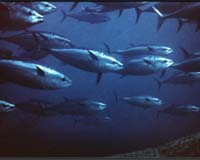
On June 13, the commission decided to halt the industrial fishing of bluefin tuna two weeks early, at the peak of the season, over fears quotas were being filled too quickly.
The move triggered a wave of fierce criticism from Europe's leading tuna fishing nations France, Italy and Spain, which accused the commission of using faulty figures and demanded the decision be scrapped.
Dismissing their accusations, the commission hit back last week arguing that its critics were failing to keep track of catches, running the risk of overfishing.
However, Spain, which was given one week more than other EU members to keep fishing, backed down from its criticism of the commission with Fisheries Minister Elena Espinosa saying Spanish fishermen had filled their quotas.
"There's no problem to close the fishery for Spain," she said. "We acted in total transparency and we want other countries to do the same."
Last year, Spain hit out at France and Italy for overshooting their tuna quotas, accusing them of not playing by the rules.
Paris and Rome were also unable to count on the support of northern European countries, where concerns about protecting the environment and endangered species run high.
"We have to safeguard the bluefin tunafish," Dutch Fisheries Minister Gerda Verburg said. "I can respect the measure although I can understand that the fishermen are not very satisfied."
Chronically overfished, Mediterranean tuna are the victims of their success with fish lovers, especially with the growing demand for sushi. About 70 percent of the Mediterranean catch goes to Japan and prices keep rising.
The commission's decision to close the tuna season early inflamed tensions with the fishing industry because it has been struggling to cope with high fuel prices.
Under pressure from some EU governments, the commission last week outlined a range of measures to help fishermen, who have led waves of protests across Europe against the high fuel prices.
EU Fisheries Commissioner Joe Borg said he favoured offering aid to fishermen who do not go out to sea over a three-month period, as part of restructuring efforts.
The commission also agreed to allow high levels of aid from member states for the sector and to be more flexible about how an EU fund for restructuring can be used.
While the ministers welcomed the proposals as a step in the right direction, there was also pressure for the commission to go even further by either increasing EU funds available to fishermen or making it easier for member states to use existing money.
