
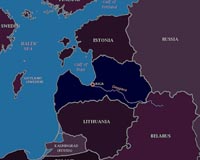
Leaders from three Baltic states on Friday warned that possible spending cuts in the European Union's post-Brexit budget could hamper their efforts to achieve the bloc's climate goals.
"Proposed reductions of the next Multiannual Financial Framework (MFF) would jeopardise the implementations of these goals," said a statement signed by the president of Lithuania and prime ministers from Estonia and Latvia.
They singled out proposed cuts to "areas that significantly contribute to the climate objectives" like cohesion and agricultural funding as particularly worrisome.
Development or cohesion policy aims to bring economic conditions in the EU's poorer southern and eastern countries up to the higher western levels.
To reach EU climate "targets for 2030, the bulk of such (green energy) investment is necessary in the next ten years, hence over the duration of the 2021-2027 MFF," said the leaders, calling the period "make it or break it" time for climate targets.
While the Baltic trio have made progress in transitioning to renewable energy and relatively low-carbon, Estonia still relies on polluting domestic shale oil for around 85 percent of its electricity.
Ursula Von der Leyen, the new European Commission chief, has said the EU must go beyond its 2030 goal of reducing greenhouse gas emissions by 40 percent, compared to 1990 levels, if it is to reach a proposed target of zero net emission by 2050.
Von der Leyen has also announced the EU will launch a Just Transition Fund to wean members off fossil fuels.
Earlier this year, the European Commission proposed a cut of around seven percent to so-called "cohesion" funding in the 1.3-trillion-euro ($1.4-trillion) post-2020 multi-year budget to help make up for the loss of Britain's contribution after Brexit.
The public appeal issued Friday by Lithuanian President Gitanas Nauseda, Estonian Prime Minister Juri Ratas and Latvian Prime Minister Krisjanis Karins comes ahead of a UN summit on the climate crisis in Madrid next week, amid growing alarm about global warming.
In a symbolic move on Thursday, the European Parliament declared "a climate and environment emergency".
