
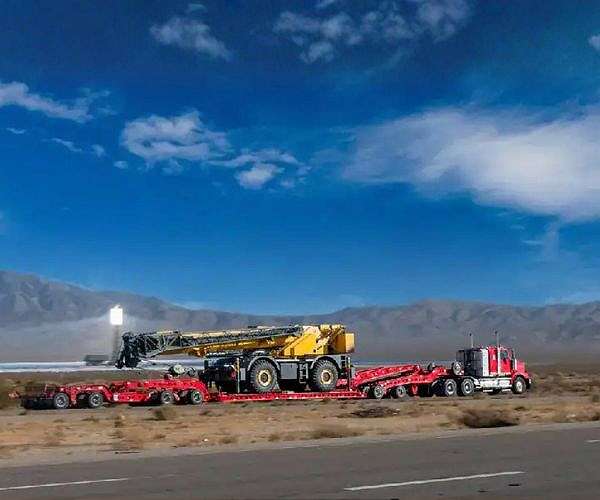
Most oversized loads are complex, but moving a rocket stage or satellite bus operates on an entirely different level of difficulty. Beyond the sheer physical dimensions of the cargo, specific aerospace factors dictate every movement.
The primary driver is the high consequence of failure; a damaged cryogenic tank or misaligned payload adapter can delay a launch by months. This results in significant lost pad time, insurance extensions, and re-manufacturing costs.
To mitigate these risks, aerospace programs rely on specialized transport providers who understand that standard logistics protocols are insufficient. Providers like Titan Worldwide's premium heavy haul trucking logistics exemplify the precision required, utilizing integrated permit teams to support everything from commercial launch vehicles to classified satellite buses.
This expertise is essential because many components fall under ITAR regulations, necessitating secure custody and vetted drivers. The scale of these operations is immense.
For example, NASA's Pegasus barge was modified to ferry the massive SLS core stage, which is over 50 feet longer than the space shuttle external tank. Such customized infrastructure highlights why this sector differs drastically from standard freight.
1. The Engineering Variables That Drive Routing
Moving space hardware requires navigating a labyrinth of engineering variables that keep logistics teams vigilant. The dimensions and weight distribution of modern hardware present the first challenge.
Route engineers must model every bridge and overpass for both static and dynamic loads. Multi-axle hydraulic platform trailers spread the weight, while Schnabel fixtures keep the center of gravity dangerously low.
Distance adds another layer of complexity. While 50% of large freight trucks operate within 50 miles of their origin, space hardware frequently traverses entire continents. These long-haul journeys expose sensitive components to varying road conditions for extended periods.
Vibration and tilt sensitivity also play a massive role. The wrong pothole at highway speeds can spike shock levels beyond design limits. Consequently, moves often incorporate real-time acceleration monitoring and active suspension systems that limit pitch and roll to just a few degrees.
Warning/Important:
Flight avionics are surprisingly fragile on the ground. While built for launch G-forces, they are vulnerable to specific road vibration frequencies. Ensure your carrier uses active suspension systems and real-time acceleration monitoring.
2. Anatomy of a Successful Move
A successful heavy haul operation follows a rigorous, step-by-step process that begins long before wheels turn. It starts with survey and route engineering, where laser scanners map every potential pinch point. Engineers analyze overpasses and even ornamental streetlights to verify that a massive convoy can navigate standard intersections.
The next phase involves extensive permitting and paperwork. Oversized load permits vary significantly by state and municipality, often requiring unique bridge studies.
Once on the road, the operation relies on strict escort protocols. Pilot cars ride ahead to warn of sudden braking or lane changes, while police units provide rolling roadblocks. Planners frequently pre-approve inland detours to keep shipments on schedule, even if original routes are compromised.
3. Selecting the Right Partner
When the mission and budget are on the line, program managers must separate marketing hype from genuine aerospace competence.
A capable transport partner typically offers documented experience moving orbital hardware and possesses in-house route engineering capabilities. The equipment itself is a key indicator; look for multi-axle, self-steering platform trailers with trackable maintenance logs.
Safety records and monitoring capabilities are equally critical. The ability to provide 24/7 load monitoring, vibration telemetry, and driver vetting is standard for mission-critical moves. Verifying safety records through FMCSA and checking customer references ensures that the partner can handle the rigorous demands of spaceflight logistics.
Pro Tip:
Verify your logistics partner's specific aerospace experience. Look for in-house route engineering capabilities and self-steering platform trailers, then validate their safety records through the FMCSA to ensure mission readiness.
The Road Forward
With the cadence of launches rising fast due to lunar missions and commercial constellations, the pressure on ground logistics is intensifying. While rocket science grabs the s, the unseen miles between the factory and the launchpad are where the mission is often truly secured.
As the industry evolves, the collaboration between engineering and logistics will only become more vital to reaching the stars.
